
Smart Tower: Real-Time Data-Based Telecommunications Towers
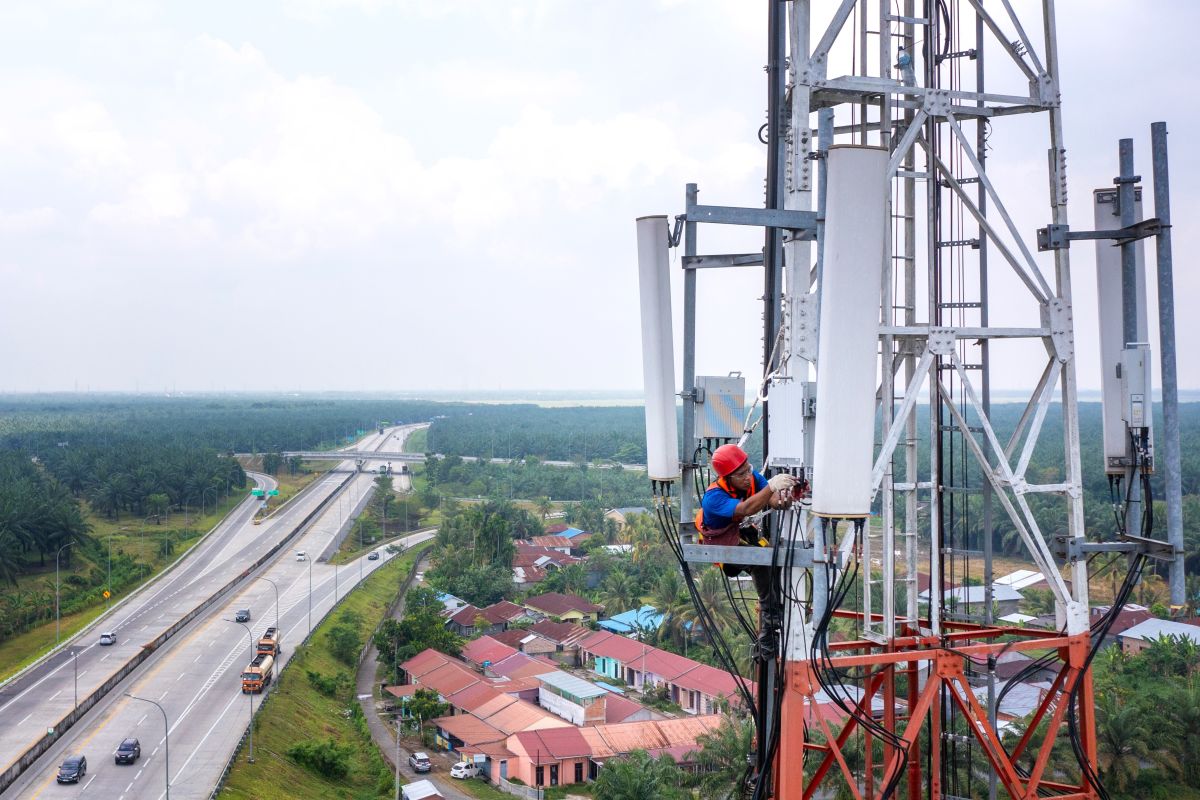
Jakarta (ANTARA) - The development of digital technology has transformed many aspects of society, including the management of telecommunications infrastructure. While public attention has previously focused on internet speeds or signal coverage, the physical foundation of the network is now taking centre stage.
Entering 2026, telecommunications towers are undergoing a significant shift in role. Towers are no longer merely passive structures supporting equipment but are evolving into intelligent infrastructure based on real-time data, known as smart towers.
The concept of smart towers has emerged alongside the growing need for stable and reliable networks in the 5G era and the expansion of digital services. Activities such as banking, trading, education, and public services are increasingly dependent on nearly uninterrupted connections. In this context, even the smallest disruption to a tower can have widespread impacts. Therefore, the old approach of waiting for damage is no longer suitable for the demands of the times.
In the conventional model, tower management is carried out manually and periodically. Staff must visit the site for inspections, while most disruptions are only identified after services are affected. This situation leads to longer repair times and increased operational costs. Smart towers aim to change this pattern by leveraging digital technology that operates continuously.
The transformation towards smart towers begins with the use of sensors installed in various parts of the tower. These sensors monitor critical conditions, such as device temperature, electricity usage, battery endurance, genset condition, and environmental security factors. Data from these sensors is sent directly to a central monitoring system, allowing the tower’s condition to be known at any time without requiring physical inspections.
The collected data is then processed using artificial intelligence systems. This technology enables the system to recognise certain patterns that are difficult for humans to detect. If unusual changes occur, the system can provide early warnings, for example, when energy consumption increases without clear reason or device temperature rises gradually. These warnings serve as the basis for managers to take action before actual damage occurs.
Digital infrastructure experts assess that this data-based approach brings major changes to tower management. Maintenance is no longer reactive but predictive. This means problems can be prevented early based on accurate data analysis. In this way, the risk of service disruptions can be reduced, while overall operational efficiency is improved.
In addition to enhancing network reliability, smart towers also play an important role in energy management. Tower energy consumption continues to rise with the addition of network devices, especially in the 5G era which requires greater capacity. Through real-time energy monitoring, managers can balance the use of electricity, batteries, and gensets more effectively. The system also helps reduce energy waste when network loads are low.
Industry observers note that data-based energy management not only impacts cost savings but also supports sustainability efforts. Amid global demands to reduce carbon emissions, smart towers provide a relevant solution. Some managers are even beginning to integrate renewable energy sources, such as solar panels, whose operations are optimised through digital systems.