
Smallholder Replanting Reaches 438,000 Hectares as Palm Oil Industry Calls for Acceleration
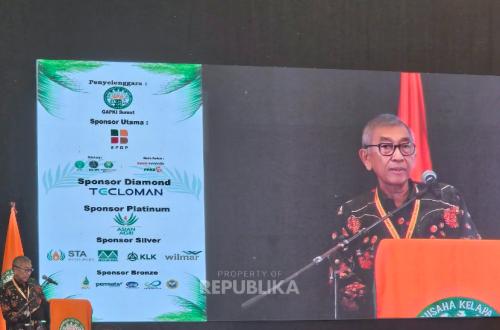
MEDAN — The Indonesian Palm Oil Stakeholders Forum (IPOS Forum) 2026 produced six recommendations to strengthen governance and the competitiveness of the national palm oil industry. They cover resolving land issues, improving the effectiveness of the Smallholder Oil Palm Replanting (PSR) programme, providing legal certainty and improving export policy. These strategic measures are expected to boost productivity across the plantation sector.
The forum, held in Medan, North Sumatra, on 29–30 October 2026, was themed “Where Is the Transformation of the National Palm Oil Industry Heading?” It was supported by the Plantation Fund Management Agency (BPDP) and attended by more than 500 participants from among farmers, companies, government, academics and practitioners.
Timbas Prasad Ginting, chairman of the North Sumatra chapter of the Indonesian Palm Oil Association (GAPKI), said the industry’s transformation faced several challenges, including the mandatory B50 biodiesel policy, which came into effect on 1 July 2026, as well as issues in land governance and plantation replanting. These challenges require an integrated response from all stakeholders.
“The sustainability of the palm oil industry must be safeguarded because it has a major impact on the interests of the people and the national economy. The government also has a vital role in helping resolve various problems to ensure the palm oil industry remains sustainable and competitive in Indonesia,” Timbas said at the opening of the forum on Thursday (29 October 2026).
He said the forum had produced recommendations to be submitted to the government as input for improving the governance of the national palm oil industry. They were drawn up following in-depth discussions among experts and industry players.
One issue discussed was accelerating PSR to increase smallholder plantation productivity. Heru Tri Widarto, acting director-general of plantations at the Ministry of Agriculture, said the programme was not merely about replacing old or unproductive oil palms, but also offered an opportunity to improve the foundations of smallholder plantations. The government is committed to overseeing its implementation to ensure it runs effectively.
“PSR is an opportunity to rebuild the foundations of smallholder plantations so they can be more productive, efficient and sustainable,” Heru said.
According to BPDP data, from 2016 to 30 September 2026 the national PSR programme had covered 438,217 hectares and involved 196,846 growers. A total of Rp12.48 trillion in assistance had been disbursed.
In North Sumatra, PSR implementation from 2022 to the third quarter of 2026 covered 19,902.13 hectares and involved 9,048 growers. Total funding disbursed in the province reached Rp553.76 billion.
Normansyah Hidayat Syahruddin, BPDP’s director of upstream-sector fund disbursement, said PSR involved central and regional governments, cooperatives, private companies and state-owned enterprises. Cooperation among stakeholders was key to the programme’s long-term success.
“The Smallholder Oil Palm Replanting [PSR] programme is a strategic government programme intended to increase the productivity and sustainability of smallholder oil palm plantations, while improving growers’ welfare and ensuring the sustainability of the national palm oil industry,” Normansyah said.
Alfi Syahriza, an expert adviser to the Governor of North Sumatra, said accelerating PSR required comprehensive support, from simplifying procedures and providing assistance to farmers to access to financing and the supply of high-quality seedlings. The regional government was ready to facilitate these needs on the ground.
The six recommendations issued by IPOS Forum 2026 include resolving legal uncertainty and overlaps between land and forest-area policies; assessing PSR’s success based on tangible results on plantations rather than solely on the disbursement of funds; and bringing land into order without creating new uncertainty. The proposals are intended to establish a predictable business climate.
The other recommendations include implementing regulations that provide legal certainty, improving the one-stop export policy so it does not create additional trade barriers, and making productivity gains the top priority in transforming the palm oil industry. The government is expected to follow up the key points promptly.
Heru said he hoped the recommendations would lead to concrete, measurable steps to strengthen palm oil industry governance through regulation, technology and farmer empowerment. Strong collaboration, he said, could help move Indonesia’s palm oil industry forward.
Source: jawawa.id (https://jawawa.id/newsitem/smallholder-replanting-reaches-438-000-hectares-as-palm-oil-industry-calls-for-acceleration-1793638290)
Originally published by Republika (https://ekonomi.republika.co.id/berita/tnvnsn370/realisasi-psr-capai-438-ribu-hektare-industri-sawit-dorong-percepatan-peremajaan), translated from Indonesian