
Small Plane Crashes into Beijing Skyscraper, but China Remains Silent
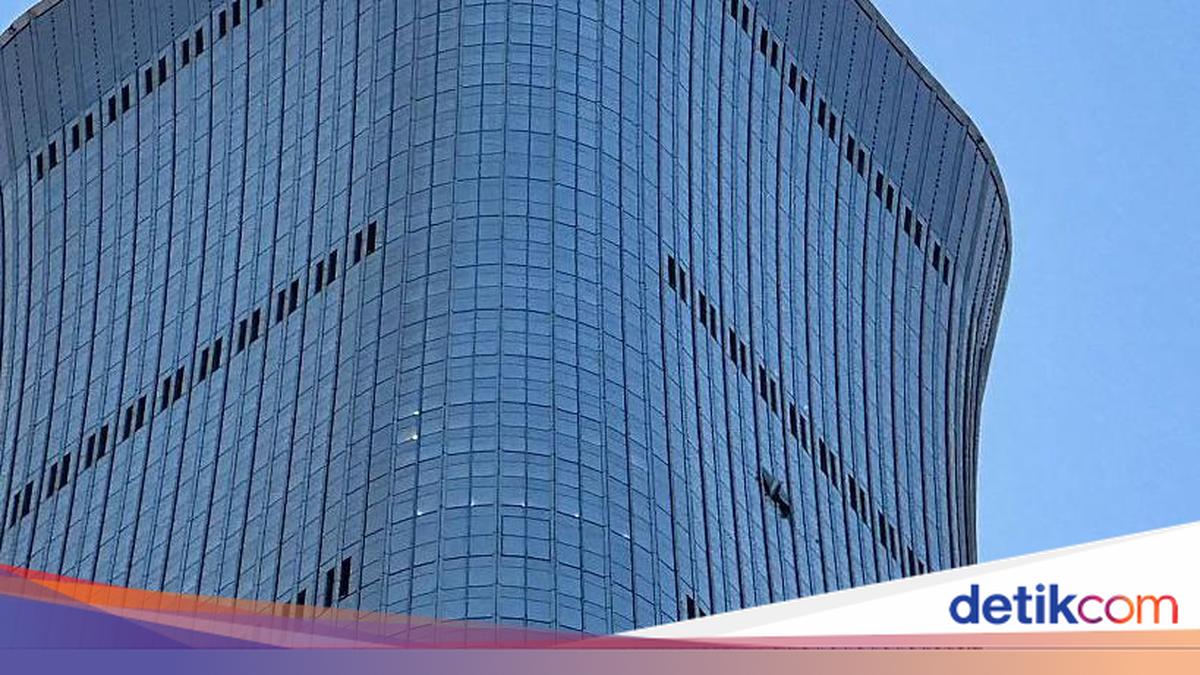
It has been four days since a small aircraft struck the tallest skyscraper in Beijing, killing the pilot—the sole occupant of the aircraft—and injuring 13 others. However, the reasons and circumstances behind the incident remain unclear.
A brief 60-word report containing basic facts published by the state-owned media, Beijing Daily, is the only official statement released by China regarding the accident so far. The crash occurred just a few kilometres from Zhongnanhai, the headquarters of the Communist Party.
The collision on Friday (26/06) created a hole in the side of the 109-storey CITIC Tower, which has since been boarded up. Dramatic footage of the incident has been removed from the internet.
At least three airlines told the BBC that they had been instructed to suspend light aircraft operations but refused to elaborate further, claiming they were ordered not to discuss the matter. “We were told not to talk about it. Please ask elsewhere,” said a woman at a flight training institution in Beijing.
Another company in Chengdu declined to name the authority that issued the instructions and promptly ended the call.
Amidst the information vacuum, speculation is rising as to how the aircraft could penetrate a city with the strictest airspace controls in the world. China is no stranger to censorship; criticism of the party, national leaders, or the government is rare, and any discussion that appears critical or touches on sensitive issues quickly disappears.
This time, however, the censorship has exceeded clear targets. Photos and memes of the skyscraper, unrelated to Friday’s incident, have also been deleted from Chinese social media platforms. “This is a very unusual incident,” one observer noted, adding that it calls into question the government’s competence and threatens the “party’s important narrative.”
The 109-storey CITIC Tower, shaped like a Chinese wine vessel, has long been a local landmark. Many view it as a symbol of good fortune, with young people often visiting or sharing photos of the building online to seek luck for exams or employment.
The aircraft involved was an Aurora SA60L single-engine, two-seat model produced by the Chinese company Sunward Aircraft, according to flight tracking service Flightradar24. With a length of 6.9 metres and a wingspan of 8.6 metres, the aircraft was designed for sightseeing, aerial photography, and recreational flying.
Outside China, Friday’s incident has reminded some of the 9/11 attacks in the United States. “This is exactly like the news alert I received when a plane hit the first tower on 9/11,” wrote one user on Reddit.
Beijing enforces a permanent no-fly zone covering approximately 100 square kilometres over the core government area, which includes Tiananmen Square and Zhongnanhai—the heavily guarded complex where the nation’s top leaders reside and work. China analyst Bill Bishop described the incident as a “major security breach.” “Just a few more seconds of flight and [the crash] could have happened at Zhongnanhai… [It would be] a massive shock to Beijing’s security system.”
Beijing has also recently tightened drone regulations due to security concerns, requiring drones to be registered before entering the capital. “The fact that a small aircraft, much larger than most drones, was able to fly across most of the city and approach Zhongnanhai is politically embarrassing and a major security oversight,” said Raymond Kuo, vice president of research at the Chicago Council of Global Affairs. While it could be pilot error or mechanical failure, he added that it “could also have been intentional.”
Some analysts suggest the incident highlights serious lapses in air defence. “An aircraft hitting the CITIC Tower means a drone or missile could also do so. This is somewhat embarrassing for the security services responsible for Beijing.”