
Small Nuclear Reactors as an Energy Solution for Indonesia's Remote Regions
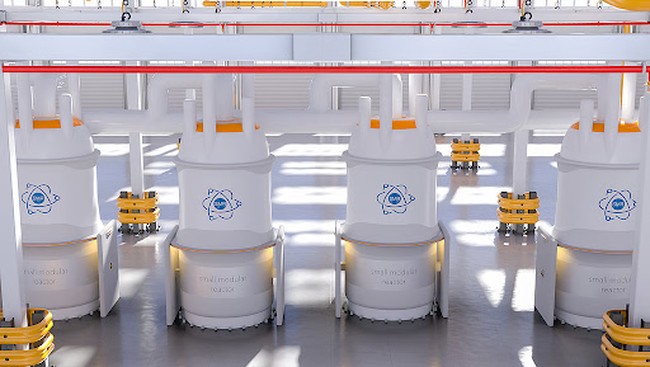
Indonesia is an archipelagic nation with thousands of islands stretching from Sabang to Merauke, with many remote areas untouched by the electricity grid. To date, electricity needs in these regions have relied on diesel generators, which are expensive, require complex maintenance, and produce dirty emissions. Another option is beginning to attract global attention: small nuclear reactors, or small modular reactors (SMRs).
SMRs are fourth-generation nuclear reactors with a maximum capacity of 300 megawatts electric (MWe) per unit, far smaller than conventional reactors which can reach 1,000 MWe or more. They are called modular because the reactor components are manufactured in a factory and then shipped to the site for assembly. This approach differs from conventional reactors built entirely on-site. With the modular method, component quality is more controlled, construction time is shorter, and costs are more predictable. SMRs also have the potential to play a significant role in the clean energy transition and support the achievement of the Sustainable Development Goals (SDGs).
For remote areas without electricity, an SMR with a capacity of 10-50 MWe is sufficient. There is no need to build a giant reactor costing trillions of rupiah. SMRs also rarely require refuelling. Conventional reactors typically refuel every 12-18 months, whereas SMRs can operate for 3 to 7 years without refuelling. Some designs are even capable of operating for up to 30 years without refuelling. This is a major advantage for remote regions, where the logistics of delivering fuel to the interior or remote islands are extremely difficult and expensive. With an SMR, fuel supply matters become much simpler, and remote areas can have their own independent power source.
One of the biggest concerns about nuclear power is safety. SMRs are designed with passive safety principles, meaning that even without human intervention or external power supply, the reactor will shut itself down automatically if a disturbance occurs. This differs from older generation reactors that rely heavily on active cooling systems. Safety from nuclear accidents is guaranteed through the application of a safeguarding system designed and implemented continuously from the initial design stage. Furthermore, the management of radioactive waste and spent fuel is a crucial aspect of SMR design.
The world has proven that SMRs are no longer just a concept. The first SMR began commercial operation in May 2020 in Russia with a capacity of 35 MWe. China has also operated several units. Meanwhile, the United States, South Korea, and Argentina are still in the construction and licensing stages. Currently, more than 80 SMR designs are being developed worldwide.
Many are unaware that Indonesia already has experience with nuclear technology. The use of nuclear energy has two main types: power (electricity generation) and radiation (various industrial and medical applications). Three non-power reactors—Kartini, Triga, and GA Siwabessy—have been operating for years for radiation utilisation in health, food, agriculture, and the environment. This means that human resources and basic knowledge of nuclear technology already exist, although what is missing is a nuclear power plant. In other words, Indonesia is not starting from scratch.
The biggest challenge is Indonesia’s geographical location on the Pacific Ring of Fire, a belt of active volcanoes and earthquakes, meaning tremors occur frequently. The immediate question is whether it is safe to build a nuclear reactor in an earthquake-prone region. Modern technology answers this question, as smaller, modular SMRs are easier to design with seismic damping systems, and because of their small size, geologically safe locations are easier to find. Meanwhile, BRIN, BATAN, and BAPETEN continue to study these safety aspects.
According to the International Atomic Energy Agency (IAEA), building an SMR in a developing country like Indonesia takes around 7 to 10 years, with detailed stages: planning and readiness assessment (2-3 years), modular design and production (2-3 years), construction and installation (2-3 years), and operational testing (1-2 years). The good news is that with existing experience in the non-power sector (research reactors), this process could be accelerated to around 5 years.
What is needed now is an in-depth study involving all parties: the government, academia, industry, and the public. In addition, honest and transparent public education about the potential and risks of small nuclear reactors is essential, because fear is often born from ignorance. Small nuclear reactors are already a reality. Russia and China are operating them, while the US, South Korea, and Argentina are in the construction phase. Indonesia need not hesitate, as we already have basic experience through three non-power reactors and potential human resources. The question is, are we ready to start?