
SLV Programme Builds a Sustainable Village Model from Trigona Honey
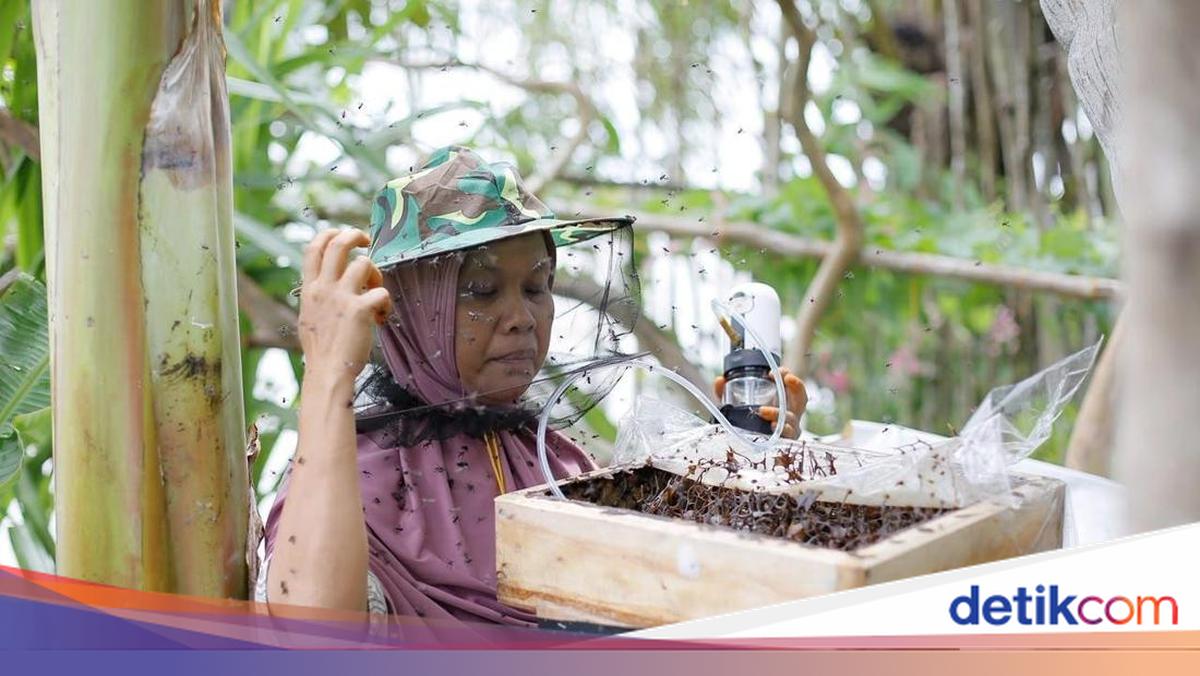
By placing the community at the centre of change that simultaneously balances economic and ecological aspects, the Sustainable Living Village (SLV) Programme has emerged as a new model for sustainable village development. SLV attempts to answer the classic challenge in the oil palm sector where improving farmers’ welfare does not always mean expanding land, which potentially damages the environment. SLV is part of the supply chain sustainability commitment run by Apical Group through the NDPE (No Deforestation, No Peat, No Exploitation) principles. This approach not only focuses on downstream production but also ensures sustainable practices occur from the upstream, not least the independent smallholders who are part of the supply ecosystem. “Apical is in the vegetable oil processing industry, where the supply chain is a crucial operational element whose sustainability aspects need to be maintained,” said Apical Corporate Social Responsibility Manager Sugiantoro. According to Sugiantoro, the SLV model is also developed with a commodity approach tailored to the character of each region. Besides Aceh Singkil, a similar programme is also run in East Kutai, East Kalimantan, through the development of cocoa as an alternative livelihood based on local potential. In Aceh Singkil, SLV is realised through trigona honey cultivation as an alternative livelihood for communities around the Gunung Leuser National Park conservation area, specifically in the Rawa Singkil Wildlife Reserve. “This honey production does not require opening new land; the cultivation process is carried out by utilising existing garden land. Trigona bees are also safe because they do not sting, and like bees in general, Trigona bees also help pollinate surrounding plants,” Sugiantoro explained. Experiencing improved income through this cultivation, the community appeared to begin reducing dependence on oil palm yields and started abandoning the old habit of hunting wild honey. In the last six months, six assisted groups recorded producing around 279 litres of trigona honey with a sales value of more than Rp 80 million, distributed to 61 beneficiaries according to each member’s production output. This approach also encourages more organised economic practices while reducing pressure on forest areas. “Honey cultivation was chosen because the community is already accustomed to searching for honey, which has been done inside the forest. We introduced Trigona Honey so they can cultivate it around their homes without having to enter the forest,” Sugiantoro disclosed. The SLV Programme is run through multi-party collaboration between Apical Group, the IDH Sustainable Trade Initiative (IDH), the Yayasan Ekosistem Lestari (YEL), the Leuser Conservation Forum (FKL), and the Government of Aceh Singkil Regency. This multi-party collaboration forms the foundation for better and more inclusive landscape governance, particularly for independent smallholders, through training in sustainable oil palm plantation practices, strengthening farmer groups, and assistance to encourage land legality and the issuance of Cultivation Registration Certificates (S-TDB). To date, around 1,000 farmers have received Good Agricultural Practices training, and more than 800 STDB have been issued for independent smallholders. The programme also encourages farmers towards sustainability certification so the supply chain meets global market standards. IDH Programme Manager Anne Fadilla Rachmi explained that IDH acts not only as a liaison between stakeholders but also as a partner ensuring the programme design runs strategically, measurably, and is oriented towards long-term impact. “At the programme level, we help Apical design and provide financing support so that SLV can be run in a collaborative spirit. Landscape improvement cannot be done per project but must be seen as holistic governance,” said Anne. “IDH encourages all parties to achieve that goal together,” she added. In line with this approach, SLV is part of the National Initiatives for Sustainable & Climate Smart Oil Palm Smallholders (NISCOPS) programme framework supported by the Dutch and UK governments, whose implementation is also carried out in various other countries such as Malaysia, India, Nigeria, and Colombia. The SLV Programme in Aceh Singkil involves 6 groups from 6 villages consisting of 61 farmers. One of them is Khaidir (30), a resident of Teluk Rumbia Village who is also the Chairman of the Madu Rumbia Group in Singkil District. He joined the trigona honey cultivation programme in 2023. Despite initially feeling doubtful, Khaidir diligently delved into honey cultivation. To date, his group has managed 267 beehives with a production of about 47 litres of honey, providing an additional income of around Rp 350,000 to Rp 500,000 per month for each group member. From these proceeds, Khaidir used them as supplementary income for his children’s school fees and to repair his house gradually. Khaidir also felt a special pride when getting the opportunity to meet many people to market his products. “Thank God, I can also send my children to school, I can also build my house little by little. Being able to travel to a place is a matter of pride. Being able to meet important people, officials, to market the honey,” he said. Besides technical skills, Khaidir and his group were also equipped with learning trigona honey cultivation techniques and marketing strategies through a comparative study programme to Lake Sentarum, West Kalimantan. The involvement of various parties in the SLV Programme is based on a shared vision between strengthening the community’s economy and conservation efforts in Aceh Singkil, which is one of the important habitats for the Sumatran orangutan. “The reason YEL was willing to become an SLV implementing partner in Singkil is the shared vision of protecting the ecosystem.”