
Sluggish Export Performance Needs Government Attention, Economist Notes
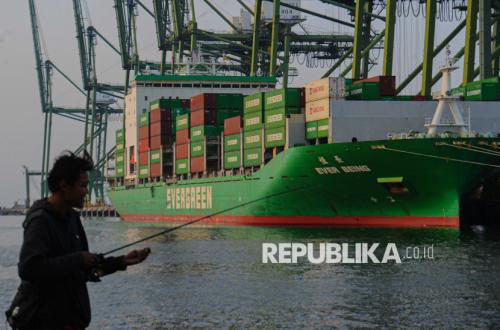
Economist Ryan Kiryanto has highlighted the contraction in Indonesia’s exports and imports in Statistics Indonesia’s (BPS) release on second-quarter 2026 economic growth. Although the economy generally grew positively at 5.29 percent, Ryan stressed that the government needs to pay more attention to export and import performance.
“The realisation of Indonesia’s economic growth or GDP of 5.29 percent (yoy), 5.34 percent (ctc), and 3.73 percent (qtq) is a good performance, especially amid international turmoil and lingering geopolitical risks. Household consumption, government spending, and direct investment were able to be the main pillars of growth. However, exports and imports, which grew negatively or experienced contraction, need to be a concern for the government,” Ryan said in a statement on Wednesday (5/8/2026).
He stated that if the trade balance in the following months remains depressed due to geopolitical risks, the US tariff hike policy of 10 percent, as well as weakening global demand and commodity prices such as coal, nickel, and bauxite, the government must promote alternative exports from the manufacturing sector.
“While maintaining, or even increasing, household consumption by preserving the purchasing power of the middle and lower classes, government spending through a more efficient, effective, and targeted Free Nutritious Meals (MBG) programme and social assistance also need to be continuously strengthened. Likewise, direct investment, both Foreign Direct Investment (FDI) and Domestic Direct Investment (DDI),” he explained.
Ryan said that in parallel with these efforts, the government also needs to improve competitiveness through bureaucratic reform to be more efficient, effective, and truly pro-business.
“Finally, regulatory or policy certainty in various fields must also be pursued to restore, recover, and strengthen public trust, especially among economic actors, markets, and investors,” he said.
“The hope, of course, is that the economic growth target of around 5.3-5.6 percent in 2026 can be achieved as well as become valuable capital ahead of 2027,” he concluded.
Statistics Indonesia (BPS) recorded that the Indonesian economy, measured by Gross Domestic Product (GDP), grew 5.29 percent (yoy) in the second quarter of 2026 compared to the second quarter of 2025. GDP at constant prices in the second quarter of 2026 was recorded at Rp 3,576.2 trillion, while GDP at current prices reached Rp 6,552.1 trillion.
From the production side, economic growth in the second quarter of 2026 was mainly supported by the processing industry, trade, and information and communication. Growth in these three sectors was driven by increased production activity to meet domestic demand.
The sector recording the highest growth was electricity and gas procurement, at 10.81 percent (yoy). This growth was driven by increased electricity sales across almost all customer segments, especially households, businesses, and industry.
Meanwhile, from the expenditure side, economic growth was mainly supported by household consumption and investment. This was driven by increased public consumption amid holiday and religious festive momentum, as well as increased investment.
Household consumption was the largest source of growth with a contribution of 2.67 percent. Meanwhile, government consumption contributed 1.07 percent and gross fixed capital formation (GFCF) or investment contributed 2.06 percent. The net contribution of exports and imports to economic growth was recorded at minus 0.78 percent.