
Slowly Rebounding, Has the JCI Touched Bottom?
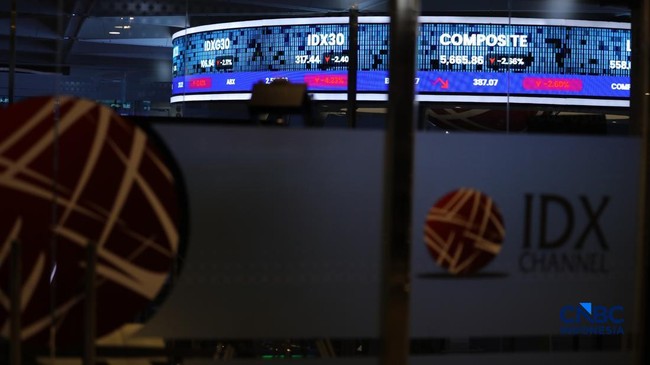
The Jakarta Composite Index (JCI) has begun to rebound from its lower levels, but the recovery is not yet strong enough to be considered a genuine revival. The rise from the June low indicates that selling pressure is starting to ease, yet the market has not received major confirmation from more critical factors: foreign flow, the rupiah, the BI Rate, the trade balance, and technical momentum. The main problem is that foreign investors have not yet returned. On a year-to-date basis, foreign flow in the stock market is still a net sell of approximately Rp74.42 trillion. This figure is substantial and signals that global investors are not yet fully comfortable taking risks in Indonesia. Therefore, even though valuations are cheap, cheapness alone is not enough to make the JCI rise sustainably. The current JCI rebound appears more as a technical rebound and bargain hunting, rather than the start of a solid new uptrend. In a healthier recovery phase, foreign selling pressure typically begins to diminish before reversing into consistent net buying of large-cap stocks such as banking, telecommunications, consumer goods, and energy. As long as this pattern is not visible, the JCI’s rise remains vulnerable to stalling. Concerns are also mounting from the trade balance. In May 2026, Indonesia recorded a trade deficit of US$1.61 billion. This is the first deficit since April 2020, following 72 consecutive months of surplus. The primary cause came from oil and gas, while exports fell 5.73% year-on-year and imports rose 22.16% year-on-year. This data is important because, over the past several years, the trade surplus has been one of the main buffers for the rupiah. If the external buffer weakens, pressure on the rupiah could increase. For foreign investors, a weakening rupiah can erode returns from Indonesian stocks and bonds. Therefore, the trade deficit is not just an export-import figure, but a signal that the external foundation is being tested. From the monetary side, Bank Indonesia likely still needs to maintain a defensive stance. With the rupiah not yet fully stable and foreign outflows still large, room for a near-term BI Rate cut appears limited. High interest rates are indeed necessary to maintain stability, but the effect on the stock market is not always comfortable. A high BI Rate tightens liquidity, increases the cost of funds, and makes rapid stock valuation re-rating difficult. For the banking sector, this condition has two sides. Major banks still have strong fundamentals, relatively solid profitability, and valuations that are starting to look cheap. However, if the real economy weakens, the market will continue to monitor credit growth, asset quality, and potential increases in credit risk. Beyond headline macro figures, pressure on the real economy is also beginning to be felt. Layoff issues in labour-intensive sectors, manufacturing, textiles, technology, and consumption are signals that purchasing power is not yet fully robust. If layoffs continue, the impact could spread to household consumption, retail sales, consumer credit, and bank credit quality. This is the reason the market cannot yet be too aggressive. Investors are not only looking at whether the economy is still growing, but also at the quality of that growth. If growth is largely supported by government spending while the private sector and consumption weaken, the market tends to continue demanding a valuation discount. From a valuation perspective, the JCI is actually starting to look attractive. Many blue-chip stocks and fundamentally strong issuers have undergone deep corrections. Some major banking stocks are even in valuation areas far below their historical averages, approaching or falling below -2 standard deviations. This makes the risk-reward profile more attractive for long-term investors. Previously expensive prime stocks are now returning to more rational levels. For a long-term horizon, areas like this usually start to be worth monitoring, especially for gradual accumulation in quality stocks. However, the stock market does not move solely because valuations are cheap. Cheap valuations can remain cheap for a long time if the macro environment has not improved. For cheap prices to turn into an uptrend, the market needs a catalyst. That catalyst could come from improving foreign flow, a more stable rupiah, a BI Rate that begins to have room to fall, a trade balance returning to surplus, or an S&P decision that does not add pressure. Technically, the key level for the JCI is around 6,450. As long as the JCI is unable to print a weekly close above 6,450 with a strong candle, the chance of a further rise is not confirmed. This area is the differentiator between an ordinary rebound and a more serious trend change. Until it breaks through, the most plausible scenario is the JCI moving sideways for some time. Important support lies in the 5,650 area, then 5,300-5,400. If this support holds, the JCI can build a base. However, if it is breached, the risk of retesting the low remains open. Thus, the JCI is currently interesting, but not yet comfortable. Cheap valuations and discounted blue-chip stocks make it an opportunity for long-term investors. However, from the perspective of foreign flow, the trade balance, the BI Rate, the rupiah, and the real economy, there is no strong confirmation yet that the pressure is over. A more rational strategy is gradual accumulation, not chasing euphoria.