
Slower Smelter Activity Impacts Regional Economies in Mining Areas
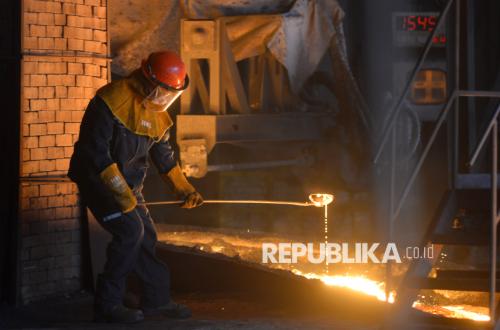
REPUBLIKA.CO.ID, JAKARTA – The slowdown in the nickel industry is starting to impact the economic pulse in several mining areas in Indonesia. Local businesses and communities around mining areas are feeling the decline in economic activity as smelter and mining operations slow down.
The founder of Poros Musyawarah Masyarakat Blok Lapaopao (PORMMAL), Ihwan Kadir, believes that the ongoing dynamics of nickel downstreaming are having economic consequences at the regional level. He says that changes in production policies and global market pressures are beginning to affect industrial activity on the ground.
According to Ihwan, the slowdown in the nickel industry is not only affecting companies but is also directly impacting the economies of communities around mining areas. Trade and transportation services are reportedly starting to decline.
“Small traders are starting to complain about declining sales, local contractors are starting to lose work, truck drivers are starting to worry that their vehicles will stop operating, small shops are starting to become deserted, and people are starting to ask: if the industry slows down, what will we eat?” he said in a statement on Friday (May 15, 2026).
He revealed that in North Morowali, the slowdown in smelter activity is starting to have a real impact on the local economy. Several kiosks are reportedly facing the threat of closure due to the stagnation of mining contractor activities and increased job insecurity.
“In Kolaka, Southeast Sulawesi, hundreds of indigenous people have even taken to the streets to demand that mining activities resume because the community’s economy is also paralyzed when operations stop,” he said.
The pressure on the nickel industry is also starting to be felt in other regions of Sulawesi. Fluctuations in commodity prices and weakening global demand are seen as increasing the risk of layoffs in the mining and processing sectors. “Now, the government is talking about cutting national production to maintain global prices,” he added.
Ihwan believes that production regulation policies need to consider the socio-economic impact on mining areas. According to him, changes in the work plan and budget (RKAB) are not just administrative figures but are directly related to the sustainability of the local community’s economy.
“But in the mining area, that means motorcycle installments are at risk of being defaulted, children can drop out of school, restaurants lose customers, and the village economy can slowly collapse,” he said.
In addition to the community, domestic investment companies (PMDN) are also considered to be facing greater pressure amid the slowdown in the industry. Ihwan cited Ceria Group through the Merah Putih Smelter project in Kolaka as a national company that is trying to maintain operations in the face of challenging market conditions.
According to him, foreign companies generally have global capital support, access to international financing, and cross-country supply chain networks that give them greater resilience to industrial pressures.
In contrast, national companies are considered to need policy certainty and industrial ecosystem support in order to survive and maintain jobs in mining areas. “True nationalism is not just about banning raw material exports. True nationalism is about ensuring that our own people do not fall first in their own country,” said Ihwan.
He reminded the importance of maintaining a balance between the national downstreaming strategy and the economic stability of mining communities so that the benefits of the industry can be felt sustainably.