
Slow Project Execution Remains a Challenge for Indonesia's Upstream Oil and Gas Industry
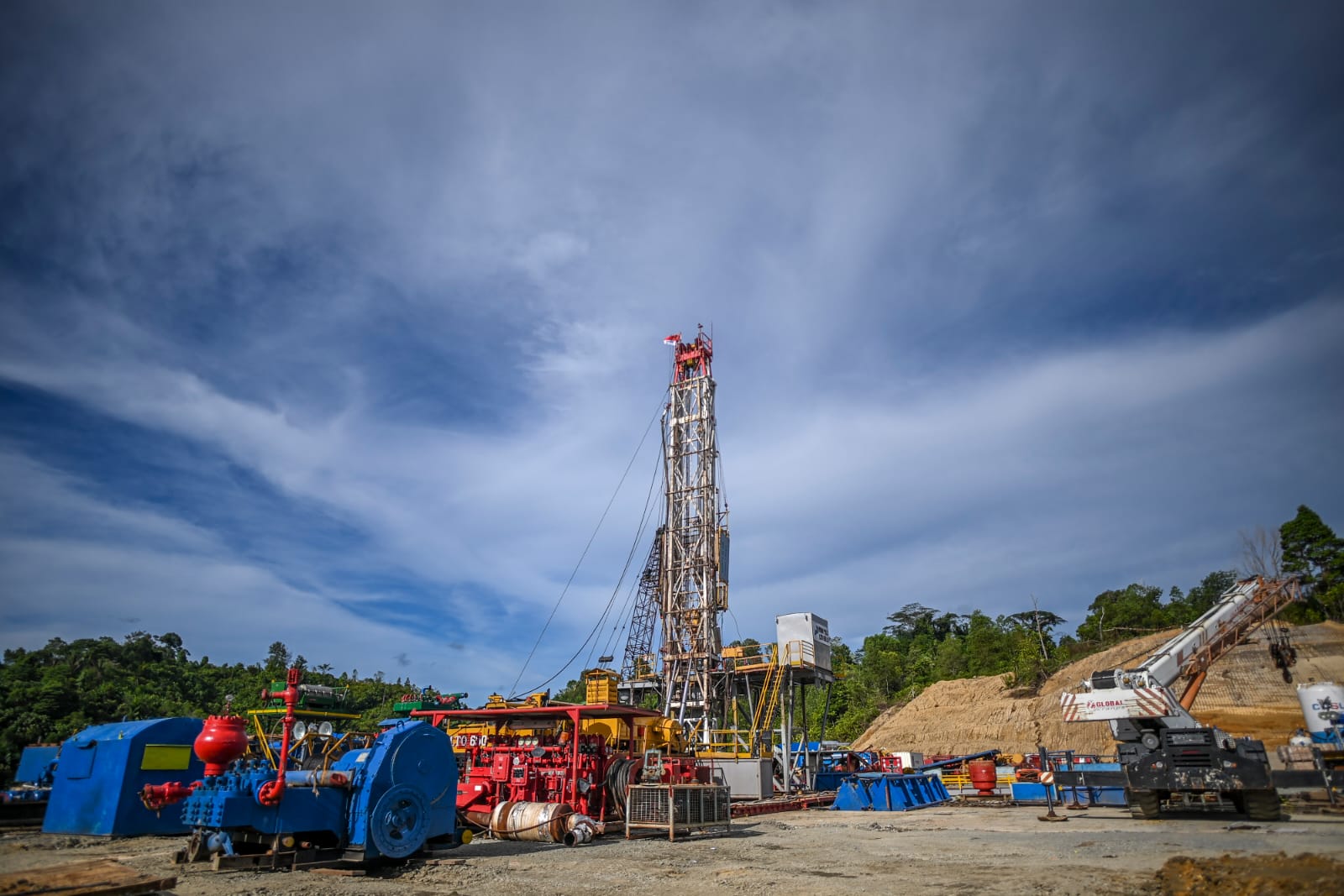
Cross-sector collaboration and solid partnerships between regulators and industry players form the foundation for accelerating investment and project execution in Indonesia’s upstream oil and gas sector.
Djoko Siswanto, Head of the Special Work Unit for Upstream Oil and Gas Activities (SKK Migas), affirmed the government’s full commitment to creating a safe, comfortable, and flexible investment climate. One strategy being initiated is to align frequencies across ministries, which is widely recognised as a major challenge for upstream oil and gas projects.
“I believe Indonesia is increasingly flexible in fiscal schemes, whether cost recovery or other arrangements. The government can provide a certain portion of revenue sharing to contractors to keep projects economically viable,” Djoko said during the Plenary Session: Path to Energy Resilience & The Role of Partnership at IPA Convex 2026 at ICE SBD on Wednesday (20 May 2026).
This comfort and flexibility relates to the project completion timeline because when projects drag on, the project’s economics deteriorate and ultimately the project cannot be executed because it does not meet economic viability. “Once an investment decision is made, it must be implemented immediately. If there are problems, let us sit together and resolve them one by one. The key is accelerating projects. I believe there is no problem that cannot be solved,” Djoko explained.
The Energy and Mineral Resources Ministry recognises that improving investment appetite requires continuous improvement in business ease, with the greatest challenge facing industry players on the ground being bureaucratic coordination, particularly regarding licensing and land use.
Laode Sulaeman, Director General of Oil and Gas at the Energy and Mineral Resources Ministry, affirmed that the government consistently coordinates across ministries to untangle the bureaucratic complexities often complained about by business players. “Regulations in the oil and gas sector are sufficiently clear, so legal certainty is maintained. We continuously align perceptions with other ministries, even working late into the night to ensure national energy security remains safe,” Laode said.
Awang Lazuardi, President Director of PT Pertamina Upstream Energy (PHE), warned of the fatal consequences if this cross-sector coordination is hampered. According to him, project execution delays directly reduce economic value, trigger a decline in oil production, increase reliance on imports, and ultimately burden society. For this reason, we must work together to accelerate the entire licensing and administrative process.
“In my view, what is most important is building a shared understanding that energy resilience is not just an oil and gas industry issue, but an issue for the entire nation,” Awang stressed.
The importance of strategic partnerships is also acknowledged by international and domestic industry players within the Indonesian Petroleum Association (IPA).
Kathy Wu, bp Regional President Asia Pacific, noted that competition for capital allocation at the global level is fierce, not only at bp but she is confident it is also the case at other companies. Strategic partnerships with the government certainly can provide confidence to investors to deploy investment.
“Projects in Indonesia must be truly competitive, both in terms of return on investment rates, risks, certainty of implementation, and certainty of results calculated on paper that can truly be realised,” Kathy explained.
Wade Floyd, President of ExxonMobil Indonesia, exemplified how a long-term partnership spanning 128 years in Indonesia has yielded clear results, including through the Cepu Field, which now supports approximately 30 per cent of national oil production. “Our long history was built on the basis of partnership and collaboration. In my view, that is one of the reasons for Indonesia’s success today,” Wade said.
Meanwhile, Ronald Gunawan, Director and Chief Operating Officer of Medco, revealed that Indonesia actually has everything from good returns on investment, business stability, and a sufficiently robust fiscal scheme. Through new regulations, contractors can choose a gross split or cost recovery scheme. So Indonesia already has all the important elements.
“If execution could be faster, I am confident Indonesia would become a top-tier investment destination,” Ronald said.
To be able to execute projects properly, we must work together and collaborate, not only between companies but also with technology providers and supporting service providers. “With that collaboration, I am confident Indonesia can become much better,” Ronald stressed.