
Sleman School's Unique Phone Locker Policy Wins Praise for Boosting Student Interaction
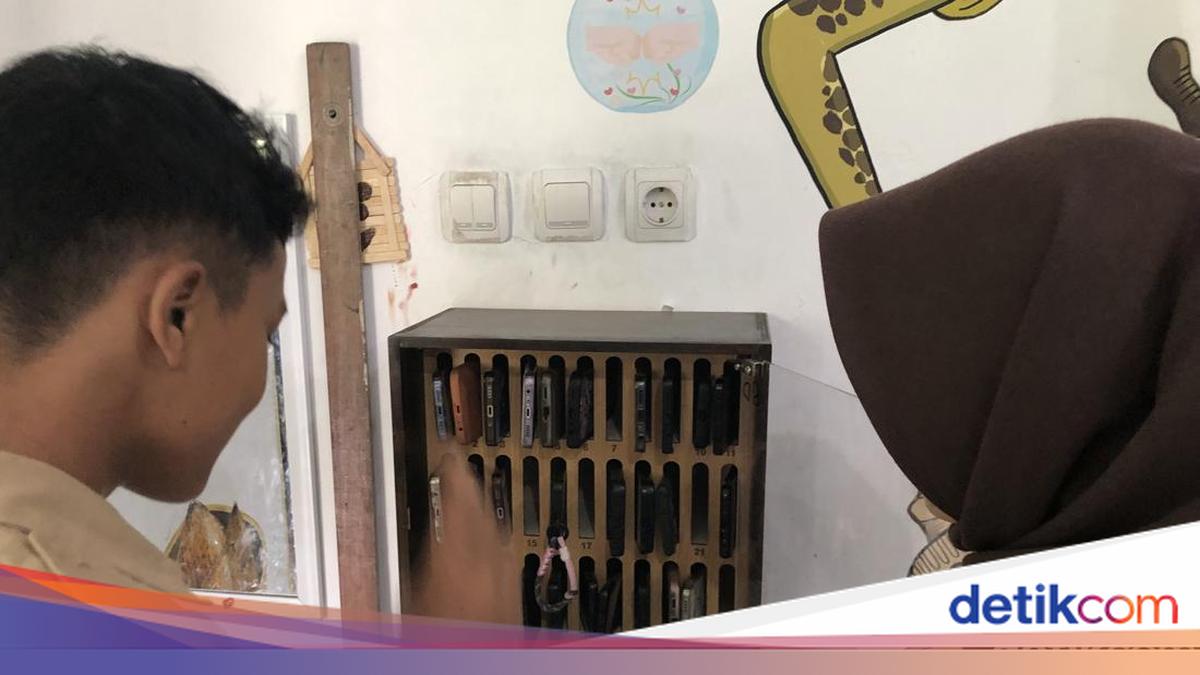
A unique innovation by SMP Negeri 1 Turi in Sleman regency to enforce a ban on students using mobile phones during lessons has drawn praise from netizens. The school created a phone locker system with numbers corresponding to student absences, making it impossible to cheat the rule.
The locker itself is quite unique. It consists of dozens of slots, each the size of a mobile phone. This method ensures the students’ phones are stored in an orderly manner. Naturally, the locker is equipped with a cover and a lock.
The school uploaded a video of the locker to its Instagram account. Within a month, the video had been viewed by 5 million users, with the majority of comments praising the school’s policy and the unique design of the locker.
The Head of SMP Negeri 1 Turi, Hospita Henny Koerniati, explained that the idea for the phone locker innovation stemmed from her concern at seeing students engrossed in their gadgets during break times. According to her, the students seemed anti-social, with no interaction amongst themselves.
“I observed that during every break, the children were playing on their phones, not talking or joking with their friends. They even ignored me when I walked past,” Henny said when met at SMP N 1 Turi on Thursday (23/7/2026).
Furthermore, Henny continued, many students were busy playing with their gadgets during lessons without paying attention to the teacher’s explanations.
“At one point, there were some students playing a game together, several of them, what was it called, ‘mabar’ I think,” Henny explained.
The school subsequently introduced a policy of collecting students’ phones in a box to be stored in the teachers’ room. However, this method drew many complaints from students as their phones were often damaged.
Eventually, the idea of making a phone locker emerged. The locker is installed in front of the classroom with a cover made of transparent material. Inside the locker, there are slots that fit one phone each. Every slot is numbered according to the student’s attendance number.
“There is one in every class, 12 in total, for four classes of Year VII, four of Year VIII, and four of Year IX. The lockers were custom-ordered from a craftsman outside the Special Region of Yogyakarta,” Henny revealed.
“In the morning before lessons start, students put their phones into the locker, then it is locked, and the key is handed over to the teachers’ room. Since there are numbers on it, it is clear who has not handed in their phone,” she added.
Nevertheless, Henny said students can still retrieve and use their phones for specific reasons. This includes when a teacher requires the use of phones for learning.
“There is no specific subject for it; if a teacher has material that requires using a phone, please do, or during a test where the questions require a phone. Or when children need to contact their parents, they can ask the teacher,” Henny stated.
“They are also not permitted to use them during break time, unless there is an assignment from a teacher. So they play with their friends, socialise, that is the goal. By now, there is a synergy between teachers and students that phones are only used for important matters,” she added.
This policy has apparently had a significant impact on the students. According to Henny, the students are now able to concentrate better during lessons. They have also become more confident in class as they no longer rely on their phones.
Moreover, the atmosphere during break time has come alive again. Without holding their phones, students now spend their break time playing, socialising, and even visiting the library.
“The impact has been tremendous. They joke around with their friends, talk to each other, and then visit other classes, Year 8, Year 9, like that. So they get to know each other. Before, they were just comfortable in their own corners, and they wouldn’t even greet me when I walked past,” she concluded.