
Sleman Family Considers Relocation After House Catches Fire 97 Times
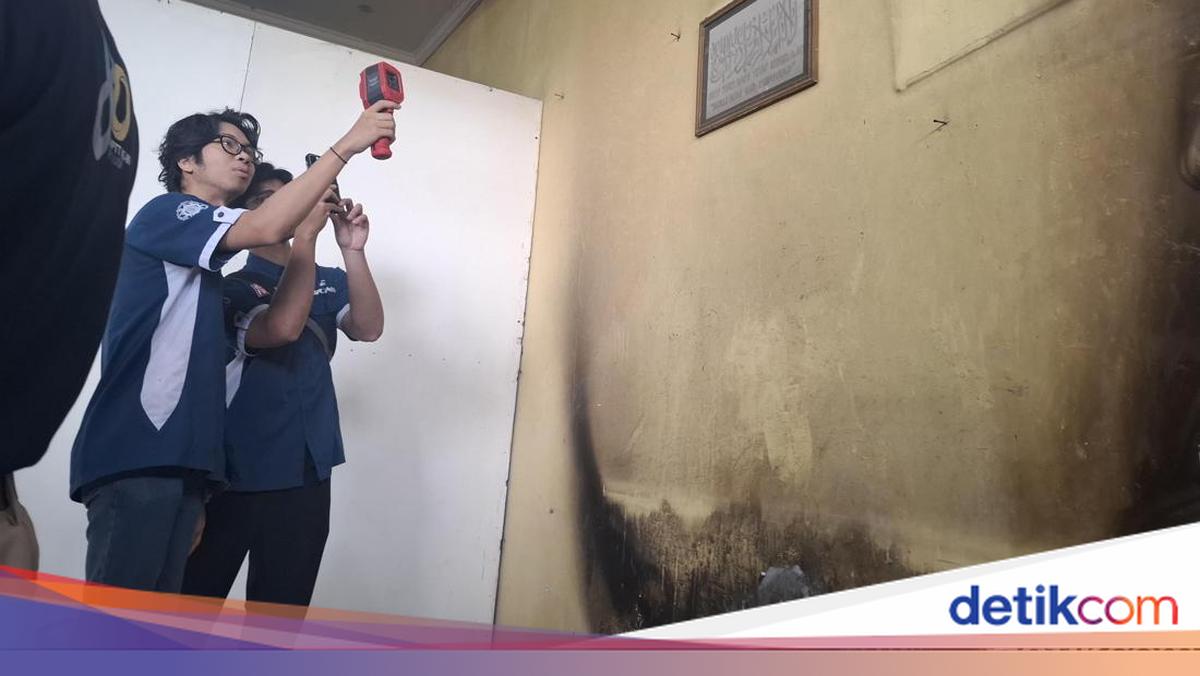
The threat of fire continues to haunt the home of Mutfia, known as Fia, a resident of Kasuran Mriyan X, Seyegan, Sleman. She is now planning to relocate after her house caught fire nearly 100 times. “(As of now) there have been 97 incidents. (The value of losses) five days ago was around Rp 40 million, but as of today I don’t know yet,” Fia told reporters after a meeting with the Sleman Regency Government, academics, and relevant agencies at the Seyegan Subdistrict Office on Thursday (4/6/2026).
Fia added that because the mysterious fire phenomenon persists, her family has proposed relocation. “But the lady earlier gave a suggestion to relocate, to start a new business that could provide a livelihood,” she said.
Fia is planning to temporarily move into a shophouse for both living and business purposes. “Relocation will probably still be to a shophouse. If we go somewhere else, we’d have to build a business from scratch,” she stated. “Because if it’s too far away, customers and consumers will certainly go elsewhere,” she continued.
It is known that the fires began appearing at Fia’s house on Saturday (23/5). “It was Saturday (23/5) night at midnight. Initially, some cloth caught fire. Then it appeared again and spread to the door frame,” Fia said at the time, Sunday (24/5).
A number of experts from Gadjah Mada University (UGM), UPN “Veteran”, and the Geological Disaster Technology Research and Development Centre (BPPTKG) have been deployed to investigate the cause of this fire terror. Preliminary findings from researchers at the Centre for Entropy Propagation Studies (PKPE) at UGM’s Faculty of Engineering indicate evidence of hydrogen gas associated with the emergence of the fires.
A member of the PKPE UGM research team, Dr Sarju Winardi, stated that the team hypothesises the gas originates from organic waste. This assumption is linked to the chicken-slaughtering business owned by Fia’s family. However, Sarju called this a special case, as no other cases of spontaneous and recurring fires have been found at other chicken-slaughtering premises.
“Why this special case occurred at Bu Fia or Pak Agus’s place, which could produce that. The fact is that the disposal area was not opened for 16 years, but there are also reports that it was often cleaned,” he said. “We do not yet have a comprehensive answer as to why the chicken-slaughtering waste at this place, let’s say, produces hydrogen compared to slaughtering sites elsewhere,” he continued.
Sarju explained that hydrogen can form naturally, as found in former organic waste disposal sites. It could also be due to waste discharge. “From the facts we observe, the most plausible cause is this waste discharge. This is an assumption,” he stressed. Therefore, the UGM team is continuing its investigation to find the hydrogen source at Fia’s house.