
Skulls Arranged in Neat Rows Reveal Contents of a 1,200-Year-Old 'Death Jar' Found in Laos
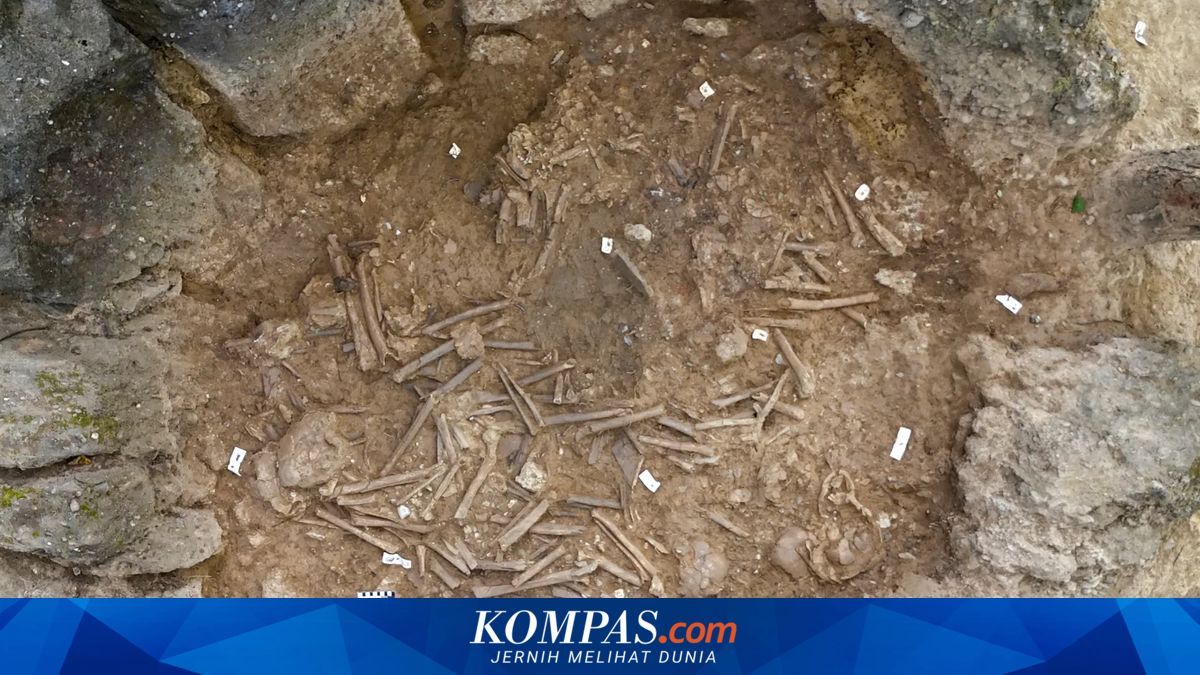
Mystery surrounding the legendary archaeological site Plain of Jars in Laos is finally beginning to unfold. For the first time in history, a team of archaeologists has recovered human skeletal remains still intact inside a giant ancient stone jar. The discovery confirms long-held theories that thousands of mysterious jars on the plateau are part of an ancient burial tradition. Uniquely, these jars did not serve as final burial places, but as collective containers for the remains of individuals who had already decomposed, generation after generation. Compared with more than 2,000 other jars scattered across the area, Jar 1 is strikingly distinctive, with a width of 2.05 metres.
“This is one of the largest jars currently known in Laos. With very thick walls, a broad base and a bowl-like appearance, combined with the extraordinary amount of human remains inside, Jar 1 stands apart from other jars excavated in Laos,” said Nicholas Skopal, archaeologist at James Cook University, Australia, on Tuesday 19 May 2026.
Upon excavating the jar’s interior, the team was surprised by the very specific arrangement of human bones. The skeletons found were not intact bodies, but parts deliberately chosen after the remains had undergone partial decomposition at another site (secondary burial). For example, skulls were arranged in neat rows along the inner rim of the jar, while arm and leg bones were grouped neatly in the centre.
Using radiocarbon dating on several tooth samples, the researchers obtained startling facts. The skeletons stored inside the jar — from children to adults — originate from a time span between AD 890 and 1160. In other words, this giant jar was used repeatedly as a communal burial space for almost 300 years by large families or local indigenous communities around 1,200 years ago.
To trace further who the mysterious civilization behind these jars might have been, scientists are now preparing the next major step: ancient DNA analysis to map the biological relationships among individuals inside the jar.
The discovery of beads provides strong evidence that the Plain of Jars community living between 500 BCE and 500 CE had extensive global trade networks in Southeast Asia in ancient times, even as they maintained sacred local rituals.
The monumental study, published in the Antiquity journal, successfully resolves decades-long debates among archaeologists about the original function of the thousands of giant stone jars in Laos.
Source: jawawa.id (https://jawawa.id/newsitem/skulls-arranged-in-neat-rows-reveal-contents-of-a-1-200-year-old-death-jar-found-in-laos-1779546192)
Originally published by Kompas (https://www.kompas.com/sains/read/2026/05/19/153700123/tengkorak-berjejer-rapi-begini-isi-guci-kematian-berusia-1.200-tahun-yang?utm_source=ABC&utm_medium=rss), translated from Indonesian