
Skilled and Adaptive Workforce Development Seen as Key to Realising Golden Indonesia 2045
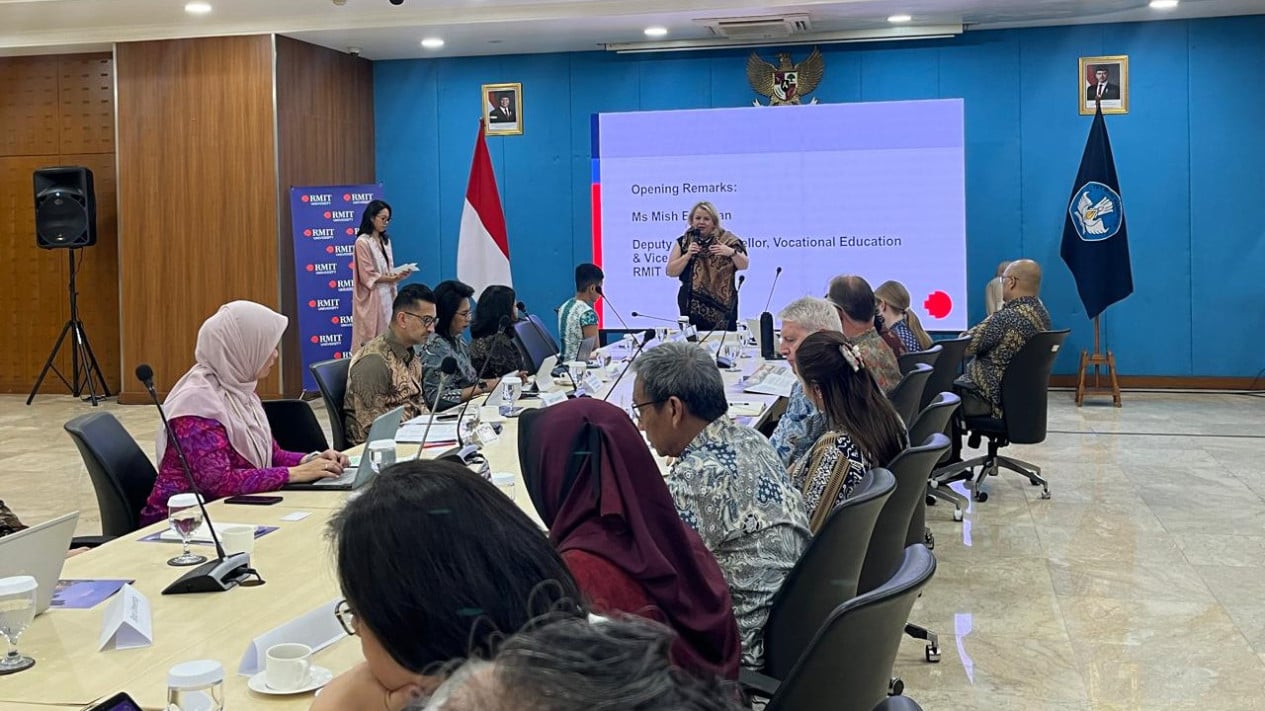
As Indonesia moves towards the Golden Indonesia 2045 vision, developing a skilled and adaptive workforce will be crucial to supporting long-term economic growth. This requires education pathways that are more responsive to industry needs and national objectives, enabling students to build practical skills alongside academic knowledge. The National Development Planning Agency (Bappenas) has identified the transformation of human resources and education as essential to achieving Indonesia’s 2045 ambitions.
Responding to these evolving needs, RMIT University Australia is encouraging a broader shift in how vocational education is viewed—not as a lower tier than university, but as an equally valuable part of an interconnected tertiary education system. RMIT delivers vocational and higher education within a single institution, offering students more study choices through practical training, academic learning, and industry experience.
RMIT emphasises the need for closer links between vocational education, higher education, and industry as Indonesia progresses towards Golden Indonesia 2045. The university is also increasingly providing seamless pathways between vocational and higher education. In Australia, it offers 350 aligned education pathways designed to meet the needs of students from diverse backgrounds and ages as their professional requirements evolve.
This connected approach is increasingly relevant for Indonesia. Shifting workforce needs and employment outcomes point to the need for stronger links between education and the world of work. Statistics Indonesia (BPS) recorded that vocational secondary school graduates had an open unemployment rate of 8.63 percent in 2025, underscoring the need to keep strengthening pathways from education to employment. The figure highlights the importance of improving transitions into meaningful work, rather than questioning the value of vocational education itself.
“We understand that an interconnected tertiary education system can better meet the needs of today’s students, employers, and national goals. Indonesia needs a system that links vocational and higher education; places practical skills on par with academic knowledge; integrates learning with industry; and allows students to move between different pathways as industries and careers evolve,” said RMIT Indonesia Director Tantia Dian Permata Indah in a written statement on Wednesday, 26 August 2026.