
SK Hynix Workers Form New Union Amid Heated Bonus Dispute
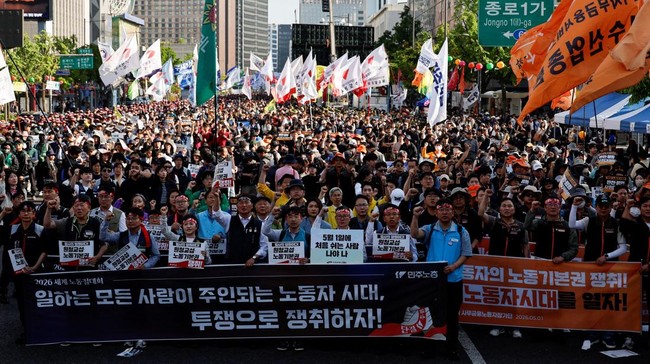
A new labour union has been officially launched by workers at South Korean memory chip giant SK Hynix, aiming to unite employees across various divisions and locations to strengthen their bargaining power against management. The union was formed on Thursday, local time, amidst heated annual wage negotiations.
The push for unity comes after SK Hynix posted record quarterly profits, fuelled by surging global demand for artificial intelligence (AI) infrastructure. According to the union’s website, nearly 2,500 workers have registered with the new body after receiving government approval. SK Hynix employs approximately 35,000 people in South Korea.
Unlike previous unions that were fragmented by job type or factory location, this new union represents the entire spectrum of SK Hynix employees, from factory workers in Icheon and Cheongju to technical and office staff. Its immediate goal is to recruit more than 50% of the total workforce to become the legitimate majority union and seize control of negotiations with management.
The core of the dispute stems from a change in the bonus scheme. Last year, the company agreed to allocate 10% of annual operating profit as cash bonuses for employees under a 10-year agreement. This year, however, management abruptly proposed paying the majority of the bonus in shares instead of cash, following the lead of its fierce rival, Samsung Electronics.
Professor Park Ji-soon of Korea University’s School of Law, a social security expert, assessed that the emergence of this new union would trigger fierce competition between unions to recruit members. Majority union status is key to controlling collective bargaining. He noted that the shift to stock-based bonuses could also spark new demands from workers, such as housing loan facilities equivalent to those enjoyed by Samsung Electronics employees.
Professor Kim Yong-jin of Sogang University’s management department commented that workers’ concerns about stock compensation are reasonable given the high volatility of the South Korean stock market, although he noted that equity-based bonuses are already common practice in the United States. The issue has also drawn the attention of investors, who are questioning whether allocating 10% of operating profit to employee bonuses will erode the company’s investment funds and reduce shareholder returns.
For comparison, Samsung Electronics and its labour union previously reached a performance bonus agreement in May, averting a threatened mass strike that could have disrupted the global chip supply chain. In that deal, Samsung agreed to allocate 10.5% of its semiconductor division’s operating profit as a special bonus for workers in the form of company shares, with lock-up periods restricting the immediate sale of most of the stock.