
Sjafrie on Andrie Yunus Case Trial: Military Court Holds High Value
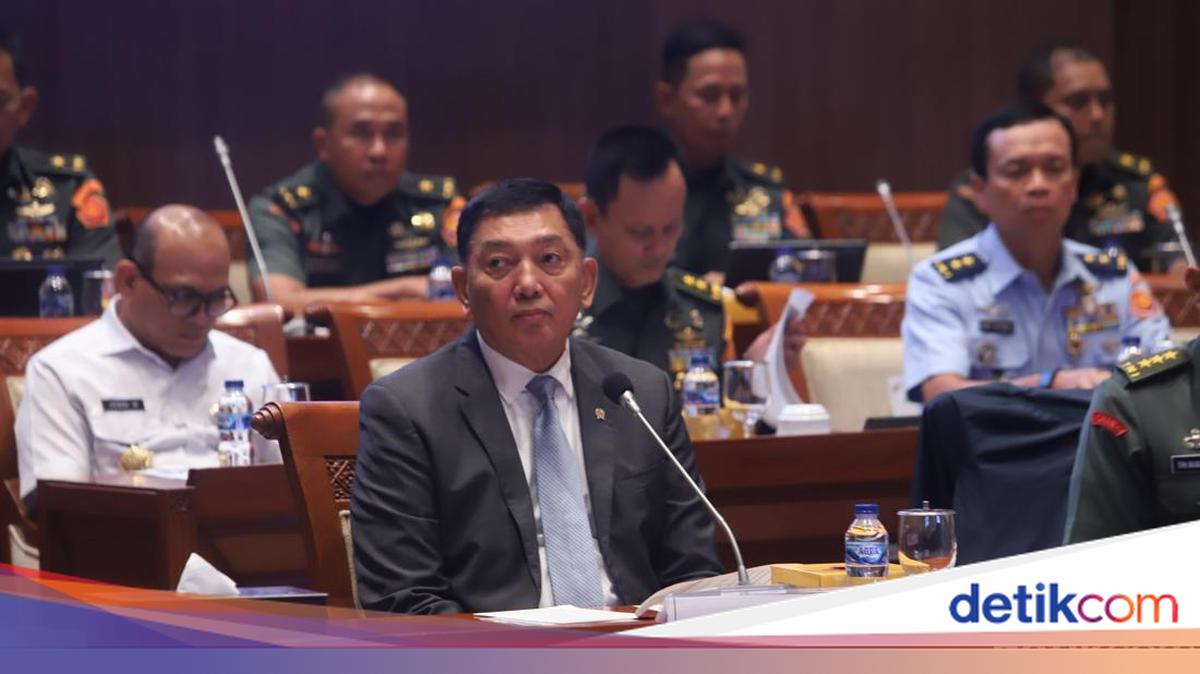
Defence Minister Sjafrie Sjamsoeddin has responded to the trial regarding the acid attack on KontraS activist Andrie Yunus, which is being held in a military court. Sjafrie assessed that the military court possesses high standards of law enforcement.
This was stated by Sjafrie during a working meeting with Commission I of the House of Representatives (DPR) in the parliamentary complex, Senayan, Jakarta, on Tuesday (19/05/2026). Initially, Commission I member TB Hasanuddin raised the controversy surrounding military versus civil courts in criminal cases involving TNI (Indonesian National Armed Forces) personnel.
Hasanuddin explained his involvement in the formation of Law Number 34 of 2004 concerning the TNI. The original spirit of Article 65 of the TNI Law referred to MPR Decree Number VII of 2000, which stipulates that TNI personnel are subject to military courts for military law violations and civil courts for general criminal offences.
“At that time, we included it directly in Article 65 of Law Number 34, which states in Article 65, paragraph 2: ‘Soldiers are subject to the power of the military court in the event of military criminal law violations, and subject to the power of the civil court in the event of general criminal law violations as regulated by law’,” said Hasanuddin.
“However, the circumstances at that time did not yet allow for full implementation, so we provided paragraph 3: ‘If the power of the civil court as referred to in paragraph 2 is not functioning, then soldiers are subject to the power of the court regulated by law’,” he added.
However, Hasanuddin noted that the conditions at the time meant that regulation had not been fully applied, as Military Court Law Number 31 of 1997 still places general criminal cases involving soldiers under the jurisdiction of military courts.
“We leave it entirely to the Commander-in-Chief to decide whether it is possible for us to work together to improve these regulations, or if it is deemed not yet the right time; we leave it entirely to the government,” Hasanuddin expressed.
On the same occasion, Sjafrie responded to Hasanuddin’s statement. Sjafrie argued that the military court continues to operate firmly, regardless of a soldier’s rank.
“In the TNI, this capability is accompanied by strict personnel discipline. You can ask the TNI: how many three-star, two-star, or one-star generals have been imprisoned?” said Sjafrie.
“We do not look at anyone’s status. Therefore, regarding the military court, it is not something we do arbitrarily,” he continued.
Furthermore, Sjafrie revealed that a high-ranking TNI officer had been sentenced to life imprisonment through the military court. “There is a high-ranking officer currently serving a life sentence because of a military court violation,” he noted.
For this reason, according to Sjafrie, punishments in the military court can be even more severe, including in the case of the attack on Andrie Yunus.
“So, regarding the discussion on the acid attack, the sentence could be even heavier. I want you to know that the military court holds very high value. Especially now, there are military prosecutors within the Attorney General’s Office and Military Courts within the Supreme Court,” he concluded.
Source: jawawa.id (https://jawawa.id/newsitem/sjafrie-on-andrie-yunus-case-trial-military-court-holds-high-value-1780890679)
Originally published by detikcom (https://news.detik.com/berita/d-8495059/sjafrie-soal-sidang-kasus-andrie-yunus-peradilan-militer-tinggi-nilainya), translated from Indonesian