
Six Countries in Trump's Crosshairs to Cripple Iran: Is Indonesia Among Them?
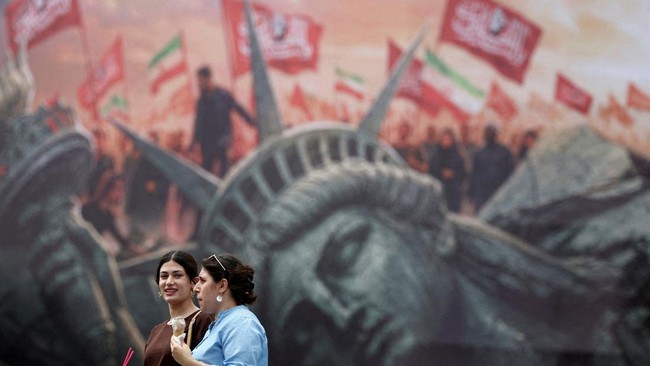
Jakarta, CNBC Indonesia - The United States is tightening economic pressure on Iran. Washington has launched a campaign dubbed ‘economic D-Day’ to isolate Tehran from the global economic system. The move is accompanied by threats of sanctions against parties that continue to assist Iran in conducting business transactions. This policy is part of US efforts to sever trade routes that have sustained Iran’s economy for nearly six months amid the war. If the threat is actually implemented, a number of countries with trade and energy ties to Iran could be affected. Several of them are Tehran’s main trading partners in Asia. Which countries are they? The following is a summary by CNBC Indonesia.
- China
China is most likely to confront the US. The country is the largest buyer of Iranian oil and one of Tehran’s most important gateways to the global economy. According to the US government, China absorbs around 90% of Iran’s oil exports. Bilateral trade between China and Iran was recorded at around US$9.96 billion (Rp175.3 trillion) in 2025. According to the U.S.-China Economic and Security Review Commission, that figure does not include around US$31.2 billion in unreported Iranian crude oil exports to China in the same year. Most of that oil is absorbed by independent Chinese refineries. According to Kpler, Iranian oil is often relabelled as oil from Malaysia or Indonesia. Payments are made through intermediaries outside the US dollar system. The US Treasury Department has imposed sanctions on a number of these refineries this year for buying Iranian oil, but so far Chinese financial institutions have been relatively spared. Beijing openly opposes US sanctions on Iran and believes economic pressure will not resolve the dispute. Eurasia Group’s China Director Dan Wang said China will not openly defy the US. He expects Beijing to quietly increase compliance by state-owned banks and oil companies with US rules to avoid being sanctioned. ‘China is more concerned about dollar access for financing and market access in the US,’ he said.
- United Arab Emirates (UAE)
The UAE is one of Iran’s main trading hubs. The country is only about 80 kilometres from Iran, across the Persian Gulf. Bilateral trade between the two countries reached around US$28 billion in 2024. In that year, the UAE was Iran’s largest source of imports, contributing more than 30%. The UAE was also Iran’s third-largest export destination, accounting for around 12% of Iranian shipments worth more than US$7 billion. However, that relationship was disrupted after the UAE moved last week to suspend all trade and financial transactions with Iran following two ballistic missiles fired into UAE territory. It should be noted that Iran has long used UAE banks and financial systems to access the world economy through illegal and non-transparent transactions. The Washington Institute assesses that cutting off Iran’s access will require firmer action from UAE authorities to eradicate such non-transparent trade and financial activities.
- Turkey
Turkey has substantial trade relations with Iran. Ankara imports natural gas from Iran while exporting various manufactured products to the country. According to the Turkish Ministry of Foreign Affairs, bilateral trade between the two countries reached US$5.7 billion in 2024. Turkey mainly exports machinery and spare parts, chemical products and agricultural goods to Iran, while Ankara imports energy products from Tehran. In recent years, Turkey has sought to diversify its energy sources, including increasing imports via pipelines from Azerbaijan and Russia. However, Ankara has so far given no signal that it will sever its energy ties with Iran.
- Iraq
Iraq has a heavy dependence on energy from Iran, especially electricity and natural gas. In March 2024, Iran renewed a five-year gas supply contract for Iraq with a capacity of up to nearly 660 billion cubic feet of gas per year. According to the U.S. Energy Information Administration (EIA), electricity imports from Iran accounted for more than 30% of Iraq’s power generation in 2023. The value of Iraq-Iran trade also reached more than US$10 billion in 2025. Iran exports food, consumer goods and various other products to the Iraqi market. However, trade between the two countries shrank this year due to increased security risks in the region and disruptions at several border crossings since the war broke out in late February. New US sanctions could hamper Baghdad’s payments to Tehran for its energy needs.
- India
India is also among Iran’s five largest trading partners, although the value of trade between the two countries has continued to decline in recent years. According to India’s Ministry of Commerce, India-Iran bilateral trade was only around US$1.6 billion in the year ending March 2026, down from US$2.3 billion in the same period in 2023. India mainly exports rice, tea, sugar and pharmaceutical products to Iran. Meanwhile, India imports dried and fresh fruits from Iran. In April 2026, India resumed importing crude oil from Iran after a seven-year halt. The decision came after the US temporarily lifted sanctions on Iranian crude oil exports. However, that trade now faces renewed risk if Washington actually implements its threat to impose sanctions on parties that buy Iranian energy, including Indian refining companies.
- Egypt
The US Treasury Department imposed sanctions on Banque Misr, one of Egypt’s major banks, for doing business with Tehran. Washington also proposed rules that could stop the bank’s branch in the UAE from transacting in US dollars. Egypt’s central bank said…