
Sister Mosque: Linking the Destinies of Istiqlal and Al-Aqsa
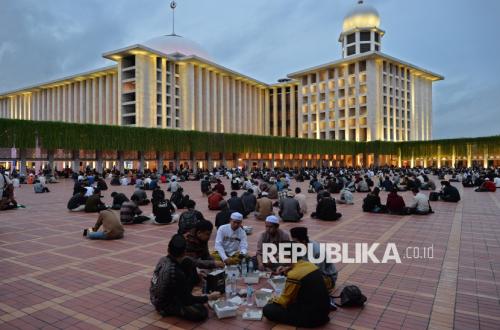
Certain dates must not be allowed to become mere numbers on the calendar. 21 August 1969 is one of them. On that day, the Al-Aqsa Mosque in Al-Quds was set ablaze. The fire consumed an important part of one of Islam’s holiest sites and damaged the historic pulpit later known as the Minbar of Saladin. The tragedy shook the Muslim world and became one of the moments that strengthened political solidarity among Muslim countries, leading to the birth of the Organisation of Islamic Cooperation. More than half a century later, the wound has not fully healed.
For Muslims, Al-Aqsa is not merely a building. It is the first qibla, the second mosque built on earth after the Grand Mosque according to several accounts, and a place closely tied to the Isra and Mi’raj journey of the Prophet Muhammad ﷺ.
But for Indonesia, Al-Aqsa also has another dimension: it is a symbol of the struggle against colonialism and oppression that is very close to the nation’s constitutional DNA. The Preamble to the 1945 Constitution has affirmed that independence is the right of all nations and that colonialism above the world must be abolished.
Therefore, Palestine is not an issue that suddenly appeared in Indonesia’s foreign policy. Solidarity with Palestine has long moral, historical, constitutional, and humanitarian roots.
It is in this media that I officially convey the idea of a ‘Sister Mosque’ relationship between Istiqlal Mosque in Jakarta and Al-Aqsa Mosque in Al-Quds, which carries strategic meaning. This is not merely ceremonial. This is not merely an exchange of plaques. And it is not merely a symbol of friendship between mosques.
If global diplomacy recognises the concept of Sister City to strengthen cooperation between cities of the world, now is the time for Indonesia to pioneer a spiritual-humanitarian diplomacy initiative through the concept of Sister Mosque: formalising the inner bond between Istiqlal Mosque in Jakarta and Al-Aqsa Mosque in Al-Quds.
The Sister Mosque idea rests on a very strong socio-historical and theological foundation:
• The Pillar of Independence and Liberation: Istiqlal—which literally means ‘Independence’—was established as a monument of gratitude for the nation’s liberation from the shackles of colonialism. Linking it with Al-Aqsa, the symbol of the Palestinian liberation struggle, becomes an eternal pledge that Indonesia’s independence is not yet fully complete as long as Al-Aqsa and the Palestinian people remain imprisoned under Zionist occupation.
• The Theological Foundation of Piety: Both mosques represent Allah’s words in Surah At-Tawbah verse 108 regarding a mosque ‘founded upon piety from the first day’. Piety is not merely a ritual of individual devotion, but the courage to uphold justice, reject tyranny, and defend the oppressed.
• The Qibla of Tolerance and Humanitarian Values: Al-Quds under Islamic leadership—from the era of Caliph Umar ibn al-Khattab with the Assurance of Safety of Ilia to Saladin—has always guaranteed religious freedom and interfaith social rights. In Jerusalem stands the Mosque of Umar ibn al-Khattab opposite the Church of the Holy Sepulchre. The same spirit is clearly reflected in Istiqlal Mosque, which stands side by side and harmoniously with Jakarta Cathedral as a symbol of harmony and inclusivity.
The inauguration of Istiqlal and Al-Aqsa as Sister Mosques would transform Indonesian diplomacy from mere political rhetoric into a living cultural and spiritual movement. This step becomes a moral beacon that the struggle to defend Al-Quds is a pillar of global justice, where human dignity and the sanctity of houses of worship must be respected without compromise.
If designed with a grand vision, Sister Mosque can become a new architecture of Indonesian spiritual diplomacy: making Istiqlal Mosque one of the centres of education, humanitarianism, culture, community economy, and global solidarity for Al-Quds and Palestine.
Istiqlal and Al-Aqsa: Two Mosques, One Spirit of Liberation
The name Istiqlal itself means independence. The State Mosque of the Republic of Indonesia was built as an expression of gratitude for the nation’s independence after a long experience of colonialism. In that historical context, Istiqlal is not only a house of worship. It is a national monument.
On the other hand, Al-Aqsa is a symbol of the Palestinian people’s long struggle to defend their homeland, identity, rights, and freedom.
Thus there is a very strong historical resonance: Istiqlal is the symbol of Indonesian independence. Al-Aqsa is the symbol of the Palestinian struggle for freedom.
Linking the two through the concept of Sister Mosque means connecting two different historical experiences that share one universal message: colonialism is not the destiny of humanity.
Indonesia has experienced colonialism. And Palestine still faces oppression, occupation, and unresolved questions of rights.
Therefore, the Istiqlal-Al-Aqsa friendship should become a bridge of memory between two nations that share experiences of struggle, not merely an emotional relationship between religious communities.
Source: jawawa.id (https://jawawa.id/newsitem/sister-mosque-linking-the-destinies-of-istiqlal-and-al-aqsa-1787446247)
Originally published by Republika (https://analisis.republika.co.id/berita/tk743m451/sister-mosque-menautkan-takdir-istiqlal-dan-alaqsa), translated from Indonesian