
Singapore’s Prime Minister Seeks to Mend Ties with Indonesia in Unexpected Jakarta Gesture
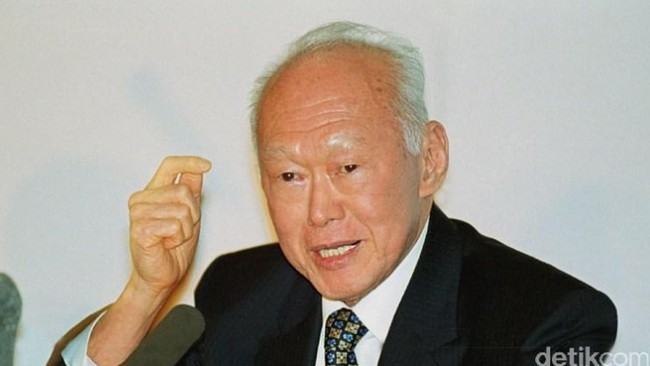
Singaporean Prime Minister Lee Kuan Yew, who held office from 1959 to 1990, made an unusual diplomatic gesture to repair ties with Indonesia. During a visit to Jakarta in May 1973, Lee went to the graves of two Indonesian marines, Usman and Harun, who had been hanged in Singapore in 1968 on his government’s orders.
The move caused controversy in Singapore, but Lee felt it was necessary. After separating from Malaysia in 1965, Singapore needed Indonesia as a strategic partner as it built its new state. Efforts to improve relations, however, had been obstructed by the Usman and Harun case, which had fuelled tensions with Indonesia.
The case began during the Indonesia-Malaysia Confrontation. On 10 March 1965, Usman and Harun were assigned to carry out a bombing in Singapore, which was then part of Malaysia. The bomb killed three people and injured 33 others.
They were subsequently arrested and sentenced to death. In 1968, Usman and Harun were hanged following a decision by the Singapore government under Lee Kuan Yew. Their execution provoked anger in Indonesia and brought diplomatic relations between the two countries to their lowest point.
“That incident placed Indonesia-Singapore relations in their worst position. […] As the hanging approached, all Indonesian embassy staff in Singapore were recalled, except for the defence attaché and several other staff members,” diplomat Abdul Rachman Ramly recalled in Pak Harto: The Untold Stories (2011).
The situation began to change after Soeharto came to power in Indonesia. Unlike the Sukarno era, which was marked by confrontation with Malaysia, Soeharto’s government was more open to co-operation with neighbouring countries.
Lee saw an opportunity to improve relations. He believed he shared common ground with Soeharto and planned to visit Indonesia in May 1973. Soeharto, however, set one condition before welcoming the Singaporean prime minister: Lee had to lay flowers at the graves of Usman and Harun in Kalibata National Heroes Cemetery.
“Pak Harto allowed Prime Minister Lee to come on the condition that he lay a wreath directly at the graves of Usman and Harun at Kalibata National Heroes Cemetery, rather than at the usual place where foreign guests lay wreaths, at the foot of the Heroes Monument,” diplomat Abdul Rachman Ramly said in Pak Harto: The Untold Stories (2011).
Lee agreed to the condition. He visited the two marines’ graves and laid a wreath. For Lee, the act was not merely a tribute to men who had been executed; it was also a way to ease tensions with Indonesia.
In his autobiography, From Third World to First (2000), Lee explained the reasoning from a Javanese perspective:
“If I wanted to build a genuine friendship with President Soeharto, the episode surrounding the hanging of the two marines had to be closed with a diplomatic gesture that accommodated ‘the Javanese belief in the importance of a clear spirit and conscience’,” Lee wrote.
Lee considered the gesture important because Indonesian generals greatly valued such actions. He accepted Soeharto’s request. To build closer communication, Lee also studied Indonesian so that he could speak directly without an interpreter.
The visit to Usman and Harun’s graves became an important step in repairing relations between the two countries. In its aftermath, Indonesia-Singapore ties gradually improved, paving the way for closer co-operation.
Source: jawawa.id (https://jawawa.id/newsitem/singapores-prime-minister-seeks-to-mend-ties-with-indonesia-in-unexpected-jakarta-gesture-1793080233)
Originally published by CNBC Indonesia (https://www.cnbcindonesia.com/entrepreneur/20261027095343-25-779736/pm-singapura-mau-baikan-dengan-ri-lakukan-aksi-tak-terduga-di-jakarta), translated from Indonesian