
Singaporean Scientists Discover Way to Recycle Mixed Plastic Packaging
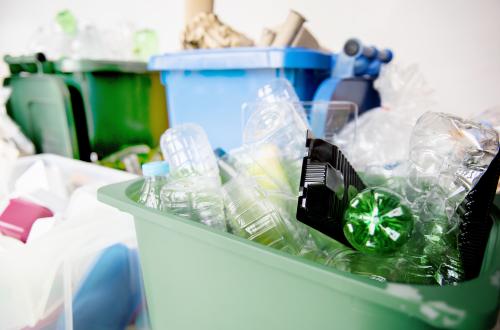
Scientists from Nanyang Technological University (NTU) in Singapore have developed a new method to recycle mixed plastic packaging without using dangerous chemical solvents. This technology is considered capable of opening opportunities for processing multi-layer plastic waste, which has historically been difficult to recycle and mostly ends up in landfills or incinerators.
A research team from the School of Materials Science and Engineering and the Nanyang Environment and Water Research Institute (NEWRI) introduced the method named depolymerisation-induced polymer separation (DIPS). This technology works by selectively breaking down specific types of plastic within mixed packaging, while keeping recyclable materials intact so they are easier to reprocess.
Multi-layer plastic packaging is widely used in food products such as snacks and instant noodles due to its high durability and ability to maintain product quality. However, the combination of several types of plastic bonded in a single package makes the material difficult to separate and recycle.
Hu Xiao, Director of the NEWRI Programme and lead researcher, stated that the use of mixed plastic packaging continues to increase, while efficient and safe recycling technologies remain limited. “We see more and more mixed plastic packaging being used in everyday food products, but recycling them efficiently and safely remains a major challenge. Our team is working to address this by developing a practical and scalable way to separate these materials without using harmful solvents,” Hu Xiao said in a statement on Wednesday.
Another researcher, Lian Yen Nan, explained that one of the biggest challenges in the recycling industry today is the lack of viable technology for processing mixed plastics. Therefore, the research focused on producing a solution that can be practically applied by the industry.
The DIPS method utilises reactive extrusion, a process using an extruder machine commonly used to melt and shape plastic. In this method, the machine functions as a chemical reactor. When mixed plastic waste is processed, poly(ethylene terephthalate) or PET plastic reacts with glycerol, a relatively cheap and readily available chemical. This reaction breaks PET into smaller molecules, altering its physical and chemical properties.
This change allows PET to separate naturally from polypropylene (PP), which is also widely used in plastic packaging. The separation occurs due to the difference in polarity and viscosity between the two materials during the process.
The entire process is conducted at normal pressure and without the use of chemical solvents. These conditions make the DIPS method safer and potentially more cost-effective compared to conventional chemical recycling technologies.
In laboratory tests, the separated PP plastic was able to maintain up to 90 per cent of the tensile strength compared to virgin material. When applied to industrial waste samples, the quality of the resulting material was also reported to be superior to conventional mechanical recycling methods.
Meanwhile, the PET material resulting from the process is not immediately reused as packaging, but it still holds economic value as it can be used as a raw material for high-value-added products, including epoxy substitutes for wind turbine blades, or reprocessed into monomers for new polymers.
The research team believes the DIPS method can be applied to various other combinations of mixed plastics and expanded to an industrial scale using extrusion machines already widely used in factories.
Lead author of the research and NTU doctoral student, Kathirvel Periasamy, stated that the technology is designed to bridge the gap between laboratory research and industrial needs. “Our process attempts to bridge the gap between laboratory research and industrial application. By simplifying separation and eliminating solvents, we aim to make plastic recycling more economically viable and environmentally sustainable,” said Kathirvel.
Researchers estimate that if mixed plastic waste can be recycled efficiently on a large scale, the potential global economic value could reach more than US$250 billion, or approximately Rp4,000 trillion per year. For the next stage, the research team plans to collaborate with industrial partners to test the technology on a larger production scale.