
Singaporean Researchers Uncover the Mystery of Babi Ngepet, Here Are Their Findings
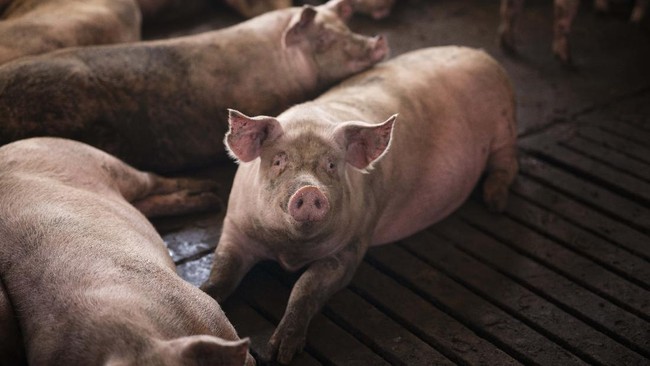
Jakarta, CNBC Indonesia - The legend of babi ngepet has long existed and evolved into Indonesian folklore. It is described as a boar-spirit that originates from the mountains and can take people’s money by simply brushing its body against the walls of a house.
Babi ngepet is portrayed as a human-like figure who changes form at night, transforming into a boar to steal money. The idea may seem illogical, but historian and researcher Christopher Reinhart of Nanyang Technological University Singapore provides a rational explanation for its origin.
He told CNBC Indonesia that tracing the historical roots of babi ngepet is a challenging undertaking. However, in the strand of colonial-era social studies, the term babi ngepet began to appear during the Cultuurstelsel or forced cultivation (1830-1870).
According to Jan Luiten van Zanden and Daan Marks in Ekonomi Indonesia 1800-2010 (2012), since the imposition of forced cultivation many new wealthy people emerged among Javanese society. They were typically merchants from the indigenous or Chinese communities who became immensely wealthy in a short time.
This situation aroused astonishment among farmers living simple lives. It was at this point that rural imagination began to take hold.
“The farmers living simple lives suddenly were shocked to see people who had suddenly become rich. Consequently, they accused the wealthy of obtaining wealth through improper means, namely babi ngepet,” said the researcher, who is now a research assistant at the University of Oxford.
For farmers, wealth accumulation was intended to be a transparent process. That is, everyone should pass through an explicit process and effort that could be seen by others. The problem was that they did not see the hard work of the newly wealthy, and therefore accused them of conspiring with the devil.
On the other hand, Reinhart notes there is some logic to the accusations of babi ngepet against the rich. The babi ngepet accusation was used by farmers to cast wealthy peers as evil capitalists, implying that the wealthy should be shunned because they could threaten farmers’ livelihoods by acquiring land or harvests cheaply, potentially leading to poverty and debt.
“Thus, the allegations and imagination of babi ngepet can be said to be a form of farmer mitigation. To keep away from the wealthy, to refrain from becoming rich, and to avoid being drawn into temptation,” he adds.
As Indonesian society has long been agrarian, the imagination and accusations of babi ngepet have taken root, been embedded, and passed down through generations.
This, Reinhart notes, endures today because our society has not fully shifted to industry. Moreover, many people still face low levels of education and income, which sustains such myths.
Source: jawawa.id (https://jawawa.id/newsitem/singaporean-researchers-uncover-the-mystery-of-babi-ngepet-here-are-their-findings-1779546205)
Originally published by CNBC Indonesia (https://www.cnbcindonesia.com/lifestyle/20260519143735-33-735971/peneliti-singapura-ungkap-misteri-babi-ngepet-ini-hasil-risetnya), translated from Indonesian