
Singaporean Researcher Flies to Indonesia to Uncover the Mystery of the 'Babi Ngepet' Myth
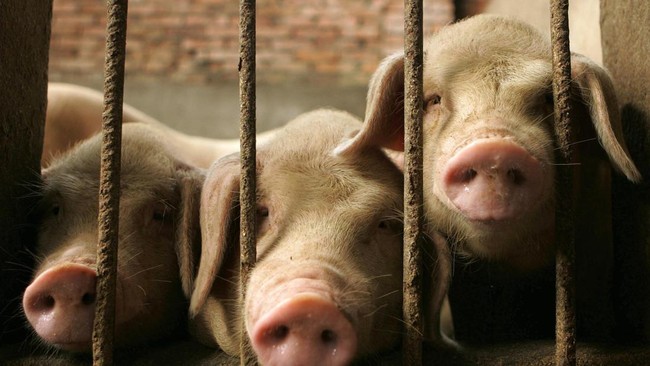
The tale of the babi ngepet has long lived on in the memory of Indonesian society and has developed into one of the folk stories believed from generation to generation. In the circulating story, the babi ngepet is depicted as a pig-shaped demon that comes from the mountain and possesses the ability to steal money through supernatural means.
The figure of the babi ngepet is also often believed to be the incarnation of a human who transforms into a pig at night to carry out its deeds.
Although it sounds implausible, the emergence of the babi ngepet story apparently has a more rational explanation. Historian and researcher at Nanyang Technological University, Singapore, Christopher Reinhart, revealed the suspected origins behind the emergence and development of the myth.
Speaking to CNBC Indonesia, Reinhart said that tracing the historical roots of the babi ngepet is a challenging undertaking. However, within the trend of colonial society studies, the term babi ngepet began to appear during the Cultuurstelsel, or forced cultivation system, of 1830-1870.
According to Jan Luiten van Zanden and Daan Marks in The Economy of Indonesia 1800-2010 (2012), since the enforcement of forced cultivation, many newly rich people emerged among Javanese society. They were generally merchants from the native or Chinese communities who became extremely wealthy in an instant. This situation sparked bewilderment among farming communities living modest lives. It was at this point that the farmers’ imagination took hold.
“Farmers living modest lives were suddenly shocked to see people become rich in an instant. As a result, they accused those wealthy people of obtaining their riches through improper means, namely the babi ngepet,” said the researcher, who is now a research assistant at the University of Oxford.
For the farming class, the accumulation of wealth was an open process. In other words, everyone had to go through a clear process and effort visible to others’ eyes. The problem was that they did not see the hard work of these newly rich people. Consequently, they accused them of collaborating with the devil.
However, on the other hand, Reinhart noted there was a certain logic to the farmers’ imaginative babi ngepet accusations against the rich. The accusation of being a babi ngepet was used by farmers to give fellow farmers a bad impression of the wealthy, portraying them as evil capitalists. In other words, the rich had to be avoided because they were dangerous to farmers’ livelihoods.
The reason was that at any time, those wealthy people could buy up the farmers’ resources, such as their rice fields or crops, at cheap prices. If that happened, the farmers would fall into poverty and become trapped in debt.
“So, the accusation and imagination of the babi ngepet can be said to be the farmers’ mitigation effort. To keep away from the rich, to avoid becoming rich, and to avoid being influenced by the rich so as not to fall into wickedness,” he added.
Because Indonesian society has been agrarian in character for many years, the imagination and accusation of the babi ngepet continued to take root, become embedded, and be passed down from generation to generation.
This, according to Reinhart, still persists today because our society has not fully transitioned to industry. Moreover, many people still have low levels of education and economic standing.