
Singapore to Import 1.3 GW of Green Electricity from Southeast Asia
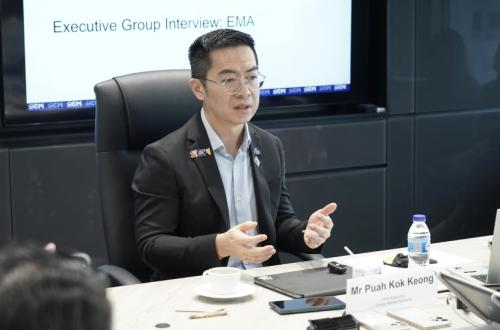
SINGAPORE — Singapore is expanding cross-border energy cooperation by opening the way to import up to 1.3 gigawatts (GW) of low-carbon electricity through several projects involving Southeast Asian countries. The move is part of efforts to strengthen energy security while supporting the transition to net zero emissions.
Energy Market Authority (EMA) chief executive Puah Kok Keong said the agency had granted conditional approval for the development of facilities to import low-carbon electricity from and through neighbouring countries. The projects include electricity from offshore wind in Vietnam, as well as solar and wind power with energy storage from Peninsular Malaysia.
Speaking at the Singapore International Energy Week (SIEW) 2026 Insight, Puah said the projects would broaden Singapore’s options for low-carbon electricity sources and import routes. The initiative builds on developments in August 2026, when the EMA granted conditional approval to Petrobras for two low-carbon electricity import projects with a total capacity of 900 megawatts (MW) from Johor, Malaysia.
“This provides strong momentum for our efforts to strengthen energy connectivity with Malaysia and contribute to the goal of realising an ASEAN power grid by 2045,” Puah said on Wednesday (28 October 2026).
Singapore and Malaysia are also conducting marine surveys to determine the route for a planned second subsea power interconnector, with a capacity of up to 2.1 GW. The surveys are expected to be completed around the end of this decade.
The two countries have also established their first joint working group to align cross-border renewable energy certificate (REC) accounting. The group will explore harmonising methods for tracking and recording RECs, giving companies greater certainty when using the certificates to meet their sustainable electricity portfolio needs.
Puah stressed that strengthening regional energy connectivity depends not only on infrastructure development, but also on regulatory alignment, intergovernmental coordination and investment certainty.
Singapore and the United States, for example, have completed the second phase of a joint study on contingencies for regional energy connectivity in Southeast Asia. The study highlighted the importance of harmonising permitting and regulatory processes, strengthening regional coordination, and developing innovative and clean arrangements for cross-border electricity trading.
At ASEAN level, discussions are continuing on legal and regulatory guidelines for the development of subsea power cables through the ASEAN Submarine Power Cable Protocol.
Puah said such infrastructure was particularly important for Southeast Asia, given its archipelagic geography. Subsea power cables could serve as key links between countries’ electricity systems while improving the resilience of regional energy supplies.
A clear framework, he said, would provide regulatory stability and strengthen investor confidence, helping to realise the ambition of an integrated ASEAN power grid.
“This is foundational work that does not always make the headlines. But without it, regional energy initiatives will not get off the ground,” he said.
As it seeks to expand low-carbon energy supplies, Singapore is also continuing to study nuclear power as one option for meeting future energy needs. Puah stressed that the Singapore government has not made a decision to adopt nuclear power.
Source: jawawa.id (https://jawawa.id/newsitem/singapore-to-import-1-3-gw-of-green-electricity-from-southeast-asia-1793177603)
Originally published by Republika (https://esgnow.republika.co.id/berita/tnlz4s423/singapura-impor-listrik-hijau-13-gw-dari-asia-tenggara), translated from Indonesian