
Singapore to Build New 'Paradise Island', Targeting 32 Million Visitors
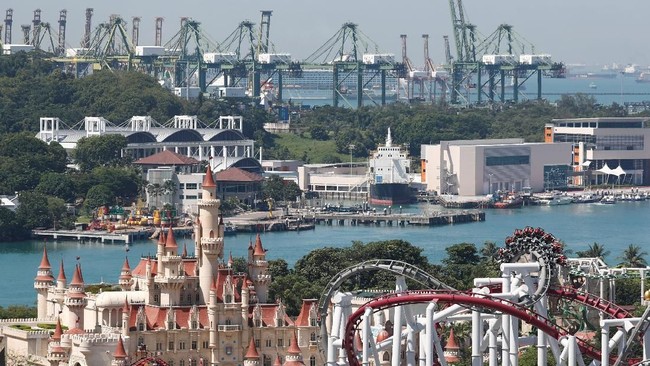
Singapore is preparing to create a new ‘paradise island’ as part of a major transformation of the Greater Sentosa area. Through a 20-year master plan, the Singaporean government is moving beyond merely building new attractions, instead aiming to transform Sentosa into a nature-based tourism destination designed to encourage longer visitor stays. This plan was announced by the Sentosa Development Corporation (SDC) via the Greater Sentosa Master Plan, which will serve as the development guide for the next two decades.
The plan details how various new experiences will be introduced, ranging from exploring small islands surrounding Sentosa and enjoying culinary experiences amidst forest canopies to providing recreational spaces that are more integrated with nature. SDC estimates that the entire Greater Sentuna area will be capable of attracting approximately 32 million visitors annually once all projects are fully developed.
Benjamin Cassim, a senior lecturer at Temasek Polytechnic, stated that this new strategy is designed to enrich the tourism experience rather than simply adding new attractions. “Instead of being standalone attractions, these experiences complement the blend of recreation, lifestyle, and entertainment already present in Sentosa. This gives tourists more reasons to stay longer, explore more areas, and return in the future,” Cassim said, as quoted by Channel News Asia (CNA).
He noted that nature-based tourism provides a competitive advantage that is difficult for other destinations to replicate, as it utilises the unique natural character of Sentosa Island. All new attractions are designed to complement existing destinations to reach various tourist segments.
Christopher Khoo, Managing Director of tourism consultancy MasterConsult Services, shared a similar view, noting that global tourism industry trends have shifted. Destinations can no longer rely solely on building new rides; they must offer more meaningful experiences, such as wellness tourism, outdoor activities, and destinations with strong narratives and identities. “Greater Sentosa responds to these changing trends,” he remarked.
The transformation of Greater Sentosa also includes infrastructure modernisation, such as replacing the Sentosa Express, which currently serves visitors, with a new tram system. Additionally, SDC will construct several new landmarks, including the ‘Sensorium’, which will function as both an indoor attraction and a multi-purpose space. Consequently, several businesses currently operating in Sentosa will be phased out as their leases expire to make room for the area’s redevelopment.
Development is not limited to Sentosa Island. The Singaporean government also plans to expand the project to Pulau Brani, particularly on the western side of the island, which is being prepared for various new attractions. Although potential investors or development partners have not yet been revealed, SDC stated that the project in West Brani has the potential to be a ‘game changer’ for Singapore’s tourism industry.
Cassim noted that Pulau Brani holds great potential as it remains a relatively untouched area. “It will be interesting to see how creatively stakeholders transform Pulau Brani,” he said. Currently, Pulau Brani serves as the Brani Port Terminal. However, port operations are scheduled to move to Tuas starting next year, opening up space for new tourism development.
Khoo added that Singapore requires new iconic projects to maintain growth in the tourism sector. Following the success of Marina Bay, Resorts World Sentosa, Jewel Changi Airport, and the Mandai wildlife precinct, he believes Greater Sentosa and Pulau Brani have the potential to become the next engines of tourism growth. “Every decade, Singapore needs a new tourism growth engine. Greater Sentosa appears set to be the flagship recreational project for future generations,” he concluded.