
Singapore Think Tank Issues Disaster Warning for Southeast Asia, Highlights Indonesia
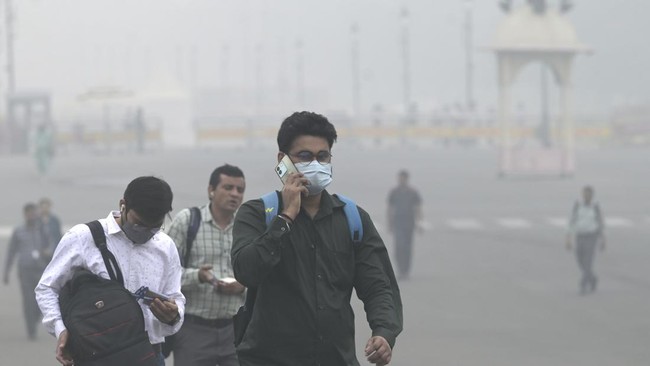
A private Singaporean think tank, the Singapore Institute of International Affairs (SIIA), has warned that Southeast Asia will face a severe threat of transboundary haze through to the end of 2026. The ‘red’ alert is expected to peak between August and September due to a fierce El Niño, which is causing hotter and drier conditions.
In its 17-page Haze Outlook 2026 report, the transboundary haze is forecast to affect Singapore, Malaysia, Brunei, and particularly Indonesia. This is only the second time the SIIA has issued its highest risk rating since launching the annual outlook in 2019, following a similar assessment in 2023.
‘Haze returned to Singapore that year as hotspots surged in parts of Sumatra amid dry conditions caused by El Niño. The transboundary haze largely originates from forest and peatland fires in the region,’ the report stated, as published by CNA on Wednesday (24/6/2026).
The SIIA noted that the heightened risk this year is also driven by disruptions in the Strait of Hormuz, which are increasing cost pressures on the agricultural sector due to fuel shortages and soaring fertiliser prices. This boosts demand for biofuels, raising concerns that some producers may expand plantations by resorting to cheaper but unsustainable land-clearing methods, such as burning.
‘This high-risk season also coincides with tightening budgets amid global economic uncertainty. In Indonesia, President Prabowo Subianto will face his first high-risk dry season,’ the report highlighted, referring specifically to Indonesia. ‘The Ministry of Forestry and provincial governments have warned that budgets for fire management are under pressure amid public spending cuts,’ it added.
SIIA Chairman Simon Tay stressed the need for preventive action. He emphasised that much can still be done to avert the worst-case scenario and strengthen climate, energy, and food resilience, as well as regional cooperation. ‘The challenge is to ensure that sustainable practices are maintained throughout the supply chain, including by small and medium enterprises that may be operating under increasingly tight economic pressures,’ he said.
The ASEAN Coordinating Centre for Transboundary Haze Pollution Control has been urged to strengthen policy coordination on haze mitigation and land management. The centre was also asked to complement scientific data and satellite haze monitoring provided by the ASEAN Specialised Meteorological Centre in Singapore.