
Singapore Strengthens AI Ecosystem with Global Partners, Accelerates Real-World Technology Deployment
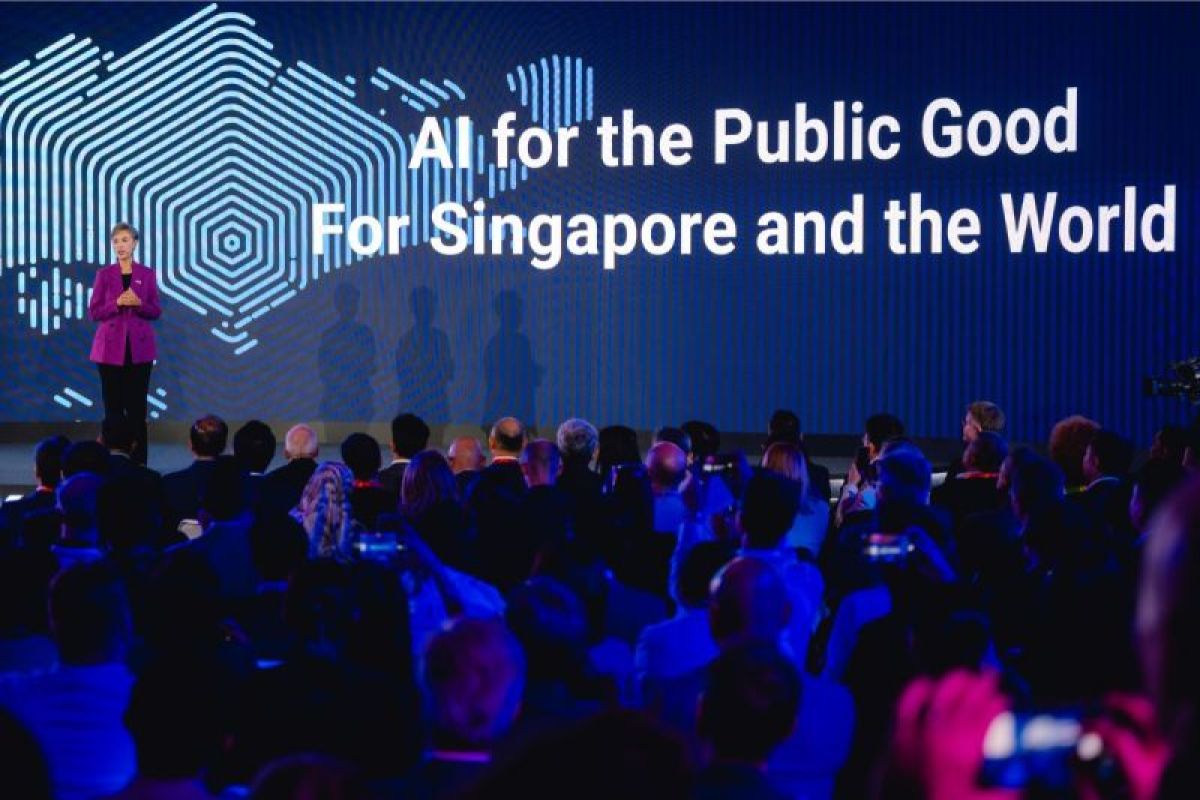
ATxSummit 2026, organised by the Infocomm Media Development Authority (IMDA) of Singapore, saw Minister for Digital and Information Josephine Teo announce a series of new global partnerships and initiatives to strengthen Singapore’s position as a leading global AI hub. The moves mark a shift from merely exploring AI technologies to the development, deployment, and governance of AI systems capable of delivering real‑world impact. In line with the Economic Strategic Review Committee’s recommendations, Singapore aims to be a hub for developing, testing, and deploying AI solutions that can address real‑world challenges at scale.
Government collaboration with Eight Industry Leaders to Develop, Test, and Deploy Physical AI in Punggol Digital District. IMDA, JTC, and the Singapore Institute of Technology (SIT) are partnering with eight global companies to develop embodied AI in the Punggol Digital District (PDD). The testing facility, which will commence operations in 2026, will become Singapore’s first multi‑functional public space designed for the deployment of embodied AI across a range of scenarios and operators. Companies such as Certis, DHL, Grab, and QuikBot will be among the first to develop, test, and validate commercial robotics services, including food and parcel delivery, cleaning, and security patrols that assist human workers. The programme is delivered in collaboration with the Land Transport Authority (LTA) under an area exemption scheme based on the Active Mobility Act.
To strengthen embodied AI (EAI) capabilities, IMDA and the National Robotics Programme (NRP) are also working with FieldAI, Thoughtworks, Slamtec, Unitree, and QuikBot through the Centre for Intelligent Robotics run by SIT in the PDD.
Strengthening AI Research Breakthroughs in Singapore. To bolster Singapore’s manufacturing competitiveness, NVIDIA will open an AI research lab in the country, its second NVIDIA research facility in the Asia-Pacific region. The lab will focus on embodied AI and energy-efficient AI, engaging university researchers, industry partners, and the government. Research will focus on two main areas: embodied AI, which helps intelligent systems understand and interact with the physical world, and efficient AI computing to improve model and infrastructure efficiency, reduce compute costs, and support large‑scale, energy‑efficient AI deployment.
AI for Public Interest: A New Industry Partnership Model. The Ministry of Digital and Information (MDDI) Singapore, together with Google, announced a national AI partnership to broaden collaboration with the Singapore government. The collaboration aims to harness state‑of‑the‑art AI to address social challenges, build an AI‑ready workforce, and create a safe and trusted digital ecosystem. Separately, MDDI and OpenAI signed a memorandum of understanding in the “OpenAI for Singapore” initiative to strengthen Singapore’s position as a hub of applied AI innovation. The collaboration includes developing AI innovations, strengthening AI talent, and broadening access to AI for the public, businesses and government. OpenAI has also pledged an investment of more than SGD 300 million to support Singapore’s AI ecosystem.
Strengthening an Safe and Scalable AI Foundation. Singapore is expanding initiatives to support AI adoption in high‑trust sectors such as finance and public services. Temus, the digital transformation and AI company founded by Temasek, will launch AI Foundry to help enterprises scale AI deployments while building digital talent. With support from Digital Industry Singapore (DISG), AI Foundry will recruit 50 professionals to work on projects in the financial services and precision health sectors.
Meanwhile, the ASTAR Institute for Infocomm Research (ASTAR I2R) is updating the MERaLiON model (Multimodal Empathetic Reasoning and Learning in One Network) to broaden AI deployments in real‑world contexts. The latest MERaLiON AudioLLM v3 now includes the ability to understand paralinguistic cues in various Southeast Asian languages. The technology will be available via cloud hosting, API, edge computing, and on devices using Apple silicon such as Mac and iPad.
Adaptive AI Governance. Singapore continues to apply a risk‑based, practical approach to AI governance. Two latest initiatives include:
An updated AI Governance Model for AI Agents. The AI governance framework first introduced at the World Economic Forum in January 2026 now arrives in a newer version with real‑world case studies and best practices from more than 50 organisations.
A Google paper on AI Agents: Google is collaborating with CSA, GovTech Singapore, and IMDA to study the safe, effective use of AI agents in real‑world settings. The paper provides guidance for government on using AI agents for public interest.
Through these initiatives, Singapore aims to ensure AI innovations can be applied in real life. It reinforces its position as a trusted global AI hub for government, industry players, and researchers looking to develop and deploy AI solutions at scale. During ATxSummit 2026, Minister Josephine Teo also attended the ASEAN‑US AI Ministerial Roundtable, which brought together ASEAN Digital Ministers, the ASEAN Secretariat, the U.S. government, and industry leaders from Amazon and Google. The forum marked the launch of “The Road to 50 Years of ASEAN‑US Relations” within the ASEAN‑US Comprehensive Strategic Partnership, with a focus on inclusive AI adoption in the region.
Further information about ATxSG: asiatechxsg.com. Media: atxsg.imda@archetype.co. Source: Infocomm Media Development Authority