
Singapore Rewards Citizens for Reading Books
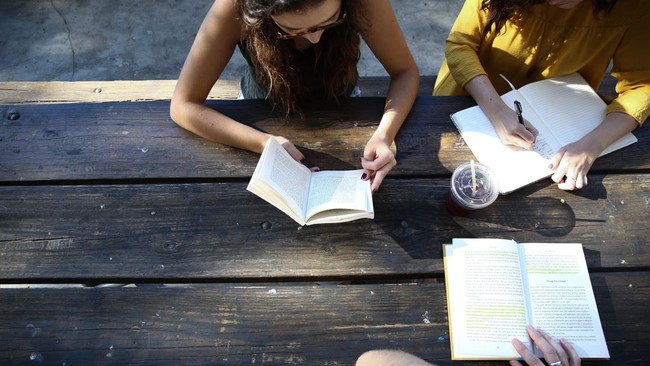
The Singaporean government has introduced a unique method to encourage the public to return to reading books. Citizens are invited to spend at least 15 minutes a day reading and then record the activity on a government platform to earn virtual coins that can be exchanged for money.
According to CNN, the programme is part of ReadSG, a five-year national movement launched by the National Library Board (NLB) on 6 September 2026, coinciding with the first month of National Reading Month in Singapore. Singaporean President Tharman Shanmugaratnam attended the launch and serves as the programme’s patron.
ReadSG is designed to make reading a daily habit amidst changing information consumption patterns, which are increasingly dominated by short-duration digital content.
Through the ReadSG Challenge, participants can log their reading sessions via the government platform CrowdTaskSG. Each reading session of at least 15 minutes earns 20 virtual coins. Accumulated, 1,000 coins are equivalent to SG$1 (approximately Rp 14,000). This means participants require 50 reading sessions to collect SG$1. Only one session can be recorded per day.
As such, the reward serves more as a habit trigger rather than a source of income. If an individual reads for 15 minutes every day, it would take a considerable amount of time to accumulate a relatively small cash value.
Encouraging Reading Amidst the Scrolling Addiction Phenomenon
The NLB stated that ReadSG was introduced in response to changing reading habits in the digital era. The institution believes that reading in long-form format can help train attention, critical thinking, imagination, and the ability to understand various perspectives.
NLB CEO Melissa Tam stated that the ultimate goal is not merely to get the public to read for 15 minutes every day, but to build a society that possesses curiosity and the ability to think deeply.
“While short-duration content helps us stay informed, reading long-form material strengthens attention span, critical thinking, and imagination,” Tam said in a statement cited in various reports regarding the programme.
This reading campaign emerges despite Singapore being known for having high literacy levels.
However, NLB data shows that public reading activity does not always equate to reading books. In the 2024 National Reading Habits Study, 89 per cent of Singaporean adults were reported to read something more than once a week. However, only 28 per cent read books. News and online articles are, instead, the more frequently consumed types of reading.
These findings indicate a discrepancy between general reading habits and the habit of deep book reading.