
Singapore Reacts as Indonesia Cuts Gas Exports by 31 BBTUD
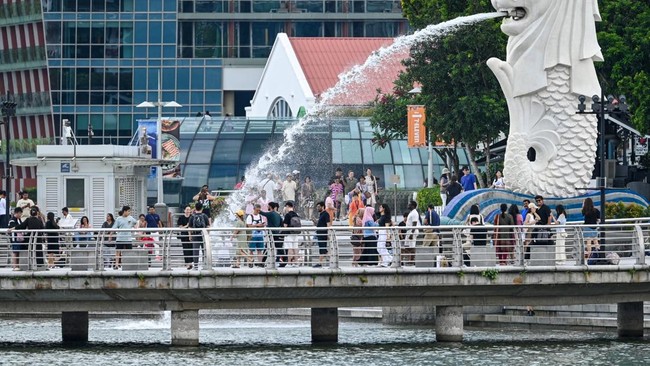
Jakarta, CNBC Indonesia – Indonesia officially began reducing the volume of natural gas exports to Singapore on Saturday (24 October 2026). The measure is intended to help the government secure national energy supplies.
Djoko Siswanto, head of the Special Task Force for Upstream Oil and Gas Business Activities (SKK Migas), said the export adjustment was intended to ensure reliable and sustainable gas supplies for the domestic electricity sector.
The reduction covers allocations of 15 BBTUD from the Natuna area and 16 BBTUD from Sumatra, bringing the total cut in gas exports to Singapore to 31 BBTUD.
“Starting tomorrow (Saturday, 23 October 2026), we will reduce gas exports to Singapore by 15 BBTUD from Natuna and 16 BBTUD from Sumatra,” Djoko said when met on the sidelines of the Energy and Mineral Resources Ministry’s Subroto Awards 2026 at The Westin in Jakarta, according to a report on Sunday (25 October 2026).
The gas allocation being cut from Sumatra comes from the Jambi Merang working area. The reduction applies specifically to pipeline gas deliveries to Singapore because the existing export pipeline connects directly to the neighbouring country.
“No, there will be no cuts to other countries; the pipeline only goes to Singapore,” Djoko replied when asked whether exports to other neighbouring countries would also be adjusted.
Singapore’s response
Singapore’s Energy Market Authority (EMA) said the reduction in gas supplies from Indonesia represented less than 2% of the city-state’s total daily gas requirements.
An EMA spokesperson said Singaporean gas importers had reported that the actual reduction amounted to 17 BBTUD over an 18-day period. Singapore’s total daily gas demand exceeds 1,000 BBTUD.
“The EMA understands that our importers will pursue all relevant legal remedies under the terms of their contracts in relation to the gas supply disruption,” the spokesperson added, according to The Straits Times on Sunday (25 October 2026).
The authorities have prepared contingency plans to address the reduction.
The spokesperson said that, based on experience, Singapore had faced supply reductions of between 20 and 100 BBTUD in recent months because of planned and emergency maintenance. The shortfalls had been replaced from other sources without incident.
The EMA said Singapore had sufficient energy reserves to meet national demand.
About 95% of Singapore’s electricity needs are met by natural gas, supplied through pipelines from Indonesia and Malaysia, as well as by liquefied natural gas (LNG) from various countries.
Singapore is also continuing to diversify its energy sources by developing domestic solar power and researching nuclear and geothermal energy technologies.
National gas procurement and supply company Singapore GasCo said it was operationally ready to increase import volumes at any time.
“Besides Indonesia, Singapore imports natural gas from various sources around the world. Power-generation companies are required to maintain adequate fuel reserves, including reserves of diesel,” the EMA said.
Meanwhile, one of Singapore’s largest gas suppliers acknowledged that deliveries to customers had been affected by a “temporary reduction” from its Indonesian supplier. Gas Supply said it remained in direct contact with customers and thanked them for their patience.
“The company continues to coordinate closely with upstream suppliers to manage the situation,” said the company, which is wholly owned by Temasek.