
Singapore Media: Attack on Singapore Was Coordinated
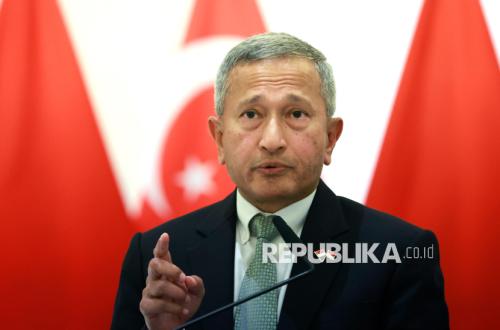
SINGAPORE — The attacks on Singapore are considered to have been a coordinated operation. Singaporean media outlet Channel News Asia traced the series of cyberattacks through digital investigations.
One example was an Instagram post on Friday night claiming that Singapore’s ambassador in Jakarta had “received” two prominent Indonesian figures at his residence.
The post named former Indonesian deputy foreign minister Dino Patti Djalal and academic Saiful Mujani, and questioned whether there was a hidden agenda behind the alleged visit.
The Instagram caption also used a pejorative term from the colonial era in Javanese to refer to local people who “serve” foreigners.
Posted by a satirical meme account with more than 710,000 followers, it appeared to be an early attempt to draw online public attention to the alleged meeting with the ambassador.
Both figures strongly denied the claim, calling it entirely fictitious, while the Singapore Embassy dismissed it as “disinformation”.
The two men had been in the spotlight for different reasons. The day before, Dino publicly rejected claims that Singapore was behind the Indonesian stock market’s slump.
Meanwhile, the previous week, Saiful’s polling institute published survey results showing declining support for Indonesian President Prabowo Subianto.
The post was among nearly 400 items identified by CNA Verify across platforms including Instagram, TikTok, YouTube, X and Facebook, which spread or repeated false and baseless claims about Singapore.
Taken together, the posts had amassed nearly 12 million views across the social media platforms. Half of those views came from just 10 posts.
Among the main allegations were that Singapore had engineered the market collapse in Indonesia and should be punished for it, as well as claims that Dino and Saiful were acting on Singapore’s instructions.
The posts, detected through AI-powered searches and then manually reviewed by the CNA Verify team, appeared between 19 and 27 October. This period coincided with smoke from forest fires in Indonesia spreading across the region and the Indonesian stock market recording its worst two-day decline on record.
Further analysis by CNA Verify also found strong indications that some accounts spreading the allegations were coordinated: they were created on the same day, posted similar text and images, and published content at almost the same time. However, it could not establish whether a single party or operator was behind the posts.
Responding to CNA Verify’s findings, Muhammad Faizal bin Abdul Rahman, a researcher with the regional security architecture programme at the S. Rajaratnam School of International Studies (RSIS) think tank, cited studies showing that Indonesia’s digital space is populated by people known as “buzzers” who seek to influence domestic political opinion.
“Some may be coordinated by local political actors, while others may emerge organically from the grassroots. We may be seeing a combination of the two,” said Faizal, whose expertise includes influence operations and geopolitics, as quoted by Channel News Asia.
“Their main aim is likely to silence dissenting voices at home. But if nationalist sentiment links foreign parties to those voices, other countries may inevitably be drawn in as targets as well.”