
Singapore Layoffs Rise, University Graduates Hit Hardest
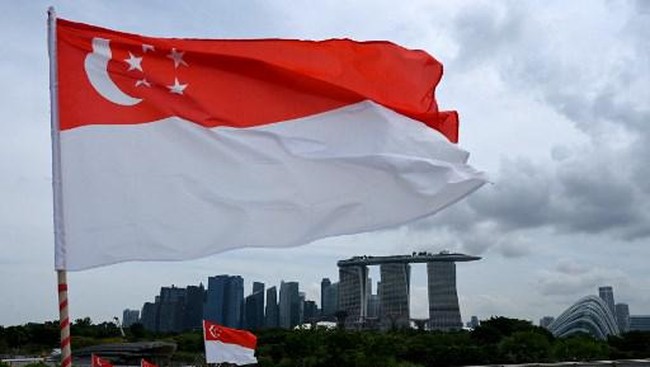
The wave of retrenchments in Singapore increased in the first quarter of 2026, with university-educated workers becoming the most affected group amid ongoing restructuring in the professional and knowledge-based sectors.
According to Channel News Asia on Wednesday (17/6/2026), the Ministry of Manpower (MOM) recorded that the number of layoffs rose to 3,830 cases in Q1 2026, up from 3,690 cases in Q4 2025. The increase was primarily driven by corporate restructuring and reorganisation, rather than cost-cutting measures.
Layoffs were concentrated in externally oriented sectors such as manufacturing, financial services, and professional services. Nevertheless, MOM stressed that the overall retrenchment rate remained at 1.6 per 1,000 workers, which is still considered within the normal range and does not yet reflect recessionary conditions.
Data showed that the layoff rate among university graduates surged from 2.6 to 3.1 per 1,000 resident workers, the highest across all education groups. MOM said this indicates that restructuring activity remains concentrated among highly educated workers, in line with organisational changes taking place in professional and knowledge-based industries.
Conversely, the layoff rate for workers with secondary education or lower actually fell to 0.7 per 1,000 workers, while workers with diplomas and professional certifications saw a decline to 1.1 per 1,000 workers.
Beyond university graduates, workers aged 50 to 59 also experienced a rise in the layoff rate, increasing from 2.8 to 3.1 per 1,000 resident workers in the first quarter. Meanwhile, professionals, managers, executives, and technicians (PMETs) remained the occupational group with the highest layoff rate at 2.6 per 1,000 workers, unchanged from the previous quarter.
Although the number of retrenchments increased, Singapore’s labour market continued to show resilience. The proportion of workers who successfully found new employment within six months of being laid off rose to 60.7%, up from 57.4%. Improvements were seen among PMETs, university graduates, and young workers under 30.
Minister for Manpower Tan See Leng said that retrenchment remains a difficult experience for workers, but he noted the positive development of displaced workers returning to employment more quickly. “Retrenchment is never easy. But what is encouraging is that we are seeing more laid-off workers able to find new jobs faster,” Tan said.
In the same report, MOM for the first time also highlighted the impact of artificial intelligence (AI) on the labour market. Based on data released in April, only 6.2% of companies that implemented or trialled AI reported a reduction in headcount, while 8.5% reported a decrease in hiring.
Instead, companies were more likely to redesign jobs after adopting AI. A total of 18.9% of respondents stated they had changed job functions as a result of implementing the technology. Tan assessed that AI has so far been reshaping jobs more than eliminating them. “AI will indeed change the way we work. But so far, what we see is that AI is reshaping jobs more than replacing workers,” he said.
Around 85% of AI users also reported increased productivity, time savings, and better work quality. Therefore, the Singapore government continues to push for workforce upskilling to enable adaptation to new job demands in the AI era.
Source: jawawa.id (https://jawawa.id/newsitem/singapore-layoffs-rise-university-graduates-hit-hardest-1781671933)
Originally published by CNBC Indonesia (https://www.cnbcindonesia.com/lifestyle/20260617094718-33-743264/phk-naik-di-singapura-lulusan-sarjana-yang-jadi-korban-melonjak), translated from Indonesian