
Singapore Assesses Indonesia as Remaining Attractive for Investment
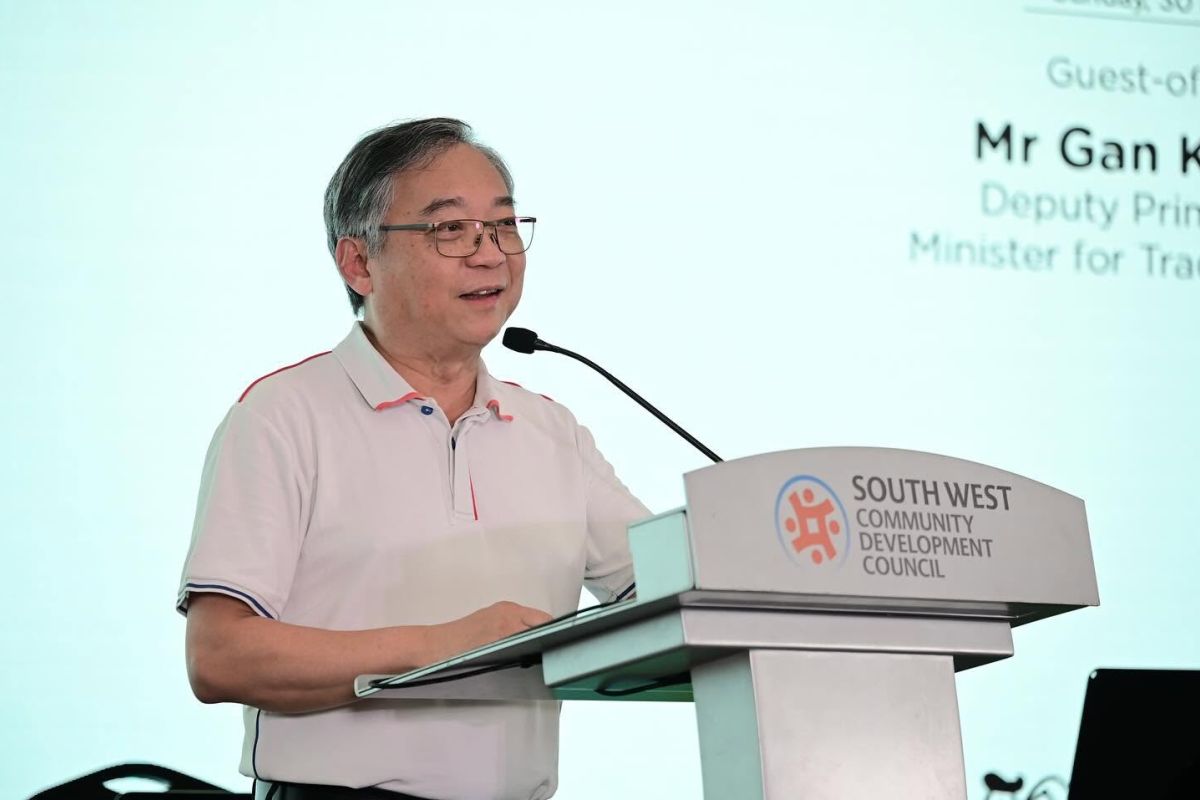
The Singapore government has assessed that Indonesia’s long-term economic fundamentals remain strong and attractive for businesses, even though the domestic financial market has recently experienced volatility. The statement was emphasised by Deputy Prime Minister and Minister for Trade and Industry Gan Kim Yong in a written statement from the Singapore Embassy in Jakarta, responding to the outlook for market attractiveness and the sustainability of investment flows into Indonesia amid global economic dynamics. “Singaporean entrepreneurs continue to have a strong interest in Indonesia. I think we can continue to see investments flowing into Indonesia,” Yong said during a joint press conference with Indonesian Coordinating Minister for Economic Affairs Airlangga Hartarto in Jakarta on Tuesday. “In the long term, Indonesia’s fundamentals remain very strong, very attractive, as a place with abundant resources, a large workforce, and many opportunities,” he stated following the 16th Singapore-Indonesia Six Bilateral Economic Working Groups Ministerial Meeting. Yong did not deny that Indonesia, like many other countries around the world, will continue to face periodic challenges due to global economic dynamics. However, he expressed optimism that the future of bilateral cooperation will remain promising if these challenges are met with solid collaboration. He noted that the realisation of Singaporean investment in Indonesia continues to show a strong trend, with Foreign Direct Investment (FDI) contributions reaching approximately 17.4 billion US dollars. In the investment sector, both countries discussed strategic measures to facilitate and simplify business operations in order to maintain the attractiveness of the investment climate for investors. One of the main focuses is the transformation of the Batam, Bintan, and Karimun (BBK) area into a dynamic digital hub. Singapore and Indonesia will jointly conduct a technology sector study to identify new opportunities and formulate concrete recommendations for BBK’s future development. In addition, a flagship bilateral cooperation project, the Kendal Industrial Park (KIP) in Central Java, is confirmed for significant expansion. With a land expansion of up to 1,000 hectares, KIP is projected to attract new investment, create jobs, and spur economic growth in Central Java. In the energy sector, a utility-scale solar power plant project resulting from a collaboration between Sembcorp and PT Sumber Energi Surya Nusantara (SESNA) has now entered the construction phase. The 200 MW capacity project, equipped with an 80 MWh battery energy storage facility, is targeted for completion next year. Additionally, Indonesia’s first pilot project for biogas-to-biomethanol is being developed in North Sumatra through a partnership between CRecTech and Pertamina. Meanwhile, in the field of agricultural technology, both countries have commenced the inaugural implementation of the Young Farmers Development Programme in Singapore to deepen collaboration in this sector. “Overall, the outcomes of today’s meeting reflect a partnership that evolves over time—a partnership that is responsive to new challenges and grounded in a shared vision to create a region that is growing, resilient, and sustainable,” said Yong.