
Singapore and Indonesia Race to Build Nuclear Power Plants
JAKARTA — Singapore Prime Minister Lawrence Wong has urged all parties to honour gas supply contracts after Indonesia cut its natural gas exports to Singapore from Saturday (24 October 2026). At the same time, Wong said his country was assessing nuclear energy so that it would not remain dependent on gas.
“Gas supplies are governed by commercial contracts. We hope all parties will honour their commitments, and Singapore’s gas importers will take the necessary steps to protect their rights and interests under those contracts,” Wong, who is also secretary-general of the People’s Action Party (PAP), said at the party’s convention on Sunday (25 October 2026), according to Channel News Asia (CNA) and The Straits Times.
Upstream oil and gas regulator SKK Migas told CNA that the cut was made to redirect more gas to meet domestic electricity demand. Singapore’s Energy Market Authority (EMA) said the reduction was 31 million standard cubic feet per day (MMSCFD), or less than 2 per cent of Singapore’s total daily gas supply.
Although the share is small, the cut touches a vulnerable point in Singapore’s energy security. About 95 per cent of the country’s electricity is generated from natural gas, a significant portion of which is imported by pipeline from Indonesia.
Interestingly, the planned reduction had already been reflected in discussions on a new gas sales contract with Singapore six years ago. Negotiations began in 2020 and an agreement was reached in 2022, ahead of the previous contract’s expiry in 2023. The latest contract runs until 2028. At the time, the Indonesian government had already indicated that gas sales to Singapore would be lower as domestic industrial needs took priority.
Wong said Singapore had prepared for risks of this kind. The country has invested in liquefied natural gas (LNG) terminals so it can import gas from various countries without relying on pipelines. This gives Singapore more options for managing supply disruptions.
However, Wong said Singapore must look beyond natural gas to cleaner energy sources capable of providing reliable electricity around the clock. The authorities are therefore assessing the potential of nuclear power.
Wong acknowledged that there were concerns. “It is understandable that there are concerns about the safety of nuclear power in a small and densely populated country like Singapore. We take those concerns very seriously. Safety must come first,” he said.
“But we should not rule out an option simply because it is difficult or controversial. We must carefully weigh the risks and benefits, involve Singaporeans and, ultimately, make the right decision to secure our energy future,” Wong said.
From 2027, Singapore will undergo an Integrated Nuclear Infrastructure Review by the International Atomic Energy Agency (IAEA) to assess its readiness to make an informed decision about adopting nuclear energy.
Wong also warned that computing power would become increasingly important to the future economy and would require very large amounts of energy.
Across the strait, Indonesia is moving in a similar direction. The government aims to have selected a site for a nuclear power plant (PLTN) by 2027 at the latest.
“The government is pursuing nuclear power plants. God willing, by 2026 or 2027 at the latest, the government will have selected the site,” Elen Setiadi, deputy for energy and mineral resources co-ordination at the Coordinating Ministry for Economic Affairs, said at a WRI Indonesia seminar in Jakarta on Wednesday (30 September 2026), Antara reported.
Elen said site selection would take account of the chosen nuclear technology. She said several technologies and potential partners were being considered, with interested parties from the United States, South Korea, Japan and Russia.
Elen said nuclear power was part of efforts to provide sufficient, reliable, competitive and sustainable energy to support economic growth and industrialisation. National electricity demand is projected to rise to 600 terawatt-hours (TWh), with per-capita consumption approaching 2,000 kilowatt-hours (kWh) by 2030, she said.
A strategic pillar of the energy transition
Alongside nuclear power, the government is promoting the development of solar, hydropower, wind, bioenergy, geothermal and marine energy.
Under state electricity company PLN’s 2025–2034 Electricity Supply Business Plan (RUPTL), the government is targeting an additional 69.5 gigawatts (GW) of generation and energy storage capacity. Of this, 42.6 GW, or 61 per cent, will come from renewable energy; 10.3 GW, or 15 per cent, from energy storage; and 16.6 GW, or 24 per cent, from fossil-fuel power plants.
The plan allocates 500 megawatts (MW) to nuclear power through the construction of small reactors. The capacity is divided equally, with 250 MW each for the electricity systems of Sumatra and Kalimantan, targeted to begin operating in 2032 and 2033.
The year 2027 will therefore be a milestone for both neighbours: Singapore will begin its IAEA review, while Indonesia aims to have selected the site for its first nuclear power plant.
For Indonesia, this direction has been evident since last year. In June 2025, Deputy Energy and Mineral Resources Minister Yuliot Tanjung said China and Russia had offered nuclear power plant technology. At the time, the government was still considering whether the planned 500 MW plant would use a small modular reactor (SMR) or a large-scale reactor.
“We are considering the technology first and looking for a suitable option. There is also a requirement for around 40 per cent domestic content,” Yuliot said at the time, referring to the domestic component level requirement.
By late October 2025, the government’s position had become firmer. At an executive meeting of the Nuclear Energy Regulatory Agency (Bapeten) in Jakarta on Monday (27 October 2025), Yuliot described nuclear power as a strategic pillar of the energy transition towards net-zero carbon emissions by 2060, as well as a support for national energy security. “Nuclear power is no longer considered a last resort, but an important part of national energy planning,” he said.
That same week, Singapore helped sharpen the focus on the issue. At Singapore International Energy Week (SIEW) 2025, as ASEAN countries actively discussed nuclear energy opportunities, National Economic Council chairman Luhut Binsar Pandjaitan said Indonesia was beginning to prepare small modular reactors as part of its national energy transition roadmap.
“Because Indonesia is an archipelagic country with more than 17,000 islands, we need small modular reactors that can be deployed in the eastern regions,” Luhut said at the time.
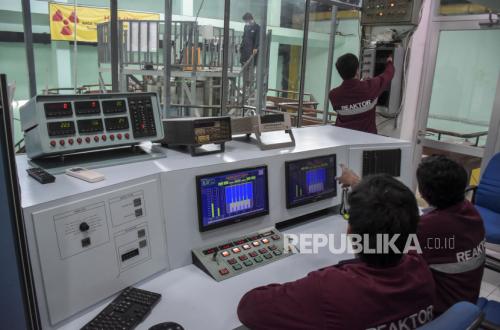
In Indonesia, the National Research and Innovation Agency (BRIN) had already begun laying the groundwork. Since 2019, BRIN and Gadjah Mada University (UGM) have been developing a simulator for a 50–70 MW small modular pressurised water reactor (PWR). This type of reactor relies on natural circulation, allowing coolant to continue circulating on its own even if the power supply fails.
Source: jawawa.id (https://jawawa.id/newsitem/singapore-and-indonesia-race-to-build-nuclear-power-plants-1792975850)
Originally published by Republika (https://analisis.republika.co.id/berita/tnho08475/kejarkejaran-membangun-pembangkit-nuklir-di-singapura-dan-indonesia), translated from Indonesian