
Singapore Air Quality Reaches Unhealthy Levels Due to Indonesian Haze
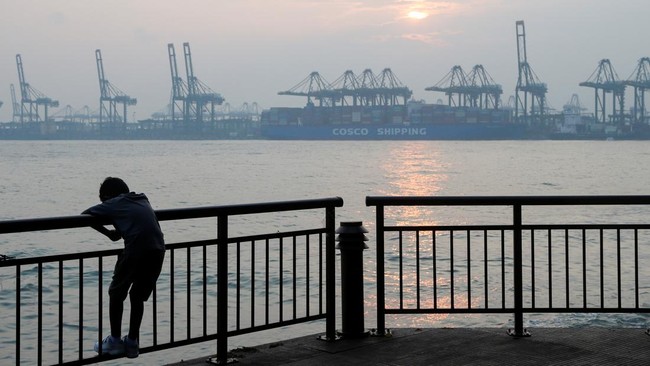
Air quality in central Singapore entered the unhealthy category on Friday (4/9/2026). The 24-hour Pollutant Standards Index (PSI) breached the 100 mark amidst the increasing risk of transboundary haze across Southeast Asia.
According to data from Singapore’s National Environment Agency (NEA) reported by Channel News Asia (CNA), the 24-hour PSI in the central region reached 101 at 07:00 local time, subsequently rising to 105 by 10:00. Under Singapore’s standards, a PSI of 0-50 is classified as good, 51-100 as moderate, 101-200 as unhealthy, 201-300 as very unhealthy, and above 300 as hazardous. Meanwhile, air quality in other parts of Singapore remained at moderate levels, with readings of 90 in the west, 89 in the east, 78 in the north, and 75 in the south at 10:00.
Singapore utilises the 24-hour PSI as a daily air quality indicator and the basis for NEA health advisories. The index is calculated based on six pollutants: PM2.5, PM10, ozone, sulphur dioxide, nitrogen dioxide, and carbon monoxide. PM2.5, fine particles with a diameter of 2.5 micrometres or smaller, is a dominant pollutant during haze events and poses significant health risks.
In its latest update, the NEA noted that numerous air quality monitoring stations in Kalimantan, central and southern Sumatra, as well as Sabah and Sarawak, recorded air quality levels ranging from unhealthy to hazardous. Widespread hotspots have been detected across Kalimantan and the southern and central regions of Sumatra, with additional hotspots found in parts of southern ASEAN currently experiencing dry conditions.
Moderate to thick transboundary haze has been observed in northern Borneo and southwestern Philippines. Additionally, moderate to thick smoke plumes are visible across many areas of Kalimantan, central and southern Sumatra, and central Sarawak. The NEA stated that dry conditions are expected to persist in many southern ASEAN regions over the coming days, except for northern Peninsular Malaysia, Sumatra, and central Borneo, which are expected to receive rain.
The NEA warned that hotspot and haze situations are expected to remain high in fire-prone areas experiencing prolonged dry conditions, with the risk of severe transboundary haze continuing.
The NEA issues daily haze advisories whenever the 24-hour PSI enters the unhealthy category or exceeds 100. For healthy individuals, the NEA suggests reducing prolonged or heavy physical activity outdoors when the PSI is at unhealthy levels. Such activities should be avoided entirely if air quality reaches the very unhealthy category. Vulnerable groups, including the elderly, pregnant women, and children, are advised to minimise outdoor physical exertion during unhealthy periods. Furthermore, individuals with chronic lung or heart diseases are advised to avoid heavy outdoor activities at these levels.
Singapore’s Ministry of Manpower also provides guidelines for companies to protect workers from the impacts of haze. Companies are requested to identify vulnerable workers and outdoor tasks that need to be reduced when haze risks increase. If outdoor work cannot be halted, companies are encouraged to provide appropriate masks or respirators. Previously, in early August, the ASEAN Specialised Meteorological Centre raised the warning status to Level 2 for the southern ASEAN region, the second-highest alert level, indicating an increased risk of transboundary haze.
Source: jawawa.id (https://jawawa.id/newsitem/singapore-air-quality-reaches-unhealthy-levels-due-to-indonesian-haze-1788512113)
Originally published by CNBC Indonesia (https://www.cnbcindonesia.com/lifestyle/20260904132818-33-764986/kualitas-udara-singapura-sentuh-level-tidak-sehat-imbas-kabut-asap-ri), translated from Indonesian