
"Silvofishery" pattern increases interest of farmers in mangrove rehabilitation
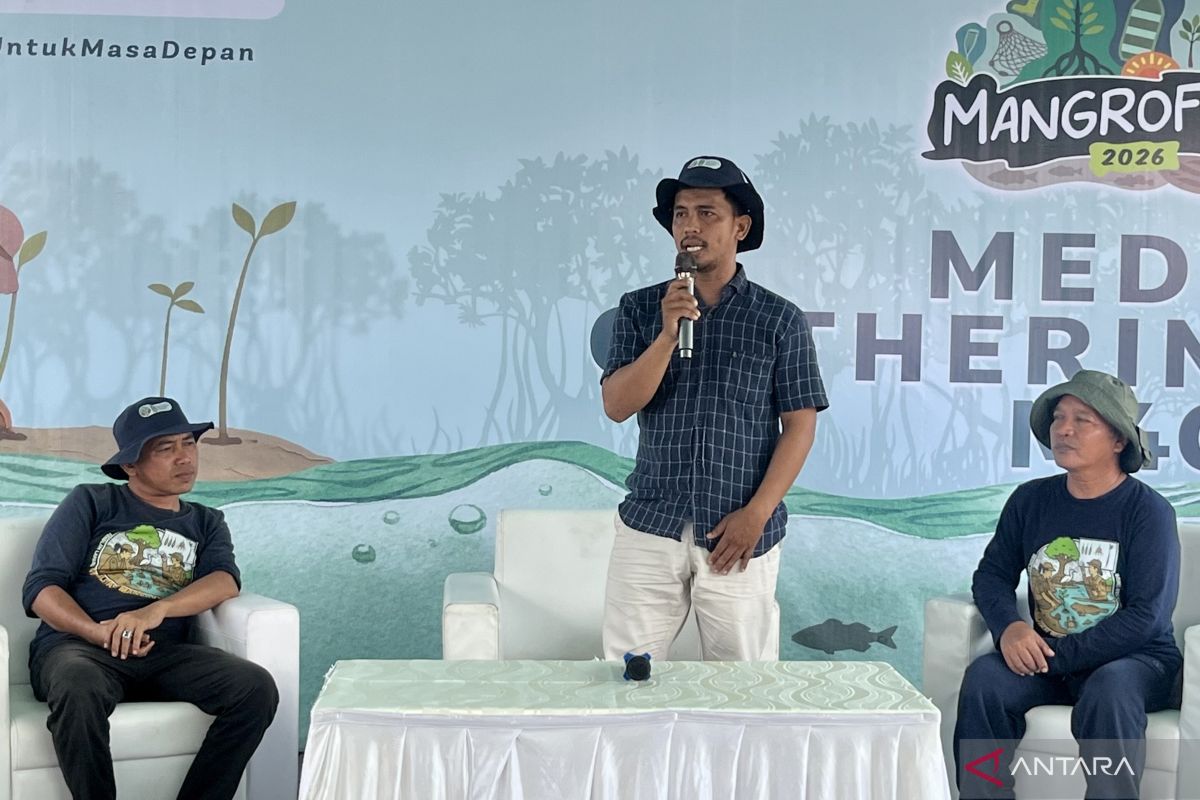
Kutai Kartanegara (ANTARA) - The implementation of an environmentally friendly aquaculture pattern, known as silvofishery, within mangrove rehabilitation programmes is increasing interest among farmers in Sepatin Village, Kutai Kartanegara Regency, East Kalimantan, to participate in restoring the mangrove ecosystem.
Suwardi, Chairman of the Peduli Hutan Mangrove Forest Farmer Group (KTH), stated that some farmers were previously reluctant to participate in mangrove rehabilitation due to fears that planting would disrupt aquaculture activities in their ponds.
“From 2025 to 2026, given the conditions we are experiencing on the ground, I believe there is a slight increase in community interest in rehabilitating mangroves because the M4CR programme introduces a different planting pattern,” Suwardi said during a media briefing with the coastal community of Sepatin Village, East Kalimantan, on Friday.
According to him, in previous rehabilitation programmes, mangrove planting was carried out across almost the entire pond area, leading to concerns among farmers that their ponds would become dirty and production would be hindered. However, the Mangroves for Coastal Resilience (M4CR) programme employs a different planting pattern through the silvofishery concept, which blends aquaculture with mangrove vegetation so that both cultivation functions and environmental preservation can coexist.
In addition to technical challenges, he noted that community groups often faced doubts from farmers who feared their land would be seized by the government if they participated in the mangrove rehabilitation programme.
“Alhamdulillah, the Ministry of Forestry has directly communicated that when participating in mangrove rehabilitation, no ponds will be forcibly taken by the government,” Suwardi added. He revealed that this assurance has helped increase community confidence to participate in mangrove rehabilitation in coastal areas.
The M4CR programme in East Kalimantan involves community groups in mangrove rehabilitation through a participatory approach, including the application of the silvofishery model in coastal aquaculture areas. Based on the M4CR rehabilitation implementation documents, the Peduli Hutan Mangrove KTH is applying the silvofishery pattern in aquaculture areas, with a planting area of 31 hectares in 2025 and 29 hectares in 2026, which is currently ongoing. The group recorded a mangrove seedling survival rate of 61 per cent for the 2025 planting.