
Silver Prices Set to Remain Weak
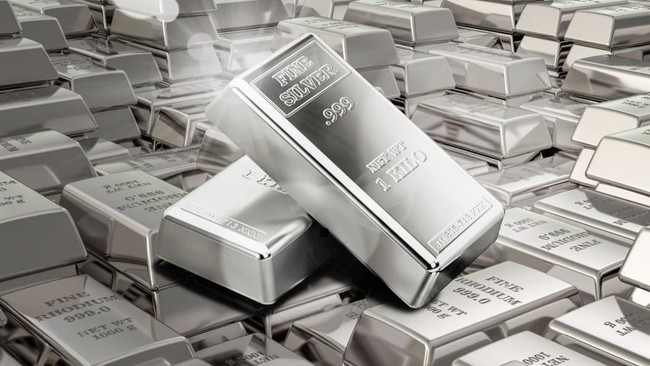
Global silver prices faced renewed pressure during the trading period of 28 September to 2 October 2026. XAG/USD ended trading on Friday (2/10/2026) at US$60.39 per troy ounce, a decrease of US$3.89 or 6.05% compared to the previous week’s close of US$64.28.
The most significant pressure occurred at the start of the week. Silver plummeted 5.16% on Monday to US$60.97, before briefly rebounding 0.80% to US$61.45 on Tuesday.
This recovery was short-lived. Prices fell again by 1.70% to US$60.41 on Wednesday. After rising 0.73% to US$60.85 on Thursday, silver weakened by another 0.75% on Friday.
Friday’s close marked the lowest point of the week. This condition indicates that buyers have been unable to sustain a recovery despite the sharp price correction.
Dollar and Bond Yields Apply Pressure
The strengthening US dollar and high US government bond yields are the primary pressures on silver. Inflation concerns resulting from energy supply disruptions are maintaining expectations for tight monetary policy.
Tensions around the Strait of Hormuz have also increased the risk of rising energy costs. For silver, the impact is not always positive; although precious metals are often viewed as safe-haven assets, persistent inflation can lead to sustained high interest rates, increasing the attractiveness of bonds over non-interest-bearing assets.
However, US employment data at the end of the week provided signals of weakness. The Bureau of Labor Statistics reported that non-farm payroll additions in September were only 29,000, while the unemployment rate stood at 4.2%. Annual wage growth was recorded at 3.0%.
This data has the potential to reduce pressure for interest rate hikes. Nevertheless, silver’s closing price remained weak, suggesting that changes in policy expectations have not yet been sufficient to reverse the price trend.
Short-Term Trend Remains Bearish
Technically, silver is trading below its five-day closing average of US$60.81, its 10-day average of US$62.98, and its 20-day average of US$63.91.
Closing peaks are also becoming progressively lower, dropping from US$67.08 on 22 September to US$64.28 on 25 September, and then to US$61.45 this week. This structure demonstrates a continuously weakening upward momentum.
As long as prices fail to break back above the US$61.45 area, any rebound remains at risk of being merely a temporary recovery within a downward trend.
Projection for Next Week
For the trading period of 5-9 October 2026, the bias for silver remains bearish, with opportunities for consolidation around US$60.
The US$60.39 area serves as the nearest support, followed by the psychological level of US$60. A daily close below US$60 would increase the risk of further declines.
On the upside, US$60.85 acts as the initial resistance, followed by US$61.45. If both areas are successfully breached, a recovery could test the US$62.96–US$62.98 range.
The direction of the dollar, US bond yields, developments in the Middle East conflict, and changes in interest rate expectations will be the primary determinants. A weakening dollar and falling bond yields are required to help silver build a stronger recovery.