
Silent in the Therapy Room: The Story of a Blind Masseur Surviving Amid the Onslaught of Online Massage
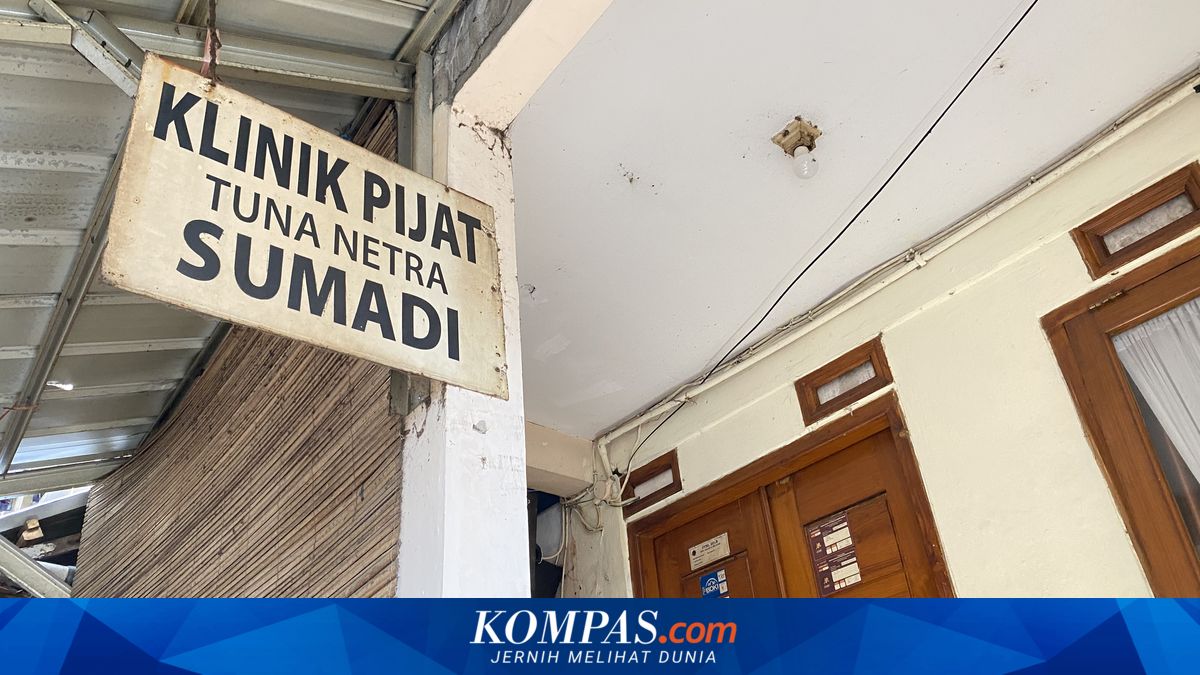
JAKARTA, KOMPAS.com - A sign reading ‘Klinik Pijat Tuna Netra Sumadi’ hangs outside a modest building in Gang Keamanan III, Tebet, South Jakarta. The paint on the sign is fading with age, but its black lettering remains legible from the narrow alleyway into the residents’ settlement. Inside the narrow passage to the clinic, Sumadi (57) sits on a plastic bench, clutching his phone. The pale white light in the room illuminates cream walls that are beginning to look worn.
Sumadi has relied on the profession of blind masseur for more than 30 years. But the busy days he once felt have become a memory. ‘I used to have seven to eight clients a day. I once had up to ten,’ Sumadi told Kompas.com by phone on Wednesday 20 May 2026. Now, the numbers have dropped drastically. In a month, he says he receives about 20 customers. It is not uncommon for the clinic to be empty for several consecutive days. ‘Today there is only one potential customer who wants to come,’ he said.
For Sumadi, the changes feel stark. He came to Jakarta from Jepara, Central Java in 1990 after training in massage at the Panti Sosial Bina Netra (PSBN) in Kudus, Central Java. The skill of massage became a lifeline enabling him to live independently in the capital city.
Initially, he worked at a shelter belonging to the Jakarta Social Service Agency (Dinas Sosial DKI Jakarta) in Mangga Dua, North Jakarta. After gathering a little capital, he began his own practice from a rented house. ‘Back then I found it easier than now. The rates were low, but the money for the time spent was valuable,’ he said.
The term ‘panti pijat tunanetra’ is also associated with ‘more serious and professional’ health massage. But developments of the times changed everything. Sumadi says the rise of app-based massage services has been one of the biggest blows to his profession. ‘Now there are many online massages, including premium ones. It has eroded customers,’ he said.
He himself tried to adapt by joining the GoMassage service under GoLife in 2015. At that time, customers briefly rose again because booking access became easier. But the service ceased operations when the Covid-19 pandemic hit. ‘After the pandemic, many customers disappeared and did not return,’ he said.
The pandemic was the toughest period for many blind masseurs. A profession that relies on physical contact effectively ground to a halt during social restrictions. Even in older age, he has persisted with the skills that have become part of his life for decades. ‘Exhausted, of course. But fatigue from many customers is actually pleasant,’ Sumadi said with a faint smile. For him and many blind masseurs, the biggest problem is no longer the physical energy, but how to stay afloat in a world that is changing ever faster.
Source: jawawa.id (https://jawawa.id/newsitem/silent-in-the-therapy-room-the-story-of-a-blind-masseur-surviving-amid-the-onslaught-of-online-massage-1779542112)
Originally published by Kompas (https://megapolitan.kompas.com/read/2026/05/22/16220041/senyap-di-ruang-terapi-kisah-pemijat-tunanetra-bertahan-di-tengah?utm_source=ABC&utm_medium=rss), translated from Indonesian