
Signs of the Apocalypse Are Growing Clearer in Milk and Rice Fields
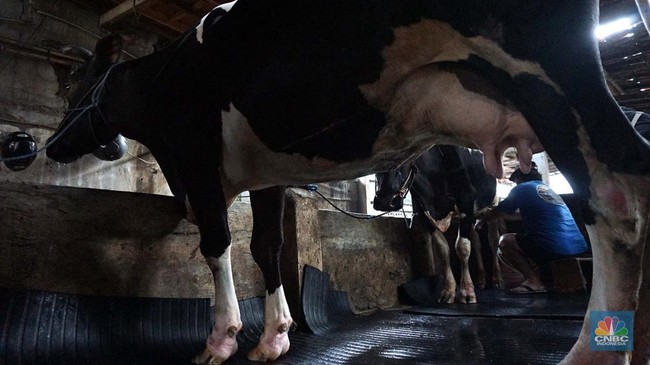
Jakarta, CNBC Indonesia - Climate change impacts are increasingly felt across various sectors of life. Extreme weather and rising temperatures are beginning to disrupt global food security. These signs are already visible from rice production to milk.
Extreme heatwaves, prolonged droughts, floods, and unpredictable seasonal patterns directly affect livestock and agriculture sectors.
A study found rice may not survive due to rising temperatures. The research indicates that air temperatures have exceeded rice cultivation limits over the past 9,000 years. Global warming is also occurring 5,000 times faster than rice’s evolutionary adaptation capacity.
Lead author Nicolas Gauthier explained this situation has likely pushed rice to its thermal limit, where it can no longer easily adapt to temperature increases. Gauthier added that future global warming could disrupt billions of people working in rice cultivation.
Historically, rice plants have thrived in areas with average annual temperatures below 28°C and a maximum of 33°C. Warmer regions may become more habitable due to climate change, but Gauthier noted that centuries-old paddy fields cannot be easily relocated, which would have major economic and food security consequences.
“You can maintain global rice production by moving cultivation areas, but this does not solve the problem for people in South Asia who depend on rice,” said Gauthier, an anthropologist and geographer at the Florida Museum of Natural History, citing Live Science on Sunday 24 May 2026.
Rice photosynthesis stops around 40°C. While rice prefers warmth, excessive heat affects pollen viability and grain development.
Another issue is rice’s high water requirement. Changing rainy and dry seasons, along with rising sea levels causing saltwater intrusion in low-lying fields, add further challenges.
Climate Change Impacts on Milk and Cheese Industry
Researchers highlight changes in milk quality due to environmental conditions and feed patterns affected by extreme weather.
A study published in the Journal of Dairy Science by Université Clermont Auvergne in France showed cow milk taste has changed compared to previous years. This change relates to the type of feed consumed by cattle.
As a result, the nutritional content of milk has altered, leading to less palatable cheese.
“If climate change continues at current rates, we will taste it in our cheese,” said Matthieu Bouchon, lead researcher of the study, to Science News.
In 2021, researchers compared two groups of cows: one fed grass and the other additional feed. Cows fed corn produced similar volumes with lower methane emissions, but their milk was less savoury and rich compared to grass-fed cows.
Grass-fed cows also had higher levels of omega-3 fatty acids and lactic acid, which are important for heart and digestive health.
This phenomenon is widespread, from Europe to Brazil.
Brazilian dairy farmer Gustavo Abijaodi said climate change has reduced milk quality there.
“We face many issues with protein and fat content in milk due to high temperatures,” Abijaodi said. “If we can stabilise heat impacts, cows will produce better, more nutritious milk.”
Other findings show cattle feeding patterns are changing due to extreme temperatures from global warming causing cows to eat less.
“Cows generate heat when digesting food, so when they feel hot, they eat less to lower body temperature,” said Brazilian Federal University of Lavras livestock expert Marina Danes.
Reduced food intake weakens animal immunity, making them more susceptible to disease.
“This process can lead to weakened immunity, making animals more vulnerable to illness,” she added.