
Signs of the Apocalypse Are Clearly Visible from a Toothbrush
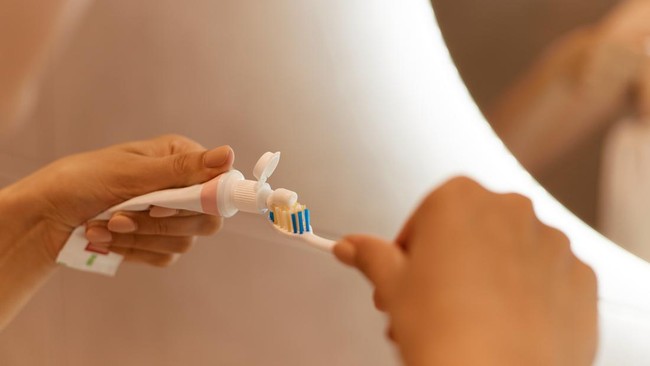
The modern toothbrush, a staple of daily hygiene, is contributing to environmental degradation and climate change. While early toothbrushes were made from natural materials like bamboo or animal bone, the 20th century saw a shift to plastic handles and nylon bristles. According to Greenbiz, these materials are non-renewable and do not decompose easily, posing a long-term threat to the environment.
National Geographic identifies the toothbrush’s short lifespan as a core part of the crisis. The American Dental Association recommends replacing toothbrushes every three to four months. For Indonesia’s population of 273 million, this habit could generate over one billion discarded toothbrushes annually. Globally, with eight billion people, the figure could reach 24 billion toothbrushes thrown away each year. Over a 75-year lifetime, a single person might dispose of roughly 300 toothbrushes.
In the United States alone, the annual toothbrush waste is equivalent to four wraps around the Earth. UK-based company Haeckels estimates 264 million toothbrushes are discarded yearly, a figure that excludes battery-containing electric models. Like other plastics, a toothbrush can take 200 to 700 years to decompose. During this time, the Massachusetts Institute of Technology notes it releases greenhouse gases, and in marine environments, it can kill zooplankton, which are vital for carbon absorption. Journalist Alejandra Borunda wrote in National Geographic that finding a plastic-free alternative is extremely difficult, and biodegradable plastics are not necessarily better for the planet than traditional plastics.