
Signs of Food Crisis Emerge as Rice, Wheat, and Sugar Prices Surge
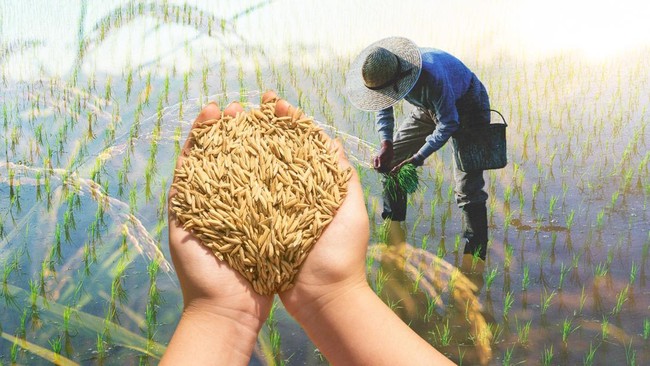
The global food price increase has not yet returned to the crisis levels seen in 2022. However, the latest report from the Food and Agriculture Organization (FAO) shows that market direction is beginning to shift. Wheat, maize, rice, and sugar moved up together in May 2026, whilst world cereal production is forecast to shrink in the next planting season.
According to the FAO Food Price Index, the world food price index stood at 130.8 points in May 2026. This figure was down a slight 0.2% compared to April. Year-on-year, the index was still 2.9% higher. Nevertheless, the current position remains 18.4% below the record high reached in March 2022 when global food markets were rocked by the Russia-Ukraine war.
The condition that appears stable on the surface actually conceals different dynamics for each commodity.
The cereal group was the largest source of increase. The FAO Cereal Price Index rose 2.6% compared to the previous month and 4.9% compared to May last year. World wheat prices rose for the fourth consecutive month after harvest prospects in a number of major exporting countries deteriorated.
The FAO stated that the condition of the United States winter wheat crop is at one of its weakest levels in decades. Rising fuel and fertiliser costs are compounding the pressure on the market.
Maize followed the same pattern. Import demand from a number of countries increased as supplies from Brazil and the United States began to tighten.
Higher energy prices boosted demand for maize for ethanol production. The effect was immediately visible on the international market. Sorghum and barley prices also rose as the market sought alternatives amidst tightening wheat and maize supplies.
Rice moved in the same direction. The FAO Rice Price Index rose 2.7% in May. Concerns about weather conditions in a number of Asian exporting countries emerged alongside rising prices for crude oil and its derivatives. This combination increased both production and distribution costs, thus supporting the price increase.
The next pressure came from the sugar market. The Sugar Price Index soared 7.5% in one month, reaching its highest position since October 2025. According to the FAO, the market reacted to the latest data from Brazil showing the share of sugarcane for sugar production was smaller than previously estimated.
Some sugarcane could potentially be diverted for ethanol needs. At the same time, market players began to factor in the weather risk from El Niño on sugar production in India and Thailand for the 2026/2027 season. Both countries are important suppliers for the world sugar trade.
Amidst the rise in cereal and sugar prices, the vegetable oil market moved in the opposite direction. The FAO Vegetable Oil Price Index fell 4.6%, marking the first decline throughout 2026. Palm oil prices weakened after rising for five consecutive months.
The FAO cited prospects of weaker global import demand and uncertainty in the energy market as the main factors. Soybean oil prices also came under pressure from increased export supplies from South America. The decline in vegetable oils kept the overall world food index moving flat.
Meat price movements were relatively calmer. The Meat Price Index rose a slight 0.1% compared to April and was 6.3% above last year’s position. Beef prices were still supported by strong import demand, especially from China and the United States.
The FAO noted that China’s import quotas continue to be absorbed quickly whilst export supplies from several producing countries remain limited due to the herd population recovery process. Conversely, pork prices fell due to abundant supply in the European Union and weak import demand.
Meanwhile, the Dairy Price Index fell 0.5% compared to the previous month and was recorded 22.4% lower than May 2025. International butter prices continued to weaken as milk fat supplies increased in Europe and Oceania. On the other hand, skim milk powder prices received support from demand in the Middle East, North Africa, and parts of Asia.
The FAO also flagged that the greater risk lies on the production side. In a separate report on global cereal supply and demand, the organisation forecast that world cereal production in the 2026/2027 season will reach 2.982 billion tonnes, a 2% drop compared to the previous season.
The decline mainly comes from wheat. At the same time, global cereal consumption is still forecast to increase by 0.6%.
World cereal trade is also projected to shrink 0.3% to 507.2 million tonnes in the coming season.
Wheat and barley are expected to experience a decline in trade volume, while maize and rice are still growing.
For food-importing countries like Indonesia, this development deserves attention because wheat, maize, and sugar are commodities that play an important role in the food industry, animal feed, and the national food supply chain.
If the upward price trend continues alongside declining production, cost pressures could re-emerge in the global food market in the coming quarters.
Source: jawawa.id (https://jawawa.id/newsitem/signs-of-food-crisis-emerge-as-rice-wheat-and-sugar-prices-surge-1781067333)
Originally published by CNBC Indonesia (https://www.cnbcindonesia.com/research/20260609101514-128-741285/tanda-krisis-pangan-muncul-harga-beras-gandum-gula-melonjak), translated from Indonesian