
Signs Emerging in Malls: Is the 'Rojali-Rohana' Phenomenon Attacking Indonesia Again?
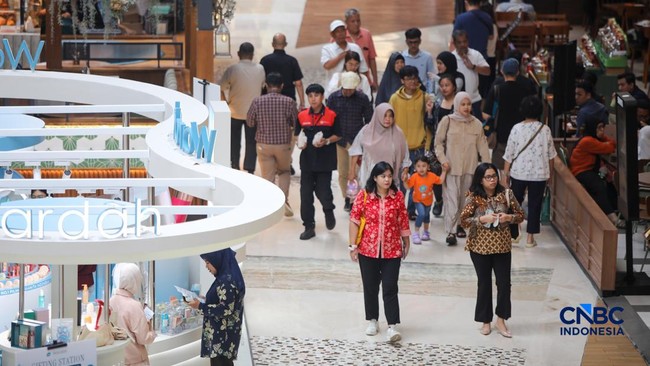
Shopping centres in Jakarta continue to appear busy in the third quarter of 2026. The public continues to visit malls for dining, entertainment, recreation, and socialising, but this crowd does not necessarily result in higher transaction volumes.
Ferry Salanto, Head of Research at Colliers Indonesia, stated that the challenge for the retail industry now is not merely attracting visitors, but converting that traffic into transactions and increasing spending value.
“If we visit several malls in Jakarta now, visually the situation looks quite positive. The malls are crowded, restaurants are full, and many people are coming with their families, appearing to return to normal activities. However, there is one thing we need to distinguish: high visitor numbers do not necessarily mean high transaction volumes,” said Ferry on Wednesday (7/1-10-26).
This phenomenon shares similarities with the conditions widely discussed in 2025 under the terms ‘Rojali’ (groups who rarely buy) and ‘Rohana’ (groups who only enquire). At that time, business players noted that while mall visitor numbers continued to increase, transactions did not always follow the rise in traffic because the public has become increasingly selective in their shopping.
This consumption pattern means that the health of a shopping centre can no longer be measured solely by the number of visitors.
“Footfall is relatively maintained. Malls remain a destination, whether for dining, entertainment, recreation, or socialising. However, consumers are now much more selective in determining when they shop and what they buy,” he said.
He noted that this condition can even be seen in the food and beverage sector. High visitor numbers do not necessarily lead to increased transaction values because consumers may visit malls but spend less.
“Even in the F&B sector, high traffic does not always mean transaction values are increasing. People might come and eat in the mall, but their average spending could also be lower,” explained Ferry.
Due to these changes in consumer behaviour, mall managers are required to undertake more fundamental updates. According to Ferry, rejuvenation is not enough if it only involves beautifying the physical appearance of the shopping centre.
“Therefore, in our view, the measure of a mall’s health is no longer sufficient based on traffic alone. Rejuvenation or upgrading malls has become important. And the rejuvenation we mean is not just about changing floors, adding lighting, or beautifying the interior, but something far more important: repositioning,” he noted.
The focus of retailers is now shifting from chasing the number of locations to chasing the performance of each individual location. Store sizes are also becoming more flexible to adjust to sales potential and operational costs.
“So, the focus is shifting from the number of locations to the performance of each location. If previously the question was how many outlets we could open, now it is more about which location our outlet can produce the best performance,” he concluded.
Source: jawawa.id (https://jawawa.id/newsitem/signs-emerging-in-malls-is-the-rojali-rohana-phenomenon-attacking-indonesia-again-1791381204)
Originally published by CNBC Indonesia (https://www.cnbcindonesia.com/news/20261007164115-4-774183/tanda-tandanya-muncul-di-mal-fenomena-rojali-rohana-serang-ri-lagi), translated from Indonesian