
Signed in the Habibie Era, the Giant Masela Gas Project Finally Begins Construction Under Prabowo
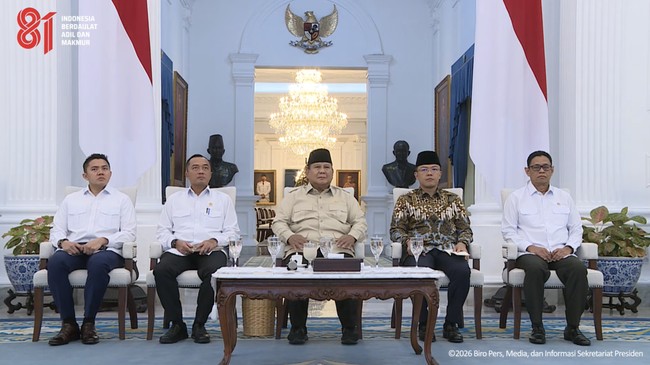
President Prabowo Subianto has officiated the groundbreaking of the Abadi Masela Block, marking the commencement of physical construction for the giant gas project in the Tanimbar Islands, Maluku. The project, which was first agreed upon in 1998, entered a new chapter with the laying of the first stone by President Prabowo on Thursday (16/7/2026).
Minister of Energy and Mineral Resources Bahlil Lahadalia stated that the project, which had been planned for 28 years, could only be executed during President Prabowo Subianto’s administration. “Today, precisely on 16 July, we mark a new chapter for the Abadi Masela project, which was initiated 28 years ago and has spanned six presidencies. It is Mr Prabowo Subianto who can execute it today,” Bahlil said during the groundbreaking ceremony.
Bahlil revealed that for years the project was hampered by a lengthy debate over the refinery development concept, specifically whether it should be built offshore or onshore. However, Prabowo demanded the immediate execution of the project and provided certainty for all oil and gas concessions and permits whose Plan of Development had been completed but not yet implemented. “On that basis, we issued the first warning letter to Inpex, and Alhamdulillah, today we are conducting the groundbreaking,” he stated.
Prabowo emphasised that the construction of this project is crucial for Indonesia’s development journey. He expressed gratitude that after nearly three decades of waiting, the project has finally commenced. “This project has been awaited for almost three decades. Alhamdulillah, today we begin construction, and the construction must not be hindered; it must be completed in the shortest possible time,” Prabowo said in his inauguration speech.
Prabowo outlined that the Tanimbar Islands in Maluku hold vast energy reserves. “We have been aware of this for 28 years, and we appreciate all elements. We must give appreciation once again to all parties who have made this project possible,” he said. He noted that realising this strategic project required significant effort and synergy between ministries and institutions. Since the initial contract, the Masela Block has undergone various policy changes, changes in government, and back-and-forth over the development scheme.
Meanwhile, CEO of Inpex Corporation Takayuki Ueda stated that the project reflects the close collaboration between the Government of Indonesia, all stakeholders, and INPEX to strengthen national energy security and promote sustainable development. “Thanks to this strong synergy, today we can stand together and begin a new chapter in the Abadi Energy project journey,” he said. He added that the project will serve as a foundation for long-term economic growth and create sustainable benefits for society and future generations, while also playing a vital role in supporting energy security for Japan and the Indo-Pacific region.
Lapangan Abadi holds gas reserves of approximately 6.97 trillion cubic feet. The project has the potential to produce 9.5 million metric tonnes per annum of LNG and 150 million standard cubic feet per day of piped gas, along with an estimated 35,000 barrels per day of condensate. The production sharing contract for the Masela Block was originally signed between the Indonesian government and Inpex Corporation on 16 November 1998, during the presidency of B.J. Habibie. The contract was initially valid for 30 years until 2028, but was extended by 20 years to 2048, with an additional seven-year extension granted as compensation for the government’s policy change requiring onshore LNG facility construction. Inpex Masela Ltd holds a 65% participating interest, while PT Pertamina Hulu Energi holds 20% and Petronas holds 15%, following Shell’s exit from the project.