
Sigi Regency Declares 14-Day Disaster Emergency Status Following Earthquake
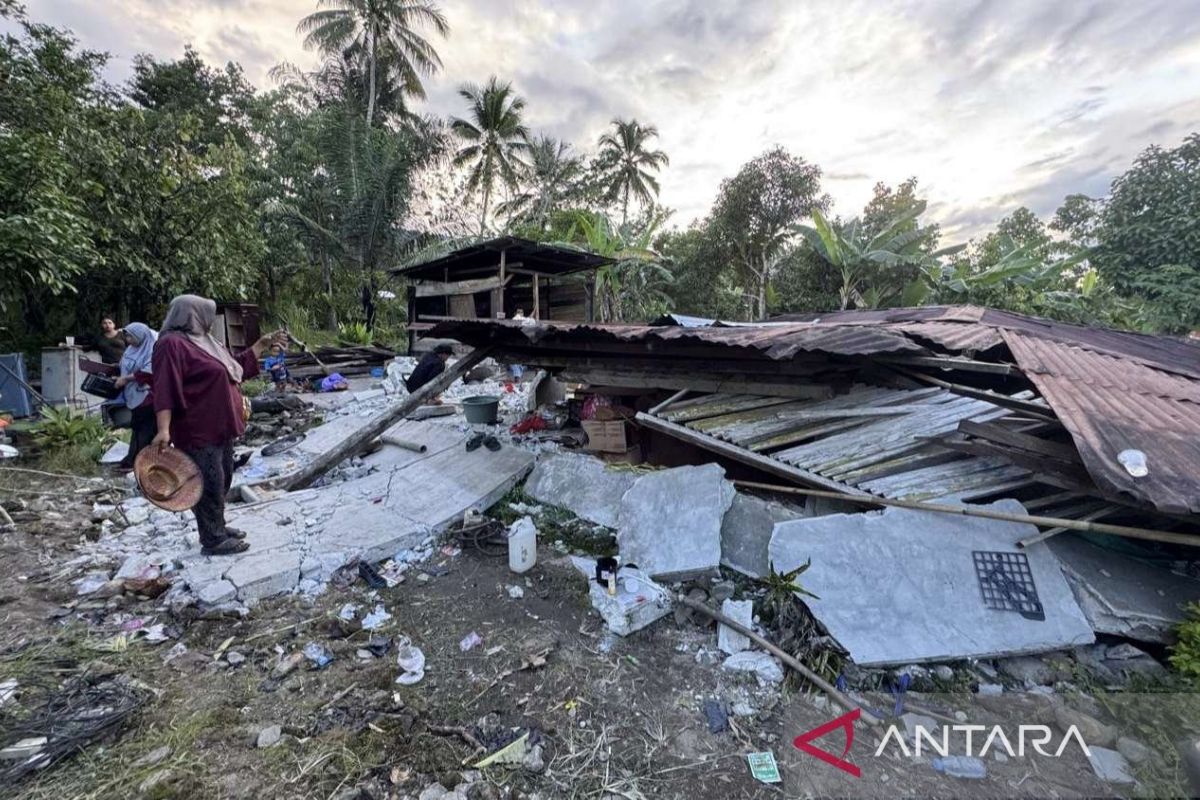
The Sigi Regency Government in Central Sulawesi has declared a disaster emergency status following a magnitude 6.7 earthquake in the area. “The disaster emergency status will last for 14 days, from 17 to 30 June 2026,” said Deputy Regent of Sigi Samuel Pongi after a meeting of the Sigi Disaster Emergency Task Force in Kamarora.
He explained that preliminary data gathered by the local Regional Disaster Management Agency’s (BPBD) Rapid Reaction Team recorded 5,300 affected residents, or 1,300 families, and 1,300 damaged houses. Since the first day of the earthquake on Tuesday (16/6), the Sigi Regency Government has assisted with the evacuation of residents, and on the second day, the government focused on distributing food logistics, clean water, tents, and providing medical treatment to the victims.
“The presence of the Regional Leadership Communication Forum at the disaster site is proof that the government is present to accelerate disaster recovery,” he said. During the emergency response period, the Sigi Regency Government is also deploying Regional Apparatus Organisations, assisted by the Indonesian National Armed Forces, the Indonesian National Police, Tagana, and other volunteers from various institutions to speed up emergency management.
“We are striving to provide excellent service to the affected residents. The regional government has also established a main command post, health posts, and public kitchens to serve the community’s needs,” said Samuel, who is also the Head of the Sigi Disaster Emergency Task Force. He noted that so far, residents have preferred to set up emergency tents in front of their own houses rather than occupy the evacuation posts prepared by the government. “The reason residents do not want to fill the evacuation posts is because they are guarding their belongings, so they prefer to sleep in emergency tents,” he said.
He added that teams in the field are continuing to collect data on affected residents, and the data collection model is being carried out simultaneously with assessments of damaged houses by a team from the Housing and Settlement Area Provision Implementation Centre.