
SIER Partners with Two Investors at EJIF 2026
Surabaya – PT Surabaya Industrial Estate Rungkut (SIER) is strengthening its role in encouraging investment growth in industrial estates by signing Letters of Intent (LoIs) with PT Freyabadi Indotama and PT Filtrona Manufacturing Indonesia at the East Java Investment Forum (EJIF) 2026.
The LoIs were signed at Grand City Convex Surabaya as part of EJIF 2026, held over two days on 1–2 October 2026. The agreements mark an initial stage for SIER and the two companies to explore potential cooperation and further investment development.
SIER’s acting head of marketing division, Dedi Apriyanto, signed the documents. PT Filtrona Manufacturing Indonesia was represented by Site General Manager Pupung Wahyu Purnaman, while PT Freyabadi Indotama was represented by Manufacturing Manager Yaroh.
PT Freyabadi Indotama produces chocolate, while PT Filtrona Manufacturing Indonesia operates in the cigarette-filter sector.
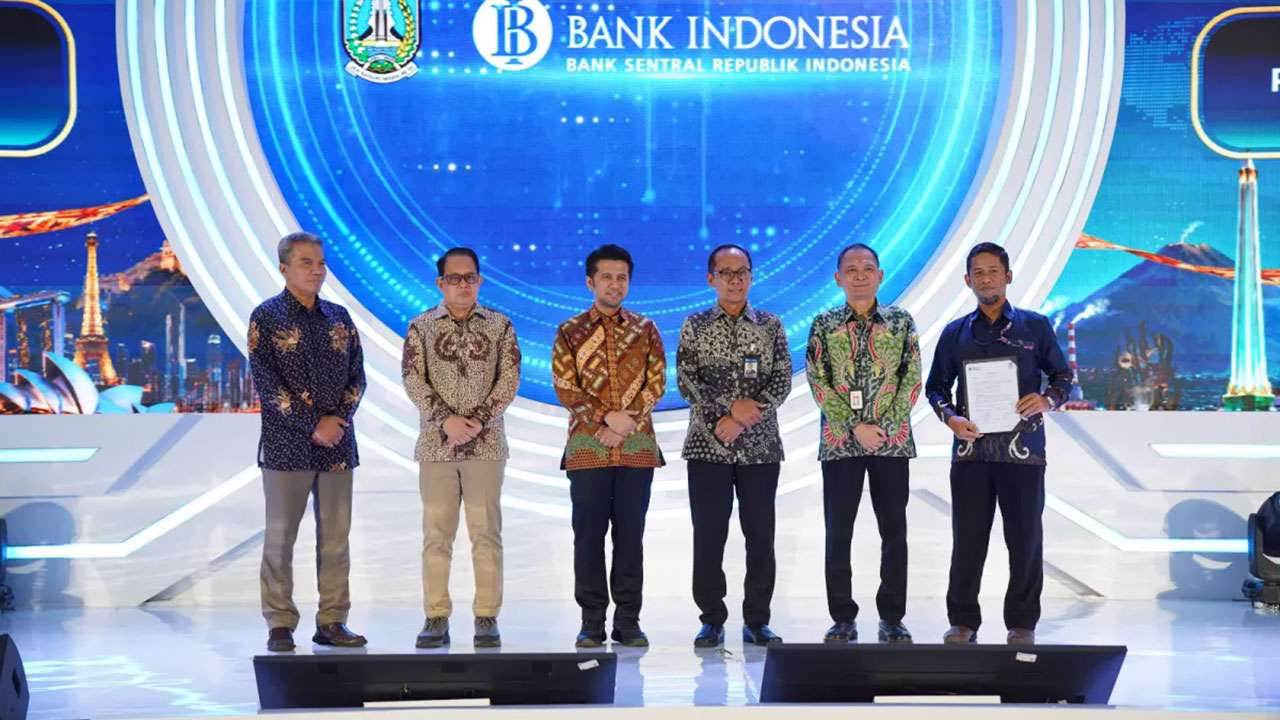
At the opening ceremony of EJIF 2026 on Friday (2 October 2026), the signing was marked by a group photograph featuring the LoI documents between SIER and the two companies.
The photograph included SIER President Director Alif Abadi; representatives of PT Filtrona Manufacturing Indonesia and PT Freyabadi Indotama; East Java Deputy Governor Emil Elestianto Dardak; East Java Regional Secretary Adhy Karyono; Bank Indonesia’s East Java representative office head Ibrahim; and acting head of the East Java Financial Services Authority (OJK), Horas V.M. Tarihoran.
Also present were SIER Finance, Administration and Risk Management Director Rizka Syafittri Siregar, Institutional Director Ahmad Fahrudin, and Corporate Secretary Division Head Yogi Widi Kurniawan.
SIER President Director Alif Abadi said the LoIs reflected investors’ confidence in the industrial estates managed by the company. He said that confidence was an important asset for sustaining the company’s growth and strengthening its support for business needs.
“Investor confidence is an important asset for SIER to continue growing. We have industrial estates with comprehensive facilities that we continue to improve, including warehousing support and BPSP to meet investors’ operational needs and support business growth,” Alif said.
He said SIER would continue developing its industrial estates to provide investors with a safe, comfortable, competitive and sustainable business environment.
“For us, every investment is not merely an expansion of business activity, but also part of an effort to build an industrial ecosystem that delivers long-term benefits for East Java,” he said.
East Java Deputy Governor Emil Elestianto Dardak said he hoped the signed LoIs would lead to actual investment and help strengthen the province’s economic structure. He said sustainable investment required a business ecosystem that gave industries room to grow and create added value.
Emil said East Java should not merely be a destination for investment, but a region with an ecosystem that enables investment to develop sustainably. He described the province as one of the main contributors to the national economy, with relatively stable regional economic activity.
“Today, our focus is on strategic policy to ensure East Java continues to have a conducive ecosystem. East Java is a regional economy, and industry is its main support. The focus must therefore be on the strengths of the economic ecosystem, particularly the manufacturing industries in East Java,” he said.
He said East Java’s position as a regional economic powerhouse was underpinned by industry, especially manufacturing. Strengthening manufacturing, he added, needed to go hand in hand with developing an economic ecosystem that supports industrial activity.
According to Emil, that ecosystem includes trade, the quality of human resources, infrastructure and inter-regional connectivity.
“Trade and manufacturing ecosystems overlap. We need an educated workforce, as well as adequate social and economic conditions,” he said.
Emil added that investment opportunities in East Java were not concentrated in a single area, as economic potential was spread across the province. Airports, ports and other connectivity infrastructure also improve access to various centres of economic activity.
The province also has Special Economic Zones (KEKs), industrial estates, halal industrial estates and plans to develop new industrial areas. These offer investors alternative locations to suit their needs.
“East Java’s potential is spread in every direction. It is not all crowded. Opportunities exist, and this creates investment prospects,” he said.
Emil said investment should therefore be assessed not only by the amount of capital it brings in, but also by its position in and contribution to strengthening East Java’s economic value chains.
The government, he added, has a role in building an ecosystem that enhances regional competitiveness, enabling investment opportunities to develop into economic activity that generates added value for the public.
“Our strategic direction is to offer investment opportunities to prospective investors. We need to carefully consider where each investment fits within East Java,” he said.