
Sidrap Regency’s Economy Grows 7%, Powered by Rice and Egg Production
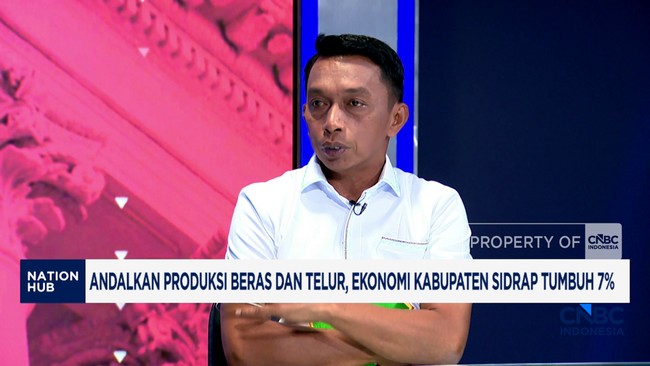
Amid a prolonged dry season caused by El Niño, Sidrap Regency in South Sulawesi has managed to maintain rice production, a key source of the local economy. Sidenreng Rappang Regent Syaharuddin Alrif said 91% of Sidrap’s farmers had successfully weathered the dry season and maintained production across 32,000 hectares of irrigated rice fields and 20,000 hectares of rain-fed fields.
The Sidrap Regency Government has adopted several strategies to protect rice production during the dry season, including bringing forward the planting season, using short-maturing seeds and implementing an electricity-to-the-fields programme.
To strengthen the agricultural ecosystem as a source of regional economic growth, Sidrap is seeking to raise productivity to 12 tonnes per hectare and develop downstream rice processing, including packaging, to meet demand from other regions.
Sidrap is also promoting its plantation sector, including coffee, cloves and nutmeg, alongside efforts to improve productivity in food crops, plantations and horticulture.
Meanwhile, the local government is targeting investment in renewable energy. This includes a 75-megawatt wind power plant, which is expected to be expanded to 200 MW by 2027, as well as solar power development on a 400-hectare lake, with investment of more than Rp1.8 trillion for each project, and solar installations on land.
Sidrap is also seeking to develop a waste-to-energy plant to serve seven surrounding areas. The discussion explores the regency’s plans to develop its agricultural potential and attract investment in green energy.