
Siak Regent Appeals to Vice President Over Revenue Sharing Funds, Inherits IDR 400 Billion Debt
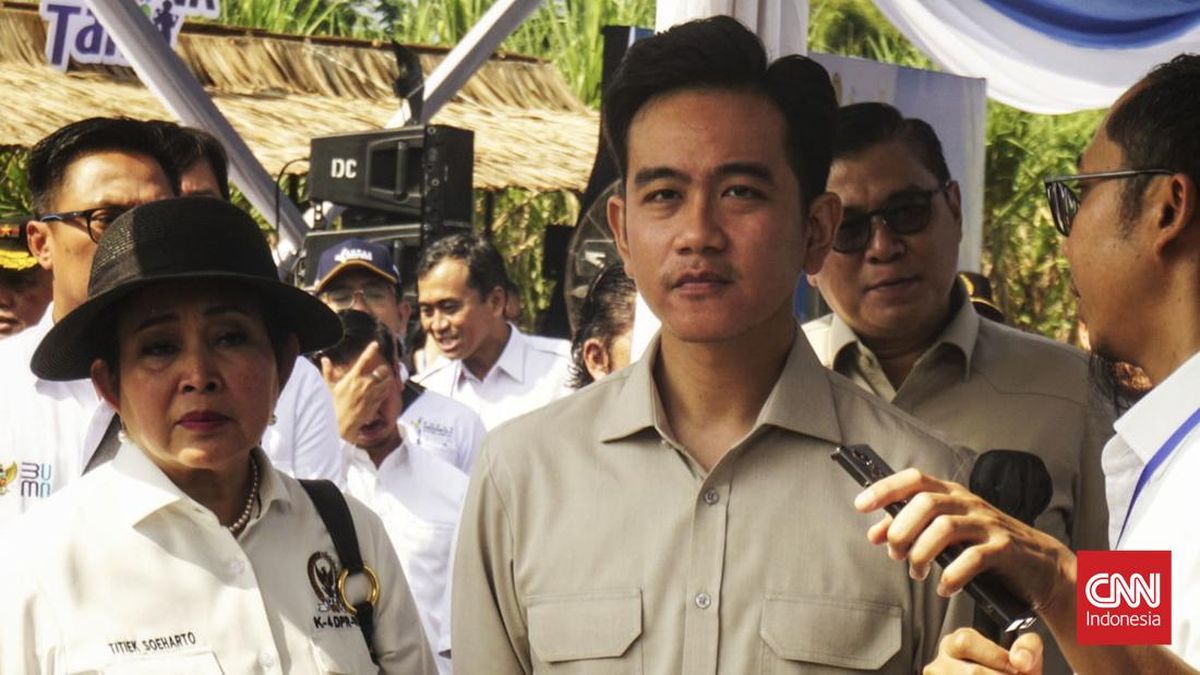
Siak Regent Afni Zulkifli has raised the issue of Revenue Sharing Funds (DBH) with Vice President Gibran Rakabuming Raka, disclosing that the Siak Regency’s finances are under severe pressure due to an inherited local debt of nearly IDR 400 billion. The moment was shared by Afni in a social media post on Friday (17/7). In the post, Afni requested a special audience with Gibran to convey the problems faced by producing regions, particularly regarding the distribution of DBH. ‘I am the Regent of Siak, hoping to have a special audience with you to convey the issues in the region,’ Afni told Gibran. ‘The current situation regarding DBH is extraordinary, especially for producing regions. DBH is part of the Regional Financial Revenue, and we are a producing region,’ he continued. ‘I have just taken office. I inherited a debt of almost IDR 400 billion. So we are barely able to undertake any development,’ he said. He also submitted a request for an audience letter to Gibran, along with a letter addressed to the Minister of Finance regarding the matter. Afni believes that producing regions like Siak are highly dependent on DBH. Meanwhile, other sources of Regional Own-Source Revenue (PAD) cannot be optimised in the short term because most of the land has already been utilised for business activities. ‘The land in producing regions is all used up. It has become Cultivation Rights Title (HGU) and Industrial Plantation Forests (HTI),’ Afni said. After meeting Gibran, Afni stated that the Vice President paid close attention to the issues he raised. ‘I met with the Vice President earlier. Despite his busy schedule, he gave it his full attention. He also understands because he said he is a former regional head,’ he said. On that occasion, Afni stressed that DBH is the right of producing regions and should not be treated as an optional policy. ‘Because there are statements from some parties saying that DBH will only be given if the region does this, this, and this,’ Afni said. ‘It makes DBH seem optional. Yet, as the name suggests, it is revenue sharing. Funds that are shared from the proceeds obtained by the state,’ he continued. He explained that producing regions also bear the impact of natural resource exploitation activities, from environmental burdens to social issues and conflict. Therefore, he argued, regions are entitled to a share of DBH in accordance with the provisions. Afni also rejected any comparison of the fiscal conditions of regency governments with those of city governments. ‘Because the DBH received is a right that must be obtained by the region, and the percentage is already very small,’ Afni said. ‘And we certainly reject being compared to city governments. It is different, especially under the Law on Central and Regional Financial Relations,’ he continued. According to him, the revenue potential differs because city governments receive more from vehicle tax and title transfer fees, whereas areas like Siak are dominated by licensed plantation and natural resource exploitation areas. He hopes the central government will continue to fulfil the rights of producing regions, both through the distribution of DBH and programmes that truly meet the needs of the local community. ‘We certainly support all of the President’s programmes. But we hope the rights of producing regions are not reduced, because everything goes back to the community,’ Afni said.