
Siak Police Reveal Cause of Death of Doctor at Tengku Rafian Regional Hospital
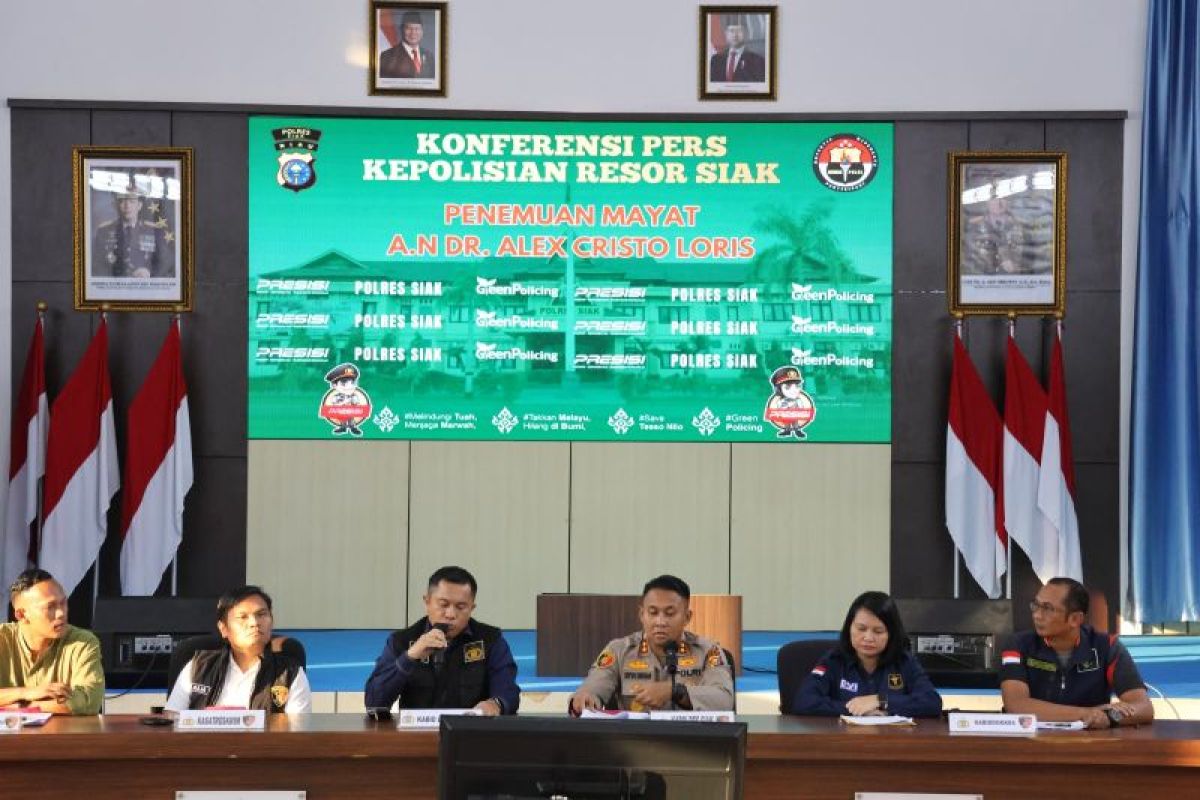
Pekanbaru, (ANTARA) - The Criminal Investigation Unit of the Siak Resort Police in Riau Province has revealed the cause of death of dr. Alex Cristo Loris, an anaesthesiology resident of the Universitas Riau specialist medical education programme at Tengku Rafian Regional Hospital in Siak.
Head of Siak Police AKBP Sepuh Ade Irsyam Siregar said that based on a series of scientific investigations, autopsy results, forensic laboratory examinations, digital forensics and forensic psychology, investigators concluded that the victim’s death was caused by his own actions.
“Investigators from the Siak Police Criminal Investigation Unit concluded that no facts pointing to a criminal act of murder were found. The cause of death of the late dr Alex Cristo Loris was concluded to be the result of his own actions,” said Sepuh Ade Irsyam at a press conference in Siak on Tuesday.
The doctor’s body was earlier found in bushes beside the fence of Tengku Rafian Regional Hospital in Siak on Tuesday, 14 July 2026 at around 11.30 Western Indonesia Time.
According to Sepuh Ade Irsyam, since the report of the body’s discovery was received, investigators immediately processed the crime scene, secured evidence, examined CCTV footage, took statements from witnesses, and involved a number of experts to determine the cause of death objectively and professionally.
The crime scene examination revealed that the victim was found lying on his back in bushes around five metres from the outer fence of Tengku Rafian Regional Hospital in Siak.
Near the victim, a bag containing various medical equipment was found, including a stethoscope, the anaesthetic drug Propofol, ampoules of Lidocaine, a syringe containing Fentanyl Citrate and Rocuronium Bromide, and a number of hypodermic needles.
In addition, CCTV footage taken from two sources showed the victim walking alone towards the location of the incident on the night before he was found dead, with no other person seen accompanying him.
“The autopsy results state that there were injection marks on the back of the victim’s left hand, suspected to be the entry point of the drug ‘Rocuronium’ into the body. Toxicological examinations found Rocuronium content in samples of the victim’s urine, blood and kidneys,” he said.
Therefore, forensic experts concluded that the victim’s death was caused by the effects of ‘Rocuronium’, which resulted in total paralysis of the respiratory muscles, causing the victim to die of asphyxiation.
Meanwhile, the bruise on the victim’s head was not the cause of death, while other wounds on the body were post-mortem injuries caused by insect activity.
“The Forensic Laboratory Examination of the Riau Regional Police also confirmed that the blood stains on the syringe were identical to the victim’s DNA, indicating that the syringe was used by the victim himself and contained Rocuronium,” he said.