
Shrimp Head Paste Processing Boosts Women's Economy in Inanwatan
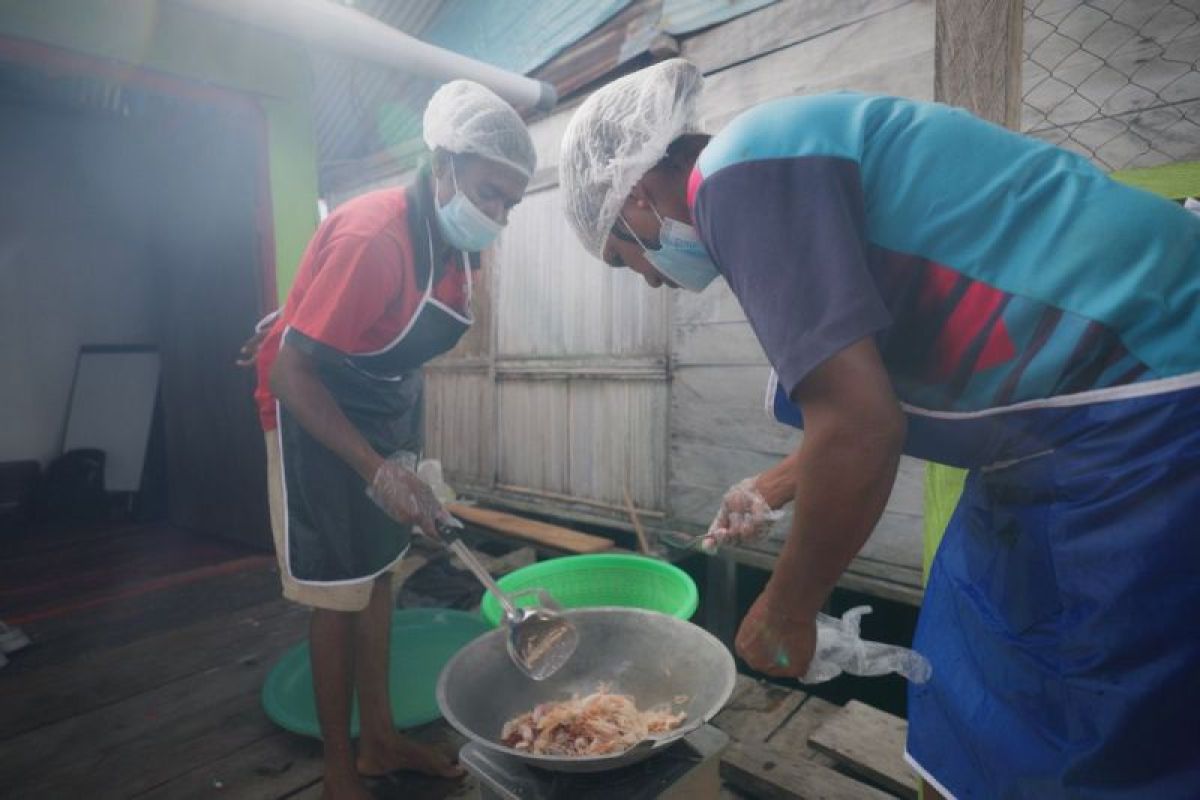
Most of the paste is taken to Sorong, with some also sold to companies.
Jakarta (ANTARA) - The processing of shrimp heads into shrimp paste has opened up new economic opportunities for women’s groups in Inanwatan District, South Sorong Regency, South West Papua, whilst also adding value to fisheries produce that has hitherto relied on the sale of fresh shrimp.
Through mentoring by the EcoNusa Foundation since mid-2024, women’s groups in Isogo Village and Mate Village have begun producing shrimp paste made from shrimp heads, marketed as far as Sorong City, as an effort to strengthen the household economies of coastal communities.
Mama Siti Awakaere, a resident of Isogo Village, said the income from selling shrimp paste helps meet the educational needs of her child, who is attending school outside the village.
“The earnings from fishing are still not enough. If I don’t make this, where would my younger sibling get money for school?” said Mama Siti in an EcoNusa statement on Thursday.
She said she was able to earn around Rp300,000 together with her companion from selling 15 kilogrammes of shrimp paste at the Weigh House in Mate Village, supported by EcoNusa. The income is used to meet family needs, including sending money to her child.
A similar programme is also running in Mate Village. As of early 2026, the women’s group in the village has produced more than 50 kilogrammes of shrimp paste, marketed to Sorong City and a number of companies.
“Most of it is taken to Sorong, and some is also sold to companies,” said Mama Alfonsina Ginuny.
The potential for business development is supported by the abundance of shrimp resources in the Inanwatan area, which has a mangrove ecosystem that serves as an important habitat for various coastal biota as well as a source of livelihood for local communities.
In addition to teaching fisheries processing techniques, the mentoring also covers business and group financial management so that production activities can be sustained.
The use of shrimp-head waste to create products of economic value is considered capable of increasing community income whilst reducing fisheries waste that was previously not optimally utilised.
This business development practice will be one example of community economic empowerment discussed at the Papeda Summit on 2–4 September 2026 in Sorong, South West Papua. The forum will bring together various parties to share experiences on sustainable natural resource management and the strengthening of indigenous community economies in the Land of Papua.