
Shortage of Workers Prompts Japanese Airline to Trial Robots at Airport
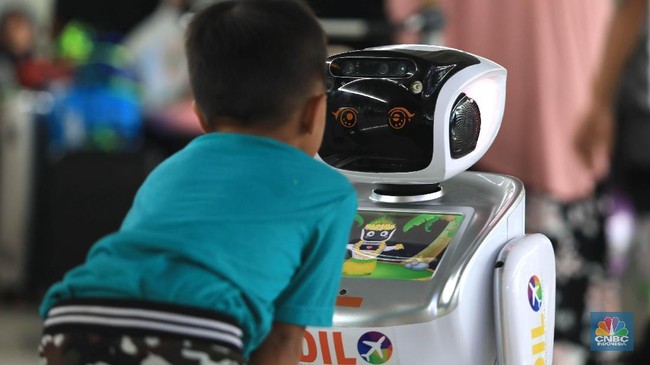
Japan Airlines has begun trialling the use of humanoid robots for ground operations at Tokyo’s Haneda Airport amid chronic labour shortages. According to CNBC, the trial is being conducted in partnership with GMO AI & Robotics to handle tasks such as baggage loading and cabin cleaning starting in May. This step comes as Japan’s aviation sector faces a surge in tourism demand and a shrinking workforce due to an ageing population. The humanoid robots are planned to be gradually implemented at Haneda Airport over a two-year trial period. In a technology demonstration, the humanoid robot produced by Chinese company Unitree Robotics was seen capable of moving items on a conveyor belt and interacting with workers. However, it is unclear whether Unitree is directly involved in the trial or merely part of the evaluation of commercially available technology. Japan Airlines stated that it is still conducting feasibility studies and risk assessments regarding the implementation of this technology. Meanwhile, Unitree has not responded to requests for comment on their involvement. Shares in Japan Airlines rose about 3% on the first trading day of May, though they are down around 13% year-to-date. On the other hand, Unitree previously attracted public attention through a demonstration of its H1 model at the China Spring Festival Gala in February. Analysts assess that demographic trends such as an ageing population and low birth rates are driving the need for humanoid robots across various sectors. Barclays noted that this situation opens opportunities for robots to take on important roles in jobs that are less appealing to humans. According to data from the Organisation for Economic Co-operation and Development, Japan’s working-age population is projected to shrink by up to 31% from 2023 to 2060. Counterpoint research director Marc Einstein predicts that humanoid robots will play an increasingly significant role in Japan’s labour market. With Prime Minister Sanae Takaichi’s administration leaning towards strict immigration policies, the government is expected to promote the use of humanoid robots. The Japanese government has also issued guidelines on the use of robotics and artificial intelligence to address the decline in workforce due to population ageing. Data from the Japan National Tourism Organization shows that international tourist arrivals rose 3.5% year-on-year in March, adding pressure to airport operations. This situation reinforces the urgency of adopting automation technology in the aviation sector. Nevertheless, several challenges still loom over the development of humanoid robots. Their ability to perform tasks requiring high precision is considered limited, while aspects of programming and reasoning are not yet fully mature. Barclays describes physical robotics as the next frontier in artificial intelligence development, with the industry’s potential value reaching US$1.4 trillion by 2035 from the current US$2-3 billion. However, analysts believe that humanoid robots still require human involvement in their operations due to their intelligence not being fully developed. Nevertheless, with the current pace of technological development, Counterpoint estimates that large-scale implementation of humanoid robots could be realised within the next five years.
Source: jawawa.id (https://jawawa.id/newsitem/shortage-of-workers-prompts-japanese-airline-to-trial-robots-at-airport-1777639913)
Originally published by CNBC Indonesia (https://www.cnbcindonesia.com/tech/20260501175510-37-731594/kekurangan-pekerja-maskapai-jepang-uji-coba-pakai-robot-di-bandara), translated from Indonesian