
Short Videos Are Colonising Our Brains
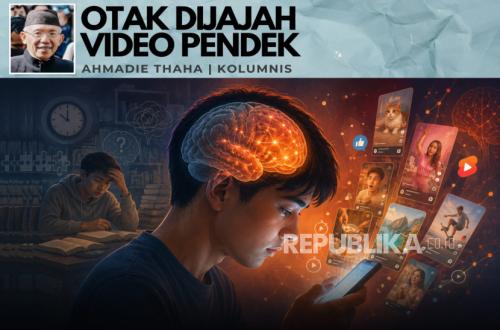
He arrives uninvited, without preamble, settling directly into the living room of our consciousness. It’s called short video. Lasting only a few seconds or minutes, its effects can linger longer than a drawn-out Friday sermon.
We think it’s just entertainment, but according to in-depth research, short videos are quietly rewriting how our brains work, systematically and relentlessly.
The scientific journal Frontiers in Human Neuroscience (June 27, 2024) published a serious study with a rather straightforward title: “Mobile phone short video use negatively impacts attention functions: an EEG study.”
This research was conducted by Tingting Yan, Conghui Su, Weichen Xue, Yuzheng Hu, and Hui Zhou from Zhejiang University, China. This isn’t just some random online opinion; it’s a laboratory study with cables, brainwaves, and statistics, all connected to the participants’ heads.
The methodology is rigorous. A total of 48 young participants (average age 21.8 years) were tested using the Attention Network Test (ANT) while their brain activity was recorded with EEG. This device reads brainwave activity directly.
They also measured the level of their short video addiction through a special questionnaire (MPSVATQ) and their self-control abilities through a psychological scale (SCS). In short: it’s not just about asking “do you watch often?”, but actually observing how their brains work when they think.
The results? It’s more than just “slightly disturbed”; there is a clear correlation: the higher the tendency towards short video addiction, the weaker the theta activity in the prefrontal part of the brain.
Theta, the area responsible for self-control, decision-making, and the ability to resist distractions, becomes weaker. In other words, the “CEO” in their brains begins to weaken, while the “entertainment division” gets promoted to commissioner.
Even more ironically, this decline is not always visible on the surface. Behaviorally, a person may seem fine. They can still answer questions, still work, still have normal conversations as if nothing has happened.
But behind the scenes, their brains are losing resistance to distractions. It becomes easily distracted, quickly bored, and difficult to sustain in activities that require long-term focus. Like an athlete who can still run, but whose lungs are leaking.
At this point, short videos are no longer just entertainment. They are a “mental trainer” quietly training us to be impatient.
Short videos accustom the brain to live in small pieces, not in long narratives. It educates us to seek instant gratification, not deep understanding.
And most dangerously: it makes us feel that all of this is normal.