
Short-sightedness and astigmatism: what is the difference? An explanation
Jakarta (ANTARA) - Both short-sightedness and astigmatism can cause blurred vision. Because their symptoms appear similar at first glance, many people assume they are the same condition.
In fact, short-sightedness and astigmatism are two different types of refractive error. The difference lies mainly in how the shape of the eye bends light, so that the image is not focused precisely on the retina.
So, what is the difference between short-sightedness and astigmatism? Here is an explanation, compiled from a number of sources:
Short-sightedness makes distant objects appear blurred
Short-sightedness, or myopia, is a condition in which a person has difficulty seeing objects that are far away, whilst objects that are close tend to appear clearer.
This occurs when the shape of the eyeball or cornea causes light to focus in front of the retina rather than directly on it. As a result, images of distant objects appear blurred.
Common signs include difficulty reading text from a distance, frequently squinting to see objects more clearly, easily tired eyes, and headaches.
In children and teenagers, short-sightedness may also be evident from the habit of sitting too close to a screen or difficulty reading writing on the classroom board.
Meanwhile, astigmatism occurs when the surface of the cornea or the lens of the eye has a shape or curvature that is not uniform in all directions.
As a result, light is not perfectly focused at a single point on the retina. This condition can cause vision to appear blurred or distorted, whether viewing near or distant objects.
Symptoms may include unclear vision, eyes feeling strained or uncomfortable, headaches, frequent squinting, and difficulty seeing in certain conditions such as at night.
Put simply, the difference between the two can be seen from the character of the visual disturbance.
Short-sightedness primarily makes distant objects appear blurred. Astigmatism, on the other hand, can cause blurred or distorted vision at various distances.
However, this does not mean that a person with astigmatism is necessarily unable to see distant objects clearly. The degree of astigmatism varies from person to person, so symptoms can also differ.
Another thing worth knowing is that short-sightedness and astigmatism can occur together. This means a person may need lenses to correct both myopia and astigmatism at the same time.
Symptoms can indeed be an early indication, but determining whether a person has short-sightedness, astigmatism, or both cannot be done based on symptoms alone.
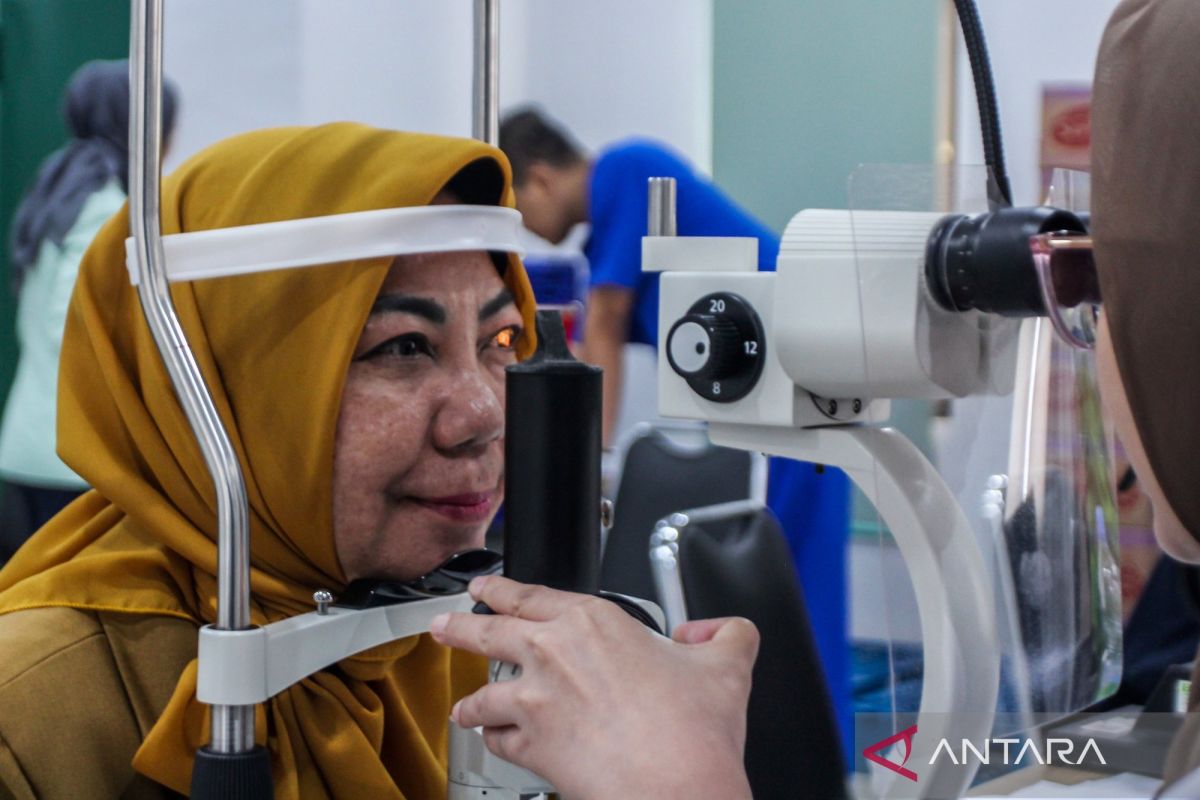
An eye examination is needed to determine the state of one’s vision and to establish the appropriate lens prescription. A refraction examination helps eye care professionals understand how the eye bends light and determine the correction required.
Therefore, if your vision starts to feel blurred, you frequently experience headaches after looking at things for long periods, or you have difficulty reading text from a certain distance, it is advisable to have an eye examination.
Both short-sightedness and astigmatism can be corrected with glasses. The lenses used are tailored to the type and degree of each person’s refractive error.
Besides glasses, some conditions can also be corrected using contact lenses. In certain cases, for people who meet the medical requirements, an ophthalmologist may consider a refractive surgery procedure.
Importantly, do not use someone else’s glasses simply because you feel your vision problems are similar. Each person’s lens prescription can differ and must be determined through an examination.
Ultimately, short-sightedness and astigmatism can both cause blurred vision, but their causes and the character of the visual disturbance differ. An eye examination is the most accurate way to determine the actual condition and to establish the appropriate correction.