
Shopee's Emak-Emak Matic programme helps thousands of homemakers boost their income
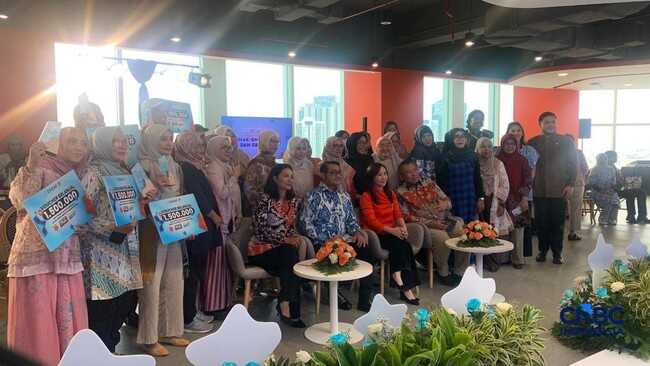
The Emak-Emak Matic digital training programme, run in collaboration with the Ministry of Creative Economy (Ekraf), is claimed to have helped thousands of Indonesian homemakers and young people increase their incomes through the digital economy ecosystem.
Creative Economy Minister Teuku Riefky Harsya said the programme has been running for a year and has reached almost 3,000 participants in eight cities across Indonesia. The programme focuses on equipping communities with digital skills to become online sellers, affiliates, or business operators on digital platforms.
He noted that digitalisation opens new opportunities for people to obtain supplementary income, including homemakers who previously did not participate directly in the digital economy. ‘With digitalisation and collaboration like this, people can earn additional income, even from their hobbies or interests,’ Harsya said at the Emak-Emak Matic programme achievements report in Jakarta on Wednesday (4 March 2026).
He assessed that programmes like this are important amid a volatile global economy and geopolitical impacts that can affect living costs. Harsya also highlighted Indonesia’s labour conditions. Currently, he notes there are about 7.4 million unemployed, around 82% of whom are under 40. Through digital training and the use of e-commerce platforms, the government hopes more people can create self-employment opportunities.
Meanwhile, the digital-based creative economy sector continues to grow. There are around 27.4 million people employed in the digital creative economy, with growth of about 1 to 1.5 million new workers each year, with about half of them from the young generation.
Shopee says the training provided emphasises not only theory but also practical exercises that help participants improve their business performance. Shopee Indonesia Deputy Director of Government Relations Balques Manisang reported that sellers who participated in the training saw business performance increases of up to three times, while Shopee Food merchants rose by about 1.8 times after taking part.
‘This programme has produced a number of success stories among participants, such as a culinary entrepreneur in Bogor who boosted sales sevenfold after the training, and other participants who recorded up to 20-fold growth after applying the digital marketing strategies learned,’ Balques said.
Expansion to pesantren: In the future, the government plans to widen the programme to more regions and segments of the community, including pesantren environments. Riefky said the ministry is preparing a development of a similar training programme aimed at ustaz and ustazah in pesantren so they can also utilise digital skills for entrepreneurship and to boost their community’s income.
‘The training will also cover pesantren segments, for both ustaz and ustazah, so they can utilise digital technology for business and creative economy,’ he added.
He argued that strengthening digital literacy among various community groups is expected to help small entrepreneurs and the creative economy sector become the backbone of the national economy, especially amid global economic uncertainty.